



What's Happening?
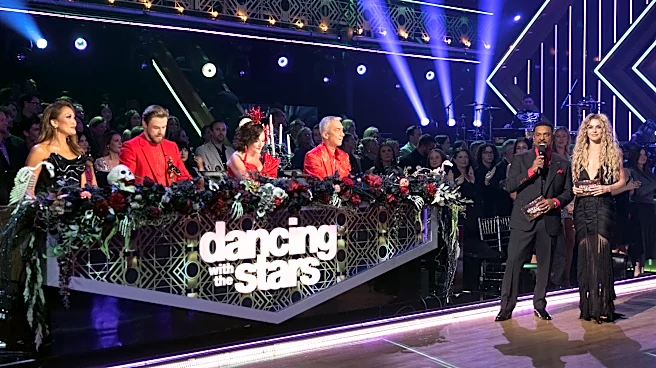
Maura Higgins, a 35-year-old reality TV star, has openly discussed the demanding nature of competing on the U.S. version of 'Dancing with the Stars.' Higgins, paired with professional dancer Mark Ballas, revealed that she endured one of her 'toughest'
weeks on the show while battling illness. She shared photos on Instagram depicting her performing, napping backstage, and receiving an IV drip, illustrating the physical toll of the competition. Despite feeling unwell and having low energy, Higgins emphasized her commitment to challenging herself and pushing her limits, acknowledging that some weeks will be more difficult than others.
Why It's Important?
Higgins's candid account sheds light on the intense physical and mental demands placed on participants in high-profile reality competition shows like 'Dancing with the Stars.' Her experience highlights the often-unseen struggles behind the glamorous performances, emphasizing that contestants are not immune to health challenges and exhaustion. This transparency can resonate with audiences by humanizing the reality TV experience and fostering a greater appreciation for the dedication required. It also underscores the pressure on contestants to perform at their best, even when facing personal difficulties, to remain in the competition and meet audience expectations.
What's Next?
Higgins, who tied for the lowest-scoring dance during a recent episode but avoided elimination, is determined to continue giving her best. Her partner, Mark Ballas, and his mother, Shirley Ballas, a head judge on 'Strictly Come Dancing,' have expressed support and pride in her efforts. The ongoing competition will test Higgins's resilience as she aims to improve and avoid future eliminations. Her story may encourage other reality TV participants to be more open about their challenges, potentially leading to a more realistic portrayal of such competitions in the media.
Beyond the Headlines
Beyond the immediate competition, Higgins's experience touches on broader themes of public perception versus reality in entertainment. Her decision to share the 'behind the scenes' struggles challenges the often-polished image presented on television, offering a more authentic view of celebrity and performance. This transparency could contribute to a growing trend of reality TV stars using their platforms to discuss mental and physical health, fostering a more empathetic understanding from the public. It also raises questions about the welfare of contestants in demanding reality formats and the support systems in place to ensure their well-being.