



What's Happening?
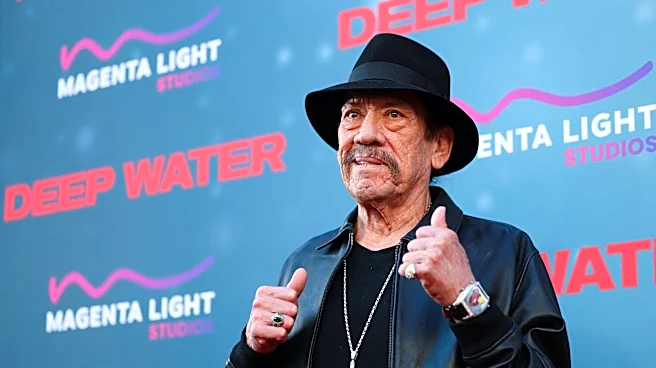
Gilbert Trejo, son of actor Danny Trejo, claims his father was deceived about the nature and backing of the upcoming film 'Pawn Shop.' According to Gilbert, Danny Trejo was two weeks into filming when the involvement of The Daily Wire, a conservative
media company, was revealed. Gilbert states that neither his father nor most of the cast and crew were informed of this in advance. He further alleges that Danny Trejo was misled about his character's role, being told he would play a 'good guy' trying to protect his store and bring peace amidst protesters, rather than a role that would align him with the film's controversial premise, which reportedly imagines ICE as heroes. Gilbert emphasized that his father could not easily withdraw from the production without causing job losses and shutting down the entire project, citing Danny Trejo's documented financial hardships.
Why It's Important?
This situation highlights the potential for actors and crew members to be unknowingly associated with projects that may conflict with their personal values or public image, especially when production details are not fully disclosed upfront. For The Daily Wire, this controversy could further solidify its reputation among its target audience while potentially alienating a broader viewership or talent pool. For the entertainment industry, it raises questions about transparency in film production, particularly concerning funding sources and ideological alignments, and the ethical responsibilities of producers to inform their cast and crew. The incident also underscores the economic pressures faced by actors, even established ones, which can limit their ability to exit projects that become problematic, potentially impacting their careers and public perception.
What's Next?
The film 'Pawn Shop' is expected to be released, and it remains to be seen how the controversy surrounding its production and The Daily Wire's involvement will affect its reception. Public and industry reactions to Gilbert Trejo's statements could influence future collaborations between actors and ideologically-driven production companies. There may be increased scrutiny on contract clauses and disclosure practices within the film industry to prevent similar situations. Danny Trejo's public image may continue to be debated, with some understanding his predicament and others criticizing his participation, regardless of the circumstances. The incident could also prompt discussions within unions and guilds about protecting members from undisclosed affiliations.
Beyond the Headlines
The controversy surrounding 'Pawn Shop' and Danny Trejo's alleged unwitting involvement touches upon broader issues of artistic integrity versus financial necessity in Hollywood. It exposes the complex dynamics between talent, agents, and production companies, particularly when political or ideological agendas are at play. The incident also reflects a growing trend of media companies with distinct political leanings entering film production, which can create ethical dilemmas for those involved. This situation could contribute to a more polarized entertainment landscape, where artists might face increased pressure to align with specific political viewpoints or risk backlash. It also highlights the power imbalance within the industry, where individual actors, especially those facing financial challenges, may have limited agency when confronted with unexpected ideological alignments in their work.