




What's Happening?
The International Chamber of Commerce (ICC) is urging COP31 to place private investment at the forefront of climate finance delivery. ICC Secretary General John W.H. Denton AO emphasized that while public finance commitments are crucial, the focus should
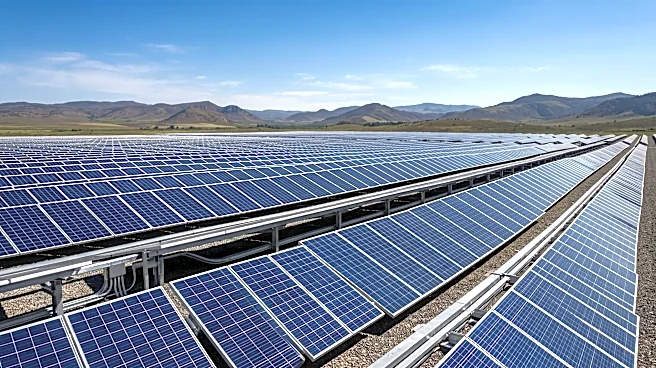
also be on removing barriers to private investment. Denton stated that governments possess more tools than just their budgets, including clear and consistent policies that can encourage businesses to invest in clean power, grids, and electrification. He also highlighted the need for credible investment plans, faster permitting, and predictable market rules to transform climate ambitions into financeable projects. The ICC advocates for financial regulation to properly recognize measures that reduce the risk of investments in emerging markets, suggesting that targeted clarification of financial stability rules could unlock lending for clean energy and infrastructure in developing economies.
Why It's Important?
This call from the ICC is significant for the U.S. and global efforts to combat climate change, as it underscores the necessity of mobilizing substantial private capital to meet climate goals. Relying solely on public funding is insufficient, and unlocking private investment can accelerate the transition to a green economy. For U.S. businesses, this could mean new opportunities in renewable energy, sustainable infrastructure, and climate technology, particularly in emerging markets. The emphasis on clear policies and predictable market rules could also influence U.S. domestic climate policy, encouraging a more business-friendly regulatory environment for green investments. Furthermore, the ICC's suggestion to adjust financial regulations to de-risk emerging market investments could lead to a re-evaluation of how U.S. financial institutions approach climate-related lending and investment abroad, potentially increasing the flow of capital to critical climate projects.
What's Next?
Ahead of COP31, the ICC's recommendations will likely be a key point of discussion among policymakers and business leaders. Governments are expected to consider practical plans to remove investment barriers in climate solutions. This could involve developing new policy frameworks, streamlining regulatory processes, and enhancing international cooperation to create a more attractive environment for private capital. Multilateral development banks may also be pressured to increase their deployment of guarantees, risk-sharing instruments, and blended finance. The push for high-integrity carbon markets, with clear rules and reliable accounting, is also anticipated to gain momentum, potentially creating new revenue streams for climate projects. The outcome of these discussions at COP31 will be crucial in determining the pace and scale of private sector engagement in global climate finance.
Beyond the Headlines
The ICC's stance highlights a fundamental shift in the approach to climate finance, moving beyond traditional public aid to a more integrated model that leverages the vast resources of the private sector. This involves not just financial incentives but also systemic changes in regulatory and policy environments to foster investor confidence. The ethical dimension of this approach lies in ensuring that private investments genuinely contribute to sustainable development and do not exacerbate existing inequalities or environmental harms. Legally, the clarification of financial stability rules and the establishment of robust carbon markets will require complex international agreements and domestic legislative changes. Culturally, it signifies a growing recognition that climate action is not solely a governmental responsibility but a collective endeavor requiring the active participation of the global business community, driven by both economic opportunity and environmental imperative.