





What's Happening?
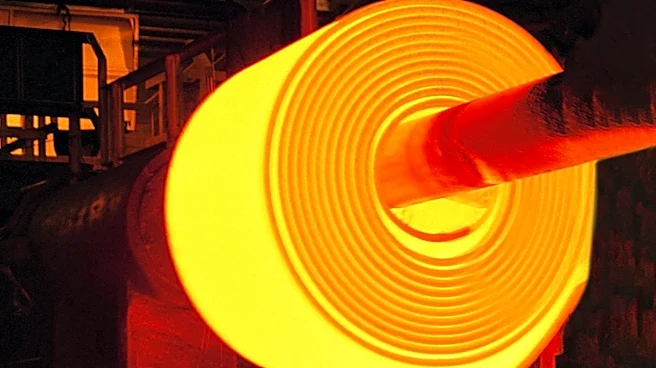
Planned maintenance outages at various U.S. steel mills are projected to reduce hot-rolled coil (HRC) production by over 1 million short tons between September and December 2026. Key facilities affected include US Steel Gary and Big River Steel Works,
which together account for a significant portion of the anticipated reductions. Despite these substantial cuts, market participants expect minimal disruption to flat-rolled steel product purchasing, as these outages have been largely anticipated. Mills have already tightened spot offerings throughout 2026 to manage backlogs, with some producers ceasing spot material sales entirely, leading to extended lead times of eight to twelve weeks. The tight domestic market has attracted HRC imports, though these have not yet significantly impacted hot band prices. Fastmarkets' daily steel hot-rolled coil index for the US Midwest reached $1,202.40 per short ton on August 20, marking its highest level since May 31, 2022.
Why It's Important?
The scheduled production cuts in the U.S. steel industry underscore the ongoing challenges in maintaining supply stability amidst consistent demand and low inventories. The reduction of over 1 million tons of HRC production could further tighten the domestic market, potentially sustaining or even increasing prices for steel products. This situation benefits domestic steel producers by allowing them to maintain higher pricing, but it could pose challenges for industries reliant on steel, such as automotive, construction, and manufacturing, by increasing their input costs. The reliance on imports to fill the supply gap highlights the interconnectedness of the global steel market and the potential for international trade dynamics to influence domestic pricing and availability. The extended lead times also indicate a strained supply chain, which could impact project timelines and operational efficiencies for businesses across various sectors.
What's Next?
The U.S. steel market will likely continue to monitor the balance between domestic supply and demand as the planned outages unfold through the fall and winter of 2026. While market participants anticipate minimal disruptions due to prior planning, the actual impact on spot availability and pricing will be closely watched. Steel producers may continue to manage their spot offerings tightly, potentially extending lead times further if demand remains robust. The influx of HRC imports will also be a critical factor; if imports increase significantly, they could eventually exert downward pressure on domestic prices, though this has not yet occurred. Businesses that rely on HRC will need to adjust their procurement strategies to account for potentially higher prices and longer lead times, possibly exploring alternative sourcing or inventory management techniques to mitigate risks.
Beyond the Headlines
The recurring nature of planned maintenance outages in the steel industry, while necessary for operational efficiency and safety, reveals a broader vulnerability in the U.S. manufacturing supply chain. The industry's ability to absorb over 1 million tons in production cuts without significant market disruption suggests a degree of resilience and foresight in planning. However, it also highlights the delicate balance between maintaining operational capacity and meeting market demand. This situation could accelerate discussions around investment in new steel production technologies, such as electric-arc furnaces (EAFs), which offer more flexibility and potentially shorter downtime compared to traditional blast furnaces. Furthermore, the sustained high prices and reliance on imports could reignite debates about domestic industrial policy, trade protections, and the strategic importance of a robust domestic steel industry for national security and economic stability.