





What's Happening?
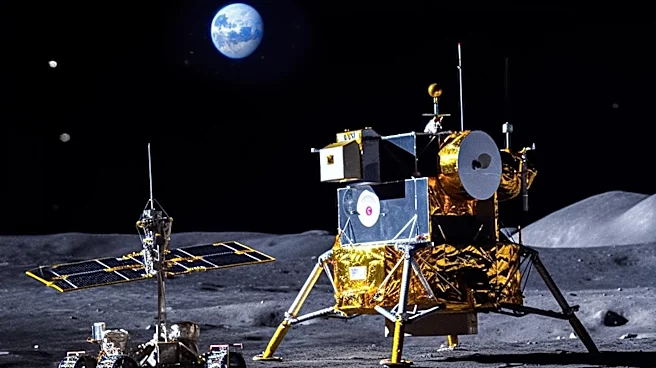
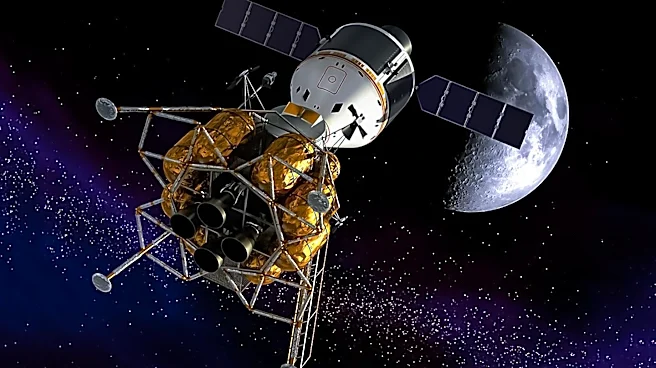
Firefly Aerospace has announced a commercial payload agreement with Starcloud to demonstrate advanced AI computing capabilities in lunar orbit. Starcloud's SC-1L compute payload will be integrated onto Firefly's Elytra orbital vehicle. This mission aims
to validate the core capabilities required for a future data center orbiting the Moon, which would support lunar surface and orbital infrastructure. The SC-1L processor will ingest data from Firefly’s onboard Solux vision system, perform high-power AI computing in orbit, and then rapidly transmit the processed data back to Earth. This demonstration builds upon Starcloud's previous AI computing success in low Earth orbit. The mission is targeted to launch no earlier than 2028, with Elytra first serving as a transfer vehicle and communications relay for Firefly’s Blue Ghost lander, part of NASA’s Commercial Lunar Payload Services (CLPS) initiative. After the lander mission, Elytra will remain in lunar orbit for five years for customer payload and imaging operations, including Starcloud’s demonstration.
Why It's Important?
This collaboration marks a significant step towards establishing permanent human and robotic presence on and around the Moon by developing crucial computing infrastructure. The ability to process massive volumes of data directly in lunar orbit, rather than transmitting raw data back to Earth, addresses downlink constraints and provides real-time, actionable insights. This on-orbit processing capability is vital for supporting complex lunar operations, including advanced lunar surface mapping, mineral detection, and reconnaissance. The development of a lunar data center could revolutionize how data is managed and utilized for future lunar missions, enabling more autonomous and efficient operations. It also highlights the growing commercial interest and investment in lunar infrastructure, moving beyond government-led space exploration to include private sector innovation in supporting long-term lunar endeavors. This initiative could position the U.S. at the forefront of lunar data processing and infrastructure development, attracting further investment and fostering technological advancements in space computing.
What's Next?
The next step involves the launch of Firefly Aerospace's third lunar mission, targeted for no earlier than 2028. This mission will see the Elytra orbiter first support Firefly’s Blue Ghost lander as a transfer vehicle and communications relay for NASA’s CLPS initiative. Following the completion of the lander mission, the Elytra vehicle will remain in lunar orbit for five years. During this extended orbital period, Starcloud will conduct its demonstration of high-power AI computing, validating the capabilities for a future orbital lunar data center. Firefly Aerospace also plans to deploy a second Elytra vehicle to lunar orbit after the launch of Blue Ghost Mission 2, targeted for no earlier than 2027. These vehicles are designed for long-term operation, enabling more frequent revisits of the lunar surface for both government and commercial clients. Further collaborations, such as Firefly's recent partnership with NVIDIA for on-orbit data processing for its Ocula lunar imaging service, indicate a continued focus on enhancing lunar data capabilities.
Beyond the Headlines
The establishment of data centers in lunar orbit represents a paradigm shift in space exploration and resource utilization. Beyond the immediate benefits of on-orbit data processing, this initiative lays the groundwork for a more self-sufficient and robust lunar ecosystem. By reducing reliance on Earth-based infrastructure for data processing, future lunar missions can operate with greater autonomy and efficiency, potentially accelerating scientific discovery and resource extraction. This development also raises questions about data sovereignty and security in extraterrestrial environments, as commercial entities begin to manage critical data infrastructure beyond Earth. The long-term implications include the potential for a 'lunar internet' or a network of orbital data centers that could support not only lunar operations but also future deep-space missions, acting as relays and processing hubs. This commercial venture into lunar data infrastructure could also spur new economic models and industries focused on space-based services, creating a new frontier for technological innovation and investment.