



What's Happening?
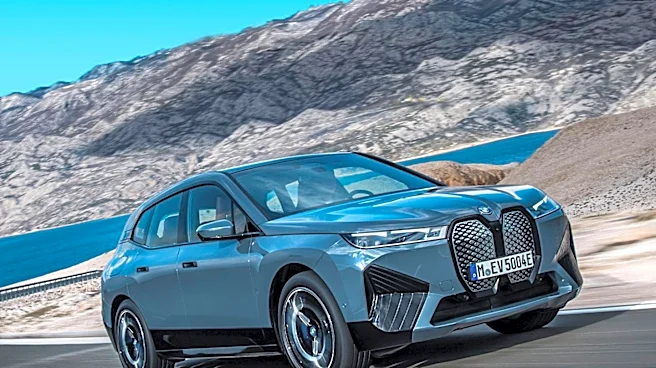
A recent test conducted by the YouTube channel Out of Spec Testing revealed that a BMW iX5 electric SUV can travel significantly further than its dashboard display indicates after reaching zero percent battery. The test involved a pre-series BMW iX5 with
approximately 5,000 miles on the odometer. Starting at four percent charge, the vehicle displayed an electric-range warning and advised the driver to pull over. In 'Max Range' mode, the car's speed and power were reduced, dropping from 450hp to 350hp as the battery went from four to two percent. After the display hit zero percent, the iX5 continued to drive for an additional 21.8 miles, consuming 7.4 kWh of extra energy. The accelerator pedal reportedly felt 'squishy' after about 10 miles past zero, and the car briefly shut down after 11 miles before being rebooted and continuing its journey.
Why It's Important?
This test provides crucial insights into the real-world performance and safety margins of electric vehicles (EVs), particularly for U.S. consumers considering EV adoption. The discovery of a substantial range buffer beyond the indicated zero percent charge can alleviate 'range anxiety,' a significant concern for many potential EV buyers. Knowing that an EV can travel an additional 20-plus miles after the dashboard shows zero could prevent drivers from being stranded and offers a practical safety net. This finding could influence consumer confidence in EVs, making them a more attractive option for daily commutes and longer trips. For manufacturers, it highlights the importance of calibration and communication regarding battery reserves. While the test was conducted under specific conditions, it suggests that some EVs may offer more leeway than commonly perceived, potentially impacting how drivers plan their charging stops and how the automotive industry markets EV capabilities.
What's Next?
The findings from this test could prompt further independent evaluations of other EV models to determine if similar range buffers exist across different brands and types of electric vehicles. This information could lead to a more informed public discourse around EV range and reliability. Automakers might consider how to best communicate these hidden reserves to consumers without encouraging reckless driving habits. There could also be a push for standardized testing protocols to accurately assess and report these 'beyond zero' capabilities. For EV owners, this knowledge might lead to a slight adjustment in their charging behaviors, potentially pushing the limits of their vehicle's range in emergencies. However, the YouTuber cautioned that these results are specific to the test conditions and may not be replicated in all real-world scenarios, emphasizing the need for continued responsible driving and charging practices.
Beyond the Headlines
The revelation of a significant range buffer in the BMW iX5 touches upon broader themes of trust, transparency, and user experience in the rapidly evolving EV market. Historically, fuel gauges in gasoline cars have also had a reserve, but the digital nature of EV range indicators often creates a more definitive sense of 'empty.' This test challenges that perception, suggesting a deliberate engineering choice to provide a safety margin. Ethically, manufacturers face a dilemma: should they explicitly communicate this buffer, potentially encouraging drivers to push their vehicles to the limit, or maintain a conservative display to ensure drivers charge proactively? This also highlights the ongoing learning curve for both consumers and the industry as EVs become more mainstream. Understanding these nuances is vital for building long-term confidence in electric transportation and ensuring a smooth transition away from fossil fuels, impacting infrastructure planning, emergency services, and driver education.