






What's Happening?
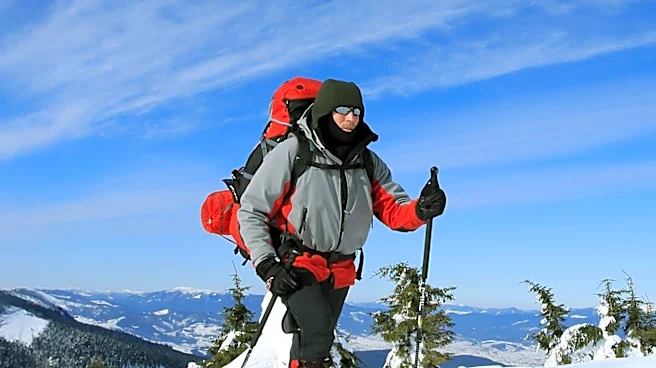
Snowshoeing is gaining recognition as an accessible and cost-effective winter activity, providing a robust workout that can burn between 400 to 600 calories per hour, according to AccuWeather. This activity involves wearing specialized snowshoes over
standard winter boots, allowing individuals to traverse snowy landscapes. The intensity of the workout can vary significantly based on the depth of the snow. Across the United States, various locations are offering snowshoeing experiences. Historic Fort Snelling provides guided snowshoe tours, inviting participants to explore historical routes. In the Sierra Nevada region, guided excursions are also available for enthusiasts. Additionally, prominent national parks and resorts in the West, such as Northstar California and Yellowstone National Park, are noted destinations for snowshoeing, catering to a range of skill levels and preferences.
Why It's Important?
The growing popularity of snowshoeing highlights a broader trend towards accessible outdoor recreation and fitness during winter months. Its low cost of entry, requiring minimal specialized equipment beyond snowshoes and winter boots, makes it an attractive option for a wide demographic. This accessibility can contribute to public health by encouraging physical activity during a season when many might become less active. Economically, the rise in snowshoeing can benefit local tourism and outdoor gear retailers in regions with significant snowfall, creating demand for guided tours, equipment rentals, and sales. For communities near popular snowshoeing destinations, this activity can extend the tourist season beyond traditional skiing or snowboarding, providing a more diverse revenue stream and supporting local businesses. Furthermore, the emphasis on guided tours, particularly in historical or natural settings, offers educational and cultural benefits, connecting participants with local heritage and environmental awareness.
What's Next?
As snowshoeing continues to grow in popularity, it is anticipated that more recreational areas and national parks will expand their offerings, including guided tours, rental services, and marked trails specifically for snowshoeing. This expansion could lead to increased investment in trail maintenance and infrastructure to accommodate the rising number of participants. Local tourism boards and outdoor recreation organizations are likely to promote snowshoeing more actively as a key winter attraction, potentially developing new programs and events to draw visitors. Furthermore, advancements in snowshoe technology may lead to lighter, more efficient, and specialized equipment, further enhancing the experience for participants. The continued emphasis on the health benefits and accessibility of snowshoeing is expected to solidify its position as a staple winter activity for individuals and families across the U.S.
Beyond the Headlines
Beyond its immediate recreational and economic impacts, the increasing engagement in snowshoeing reflects a deeper societal appreciation for nature and a desire for sustainable outdoor activities. In an era of growing environmental consciousness, snowshoeing offers a low-impact way to experience winter landscapes, fostering a connection with nature without the need for extensive infrastructure or energy consumption associated with some other winter sports. This activity also promotes mental well-being, as spending time in serene, snowy environments can reduce stress and improve mood. The community aspect of guided tours and group snowshoeing events can also strengthen social bonds and create shared experiences, contributing to a sense of community and collective well-being. As urban populations seek escapes to nature, snowshoeing provides a vital avenue for accessible wilderness engagement, potentially influencing conservation efforts and outdoor education initiatives.