







What's Happening?
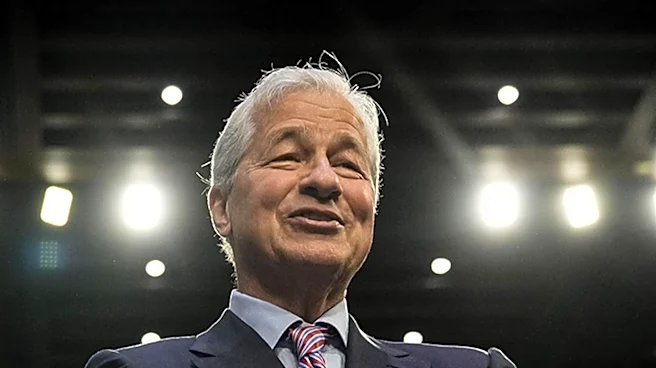
Jamie Dimon, CEO of JPMorgan Chase, is recognized as a highly influential figure in the banking sector, known for his resilient leadership. His career highlights include his role in building Citigroup as a protégé of Sandy Weill, his subsequent firing,
and his successful return to lead Bank One, which he turned around before becoming CEO of JPMorgan Chase in 2005. Dimon has maintained his position for over two decades, demonstrating remarkable longevity in a demanding industry. His leadership style is characterized by a deep understanding of the business, a clear point of view on economic and regulatory matters, and a commitment to continuous learning. Despite controversies and regulatory challenges faced by JPMorgan Chase under his watch, Dimon is seen as a leader who has made difficult decisions, adapted, and persevered.
Why It's Important?
Jamie Dimon's sustained leadership at JPMorgan Chase, one of the largest and most complex financial institutions globally, is highly significant for the U.S. financial industry. His ability to navigate crises, such as the 2008 financial downturn, and maintain relevance for over two decades, provides a case study in effective corporate leadership and resilience. His emphasis on understanding the intricacies of the business, having a strong viewpoint on critical issues like economics and regulation, and fostering a culture of continuous learning, offers valuable lessons for business leaders across sectors. The acknowledgment of controversies and mistakes under his leadership, rather than presenting him as an infallible figure, underscores a more realistic and useful approach to studying leadership, focusing on recovery and adaptation. This perspective is crucial for understanding how major financial institutions are managed and how they contribute to the stability and growth of the U.S. economy.
What's Next?
Jamie Dimon is expected to continue influencing the banking sector through his leadership at JPMorgan Chase and his public commentary on economic and regulatory issues. His focus on resilience and adaptability suggests that the bank will remain proactive in responding to market changes and challenges. The lessons from his career, particularly regarding navigating crises and maintaining a strong business acumen, will likely continue to be studied and applied within the financial industry. As the industry evolves with new technologies and regulatory pressures, Dimon's experience and perspective will remain a key factor in shaping JPMorgan Chase's strategic direction and its role in the broader U.S. and global financial landscape.
Beyond the Headlines
Jamie Dimon's career transcends a simple narrative of success, offering deeper insights into the nature of power, influence, and personal branding in the corporate world. His journey, marked by both triumphs and setbacks, challenges the often-idealized view of leadership, emphasizing that true leadership involves making tough decisions, learning from errors, and adapting. In an era where personal branding often takes precedence, Dimon's approach highlights that substantive decisions and a deep understanding of one's business are more critical than superficial image management. His longevity and consistent presence at the forefront of finance also raise questions about the demands of sustained high-level leadership and the personal toll it can take, providing a more nuanced understanding of what it means to be a 'powerful banker' in America.