




What's Happening?
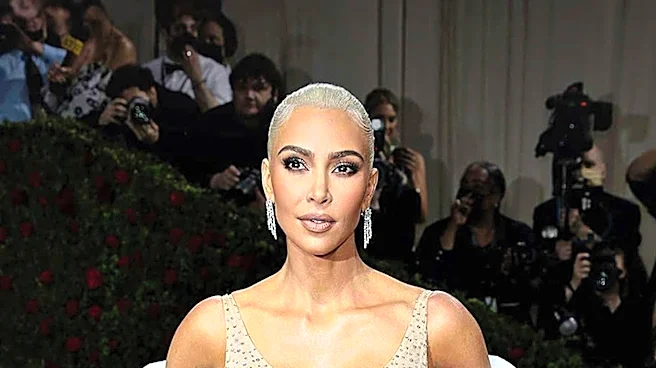
Kim Kardashian's decision to wear Marilyn Monroe's original 'Happy Birthday, Mr. President' gown to the 2022 Met Gala continues to be a subject of public debate. The Jean Louis dress, valued at over $10 million and previously worn only by Monroe since
1962, was loaned to Kardashian by Ripley's Believe It Or Not! To fit into the historic garment, Kardashian reportedly lost 16 pounds in three weeks through a regimen involving sauna suits, treadmill sessions, and a restricted diet. These comments drew widespread condemnation for promoting potentially unhealthy body image standards. Following the event, images circulated online suggesting damage to the gown, though both Kardashian and Ripley's Believe It Or Not! denied these allegations. The controversy surrounding the appropriateness of wearing such a historically significant and fragile artifact has persisted long after the gala.
Why It's Important?
This incident highlights the ongoing tension between fashion, historical preservation, and celebrity culture. Kardashian's choice to wear Monroe's gown sparked a significant debate about the ethics of using irreplaceable historical artifacts for temporary public display, raising questions about their conservation and respect for their original context. The controversy also brought renewed attention to the pressures of celebrity body image, with Kardashian's weight loss comments drawing criticism for potentially influencing young followers with unhealthy messaging. This event underscores the power of high-profile individuals to shape public discourse around fashion, history, and societal standards, and it serves as a case study in the challenges of balancing spectacle with responsibility in the entertainment industry. The debate also reflects broader societal values concerning the commercialization of historical items and the impact of celebrity actions on public health perceptions.
What's Next?
The debate surrounding the preservation of historical garments and the influence of celebrity actions on body image is likely to continue, potentially leading to stricter guidelines for the handling and display of such artifacts in the future. Museums and private collectors may re-evaluate their policies regarding loans of fragile items to ensure their long-term integrity. For celebrities, this incident could serve as a cautionary tale, prompting more careful consideration of the implications of their fashion choices and public statements. The ongoing discussion may also encourage a more critical examination of the fashion industry's role in promoting certain body ideals. The Met Gala itself, as a prominent cultural event, may face increased scrutiny regarding its themes and the choices made by its attendees, influencing future event planning and participant selections.
Beyond the Headlines
The controversy surrounding Kim Kardashian's Met Gala dress delves into deeper cultural and ethical considerations. It prompts reflection on the commodification of historical figures and their legacies, questioning whether iconic items should be treated as mere fashion statements or revered as irreplaceable cultural heritage. The intense public reaction also reveals a collective anxiety about the erosion of historical integrity in an age of rapid consumption and celebrity spectacle. Furthermore, the discussion about Kardashian's weight loss regimen touches upon the pervasive issue of body shaming and the unrealistic beauty standards often perpetuated by media and celebrity culture. This event serves as a microcosm of broader societal debates about authenticity, preservation, and the ethical responsibilities of those in the public eye, challenging audiences to consider the long-term impact of fleeting trends and sensationalism.