





What's Happening?
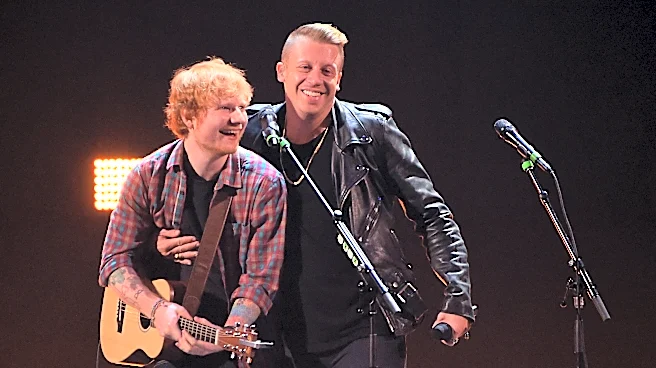
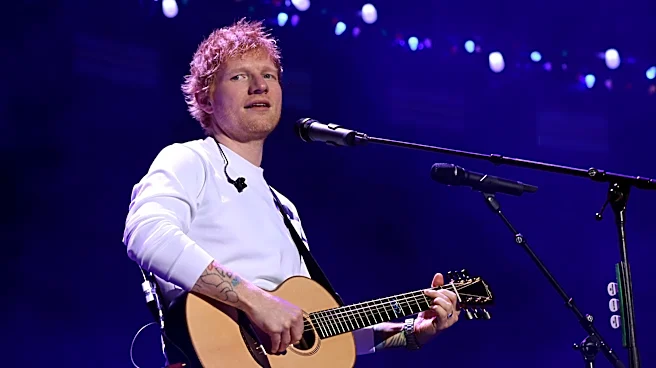
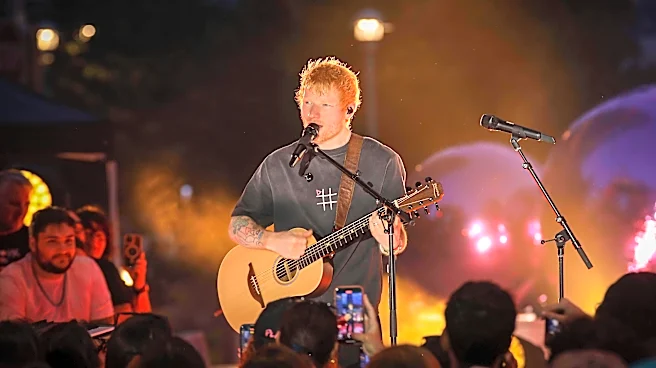
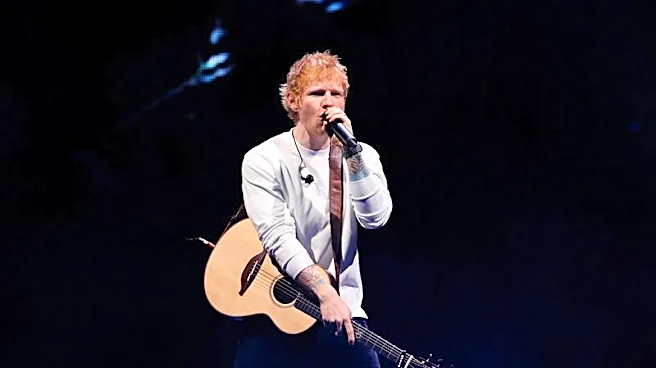
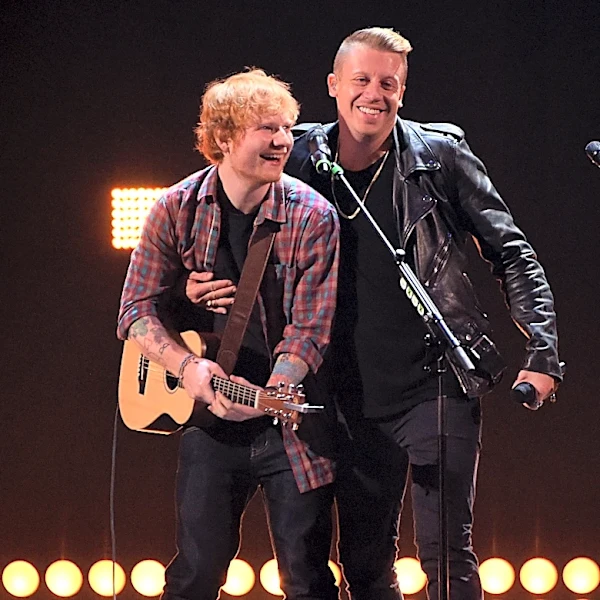
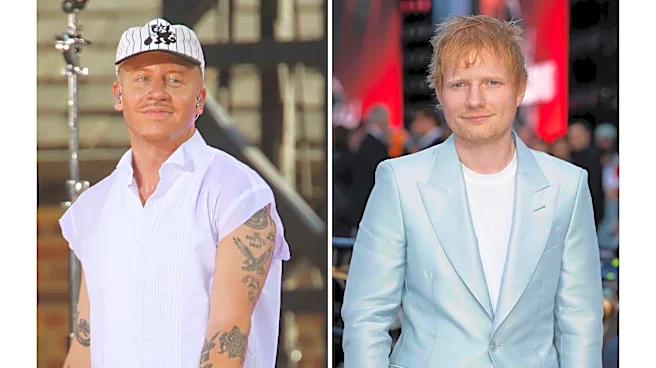
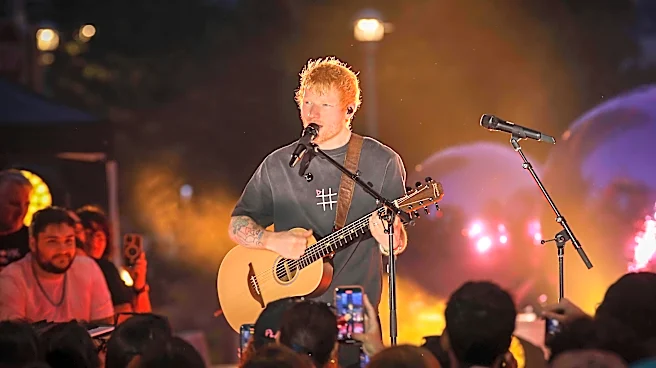
Classic Hits Radio, an independent Irish-owned radio station, has announced its decision to remove all Ed Sheeran music from its playlist. This action follows a controversy surrounding Sheeran's 'Loop Tour,' from which Macklemore, a support act, was removed
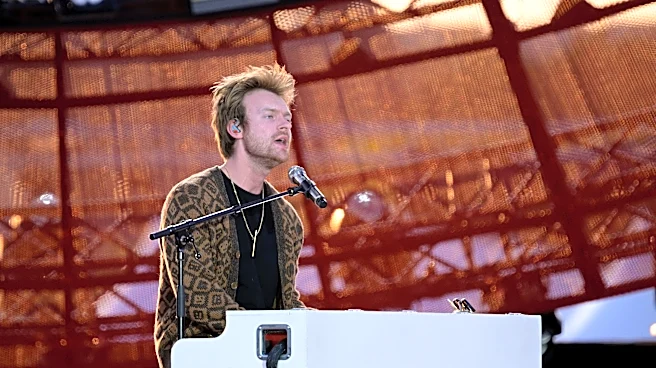
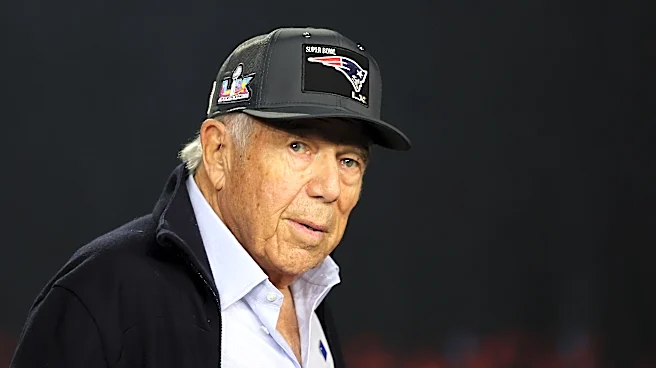
after making a 'Free Palestine' speech at a performance at MetLife Stadium. Macklemore subsequently claimed that businessman Bob Kraft orchestrated his removal. Ed Sheeran issued a statement asserting that the decision was not his and that he does not use his platform for politics, a claim that has been met with public skepticism due to past instances of his political engagement. Following Sheeran's statement, all three of his support acts and his own band quit the tour. Dave Kelly, group programme director at Bay Broadcasting, which operates Classic Hits Radio, stated that the decision was carefully considered and based on listener feedback and the actions of Irish artists involved in the tour. The station emphasized its belief in peace, humanity, respect, and artists' right to express their convictions.
Why It's Important?
This incident highlights the increasing pressure on public figures and media outlets to take stances on geopolitical issues, particularly in the context of the Israeli-Palestinian conflict. The removal of Ed Sheeran's music by Classic Hits Radio, an Irish station, underscores the global reach of such controversies and their impact on artists' careers and public perception. Sheeran's attempt to remain neutral or distance himself from political statements has backfired, leading to a loss of Instagram followers and a significant backlash, demonstrating that in today's polarized environment, neutrality can be perceived as a political stance in itself. The decision by the radio station, driven by listener response and the actions of other artists, reflects a growing demand from audiences for alignment with perceived moral or ethical positions. This event could influence how other artists and media organizations navigate sensitive political topics, potentially leading to more explicit endorsements or condemnations, or a more cautious approach to public statements, to avoid similar repercussions. It also showcases the power of collective public sentiment and artist solidarity in shaping media content and public discourse.
What's Next?
The immediate consequence for Ed Sheeran is the continued backlash and potential further impact on his career and public image, particularly in regions where the sentiment against his perceived neutrality is strong. Other radio stations and media outlets may follow Classic Hits Radio's lead, depending on their audience's reactions and their own corporate values. Sheeran may need to issue a more comprehensive statement or take a clearer stance to address the ongoing controversy and mitigate further damage. The incident could also prompt other artists to re-evaluate their public engagement with political issues, potentially leading to more artists either taking explicit political positions or, conversely, becoming more guarded in their public commentary. The music industry as a whole may face increased scrutiny regarding its artists' political affiliations and statements, and how these influence their commercial viability and media presence. This situation could also spark broader discussions about the role of artists as political commentators and the responsibilities of media platforms in curating content in politically charged environments.
Beyond the Headlines
This event delves into the complex interplay between celebrity, politics, and media in the digital age. Ed Sheeran's experience illustrates the 'cancel culture' phenomenon, where public figures face severe consequences for perceived missteps or insufficient alignment with popular social or political views. The expectation for celebrities to use their platforms for activism, even on complex international issues, has become a significant aspect of modern public life. This raises ethical questions about the extent to which artists should be compelled to take political stances and the potential for such pressures to stifle artistic expression or lead to performative activism. Furthermore, the incident highlights the fragmentation of media and public opinion, where different audiences and regions react distinctly to the same events, making it challenging for global artists to navigate a unified public image. The radio station's decision, framed as a response to its audience and a stand for 'peace, humanity and respect,' underscores the moral authority that media outlets increasingly claim in shaping public discourse, moving beyond mere entertainment provision. This trend suggests a future where cultural products are increasingly judged not just on artistic merit but also on their perceived ethical and political alignment.