




What's Happening?
At this year's US Open, professional tennis players are employing an unconventional method to alleviate muscle cramps: pickle juice. Dr. Melissa Leber, a sports medicine physician at Mount Sinai and the director of player medical services at the US Open, confirmed
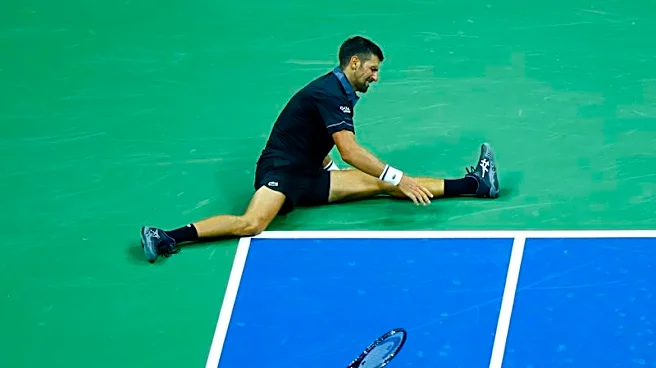
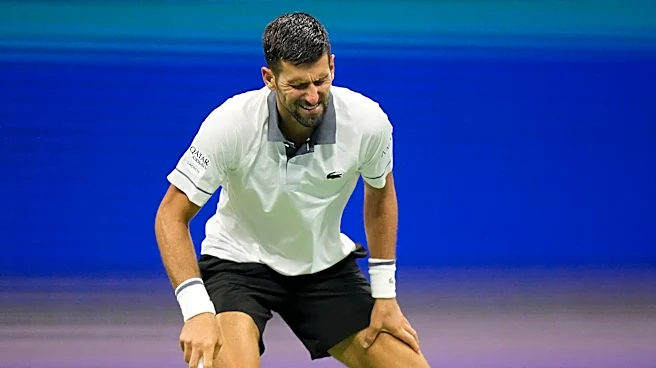
that Mount Sinai's medical team is providing this unique beverage. While traditional remedies for cramps include stretching, massage, hydration, and electrolytes, research suggests pickle juice may offer relief through a different mechanism. The theory posits that the acetic acid or vinegar in pickle juice stimulates sensory cell receptors in the mouth and throat, triggering a neurological reflex that helps reduce muscle cramping. This effect can occur within minutes, potentially faster than simply replacing electrolytes. Muscle cramps are a common issue for elite athletes, especially during intense exercise in hot conditions, making them a frequent challenge at the US Open.
Why It's Important?
The adoption of pickle juice by professional athletes at a high-profile event like the US Open highlights an evolving understanding of muscle cramp management in sports. This development is significant because it suggests that electrolyte imbalance is not the sole cause of all muscle cramps, as some individuals experience cramps even with normal electrolyte levels. For these cases, traditional sports drinks may not be sufficient. The rapid action of pickle juice, attributed to a neurological reflex rather than fluid or sodium replacement, offers a new tool in an athlete's arsenal for immediate relief. This could lead to improved performance and reduced downtime for athletes experiencing acute cramps, potentially influencing game outcomes and player careers. Furthermore, it underscores the continuous search for innovative, science-backed solutions in sports medicine to optimize athletic performance and recovery.
What's Next?
While the early evidence for pickle juice's effectiveness in treating acute muscle cramps is promising, the science is still developing. Dr. Leber emphasizes that pickle juice is best viewed as an acute treatment for cramps, not a daily hydration strategy or performance enhancer. It does not prevent dehydration or heat illness, which still require proper hydration, cooling, and medical evaluation. Future research will likely focus on further understanding the neurological mechanisms behind pickle juice's effect and identifying which types of cramps respond best to this treatment. Athletes and medical professionals will need to continue to integrate this new approach cautiously, considering individual health conditions, particularly due to the high sodium content in pickle juice. The ongoing evaluation will determine its long-term role in sports medicine and broader applications for individuals experiencing exercise-induced muscle cramps.
Beyond the Headlines
The use of pickle juice in professional sports transcends a simple hydration hack; it represents a broader shift towards exploring less conventional, yet scientifically plausible, methods for enhancing athletic well-being. This trend challenges established norms in sports nutrition and recovery, encouraging a more holistic and nuanced approach to athlete care. It also highlights the importance of empirical observation and anecdotal evidence in driving scientific inquiry, as the effectiveness of pickle juice has been noted by athletes for some time. The high sodium content of pickle juice, however, raises ethical considerations regarding its widespread recommendation, especially for individuals with pre-existing health conditions like hypertension or kidney disease. This necessitates careful medical guidance and personalized application, underscoring the complex interplay between performance enhancement, health, and individual physiology in elite sports.