






What's Happening?
Home Depot announced strong second-quarter results, surpassing Wall Street expectations and maintaining its full-year growth forecast. The company reported net sales of $47.9 billion, a 5.7% increase from the same period last year. A significant factor
contributing to these positive results was the receipt of $730 million in tariff refunds from the federal government during the quarter. These refunds are expected to help offset increased operational costs, including fuel and energy expenses. Despite a 5.3% rise in the cost of sales, Home Depot's performance was bolstered by consumers focusing on smaller home improvement projects. This trend is occurring amidst a 'frozen' housing market characterized by elevated mortgage rates and affordability issues, which are discouraging larger renovation projects and new home purchases.
Why It's Important?
Home Depot's financial performance serves as a key indicator for consumer spending and the health of the housing market in the U.S. The reported earnings boost, particularly from tariff refunds, highlights the significant financial impact of trade policies on large retailers. The $730 million in refunds demonstrates how government actions, even those related to past tariffs, can directly influence corporate profitability and operational costs. The shift in consumer behavior towards smaller home improvement projects, rather than large-scale renovations, reflects the current economic climate where high interest rates and inflation are impacting household budgets. This trend suggests that while consumers are still investing in their homes, they are doing so cautiously. For the broader economy, this indicates a potential slowdown in major housing-related expenditures, which could affect various sectors tied to construction and real estate.
What's Next?
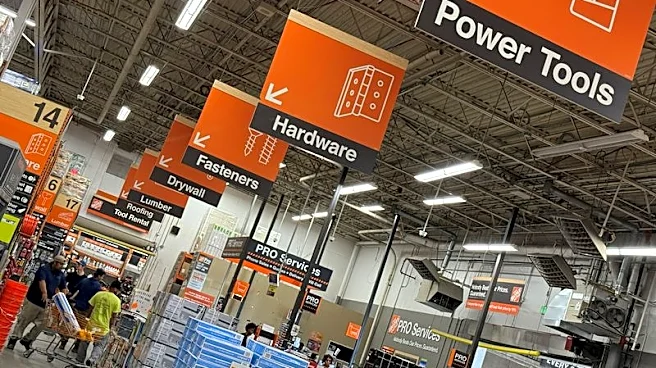
Home Depot plans to continue monitoring its input costs, including energy and fuel, as these factors will influence future profitability. The company's ability to maintain its full-year growth forecast suggests confidence in its strategy of catering to smaller home improvement projects and professional contractors. However, the 'frozen' housing market, driven by elevated mortgage rates and affordability challenges, is expected to persist, potentially limiting a return to larger renovation spending. The company will likely continue to focus on categories that support these smaller projects, such as hand tools, fasteners, decking, and concrete. The ongoing trade discussions and potential for new tariffs or tariff adjustments could also impact future operational costs and the availability of tariff refunds, making it a critical area for the company to monitor.
Beyond the Headlines
The substantial tariff refunds received by Home Depot shed light on the complex and often delayed financial repercussions of trade policies. While tariffs are designed to protect domestic industries or address trade imbalances, their implementation can lead to significant costs for importers, which are sometimes recouped later. This situation underscores the dynamic nature of international trade and its direct impact on corporate balance sheets. Furthermore, the shift in consumer spending towards smaller home improvement projects reflects a broader economic adaptation. In times of economic uncertainty, consumers often prioritize essential maintenance and minor upgrades over major investments. This trend could have long-term implications for product development and marketing strategies within the retail and home improvement sectors, emphasizing affordability and immediate utility. The reliance on professional contractors for a significant portion of sales also highlights the resilience of the professional segment even when individual consumer spending on large projects is constrained.