



What's Happening?
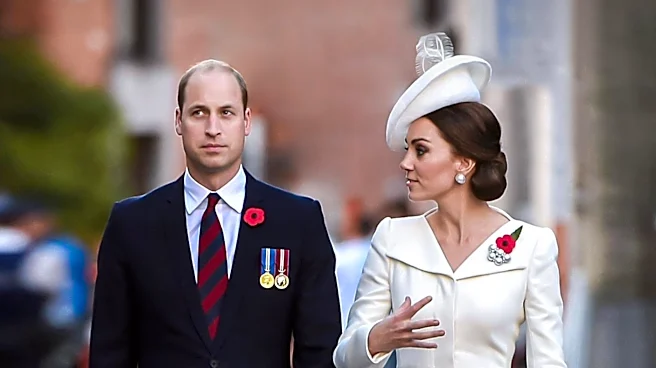
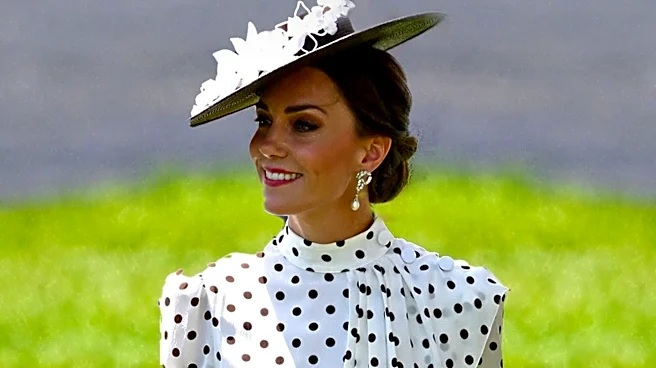
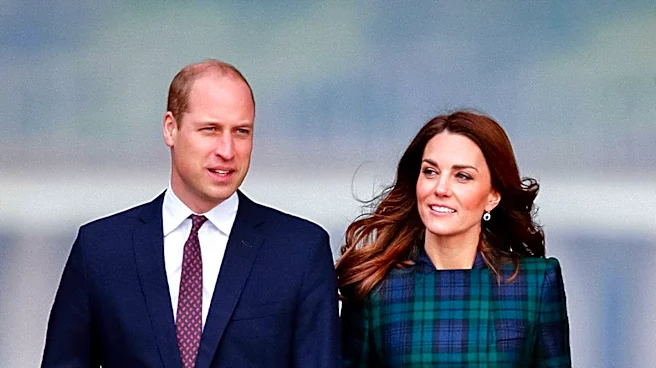
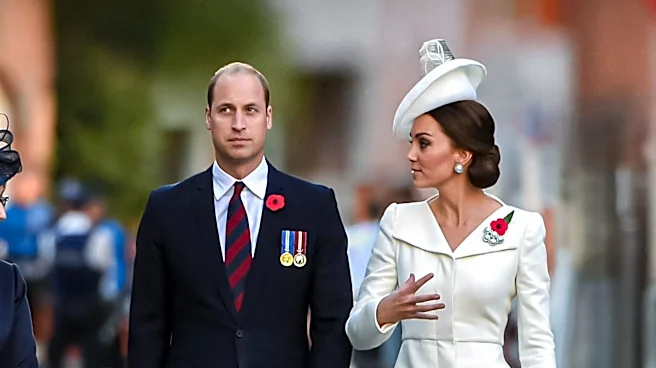
Kate Middleton, the Princess of Wales, recently attended the annual Festival of Remembrance at London's Royal Albert Hall alongside Prince William and other members of the royal family. For the occasion, she chose to rewear a black-and-white polka-dot
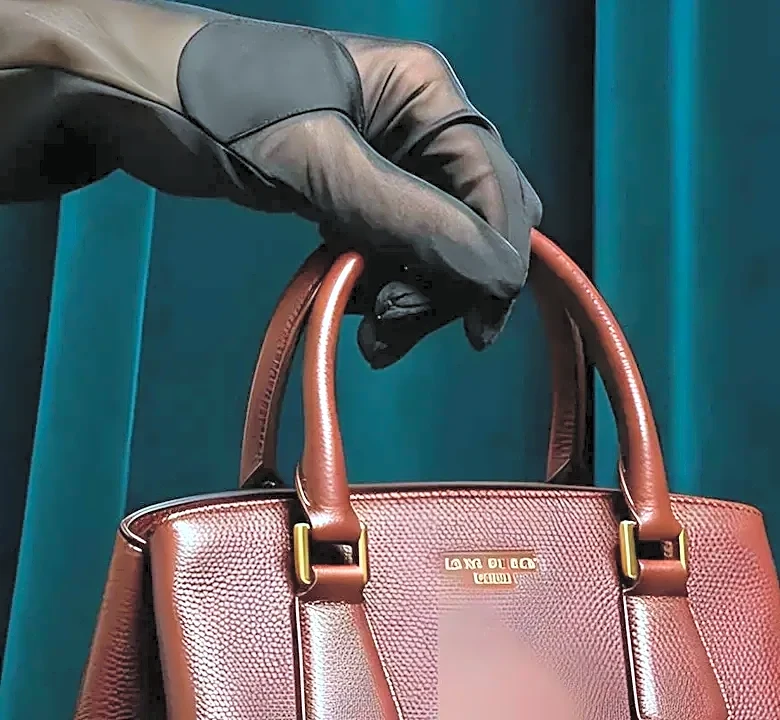
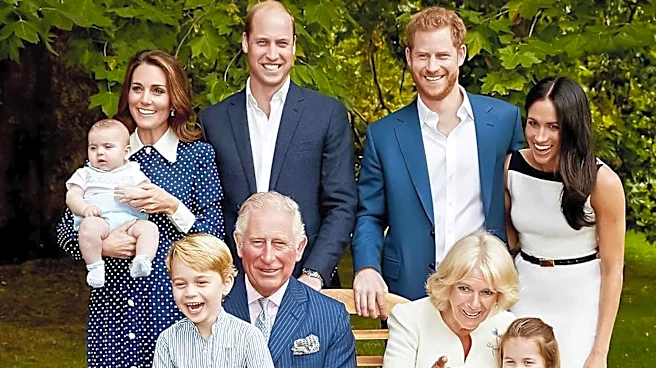
dress by Alessandra Rich. The dress, featuring long sleeves, a high neckline, and a pleated midi skirt, was previously worn by Kate at Prince Philip's memorial service in March 2022. This time, she made a slight alteration by removing the shoulder buttons, giving the dress a subtly different appearance. She accessorized the outfit with a black suede belt, pointed slingbacks, a velvet clutch, a bespoke red remembrance poppy from Lock & Co. Hatters, her Irish Guards regimental brooch, and diamond earrings that once belonged to the late Queen Elizabeth II. This rewear highlights a trend of sustainable fashion choices within the royal family.
Why It's Important?
Kate Middleton's decision to rewear a significant outfit for a public event underscores a growing emphasis on sustainable fashion and mindful consumption, even among high-profile figures. This practice can influence public perception and encourage consumers to consider the longevity and reusability of their clothing rather than constantly seeking new items. For the fashion industry, this trend could signal a shift towards valuing classic, durable designs over fast fashion, potentially impacting production cycles and marketing strategies. Her choice also demonstrates how personal style can be adapted and refreshed through minor alterations and different accessories, offering practical inspiration for individuals looking to maximize their existing wardrobes. The inclusion of meaningful accessories, such as the remembrance poppy and Queen Elizabeth II's earrings, adds layers of personal and historical significance to her public appearance.
What's Next?
The continued public display of re-worn outfits by influential figures like Kate Middleton is likely to further normalize and popularize sustainable fashion practices. This could lead to increased demand for versatile, high-quality garments that can be styled in multiple ways and for various occasions. Fashion brands might respond by emphasizing the durability and timelessness of their collections, potentially shifting away from purely trend-driven designs. Consumers may become more conscious of their purchasing habits, seeking out pieces that offer longevity and can be integrated into a capsule wardrobe. Additionally, the media's focus on such choices could inspire more discussions around environmental responsibility in the fashion industry and encourage individuals to adopt more eco-friendly approaches to their personal style.
Beyond the Headlines
Kate Middleton's rewear of the polka-dot dress extends beyond a simple fashion choice; it reflects a broader cultural movement towards sustainability and conscious living. In an era of rapid consumption and environmental concerns, her actions provide a visible example of how public figures can champion responsible practices. This approach also subtly challenges the expectation for celebrities to constantly showcase new and expensive attire, promoting a more relatable and accessible image. The act of re-wearing, especially for significant events, can also be seen as a form of quiet rebellion against the pressures of fast fashion and the 'always new' mentality, fostering a deeper appreciation for personal style, history, and resourcefulness. It highlights that true elegance can be found in thoughtful choices rather than endless acquisition.