


What's Happening?
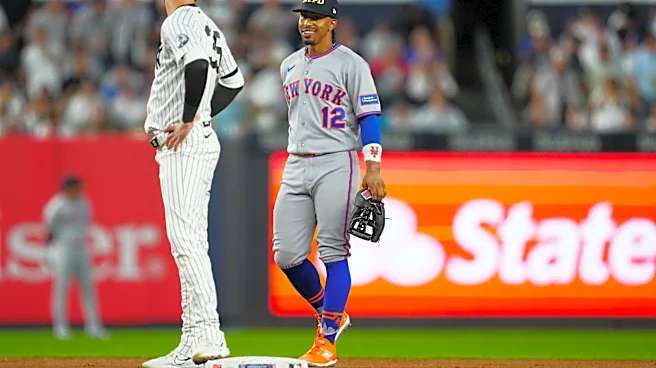
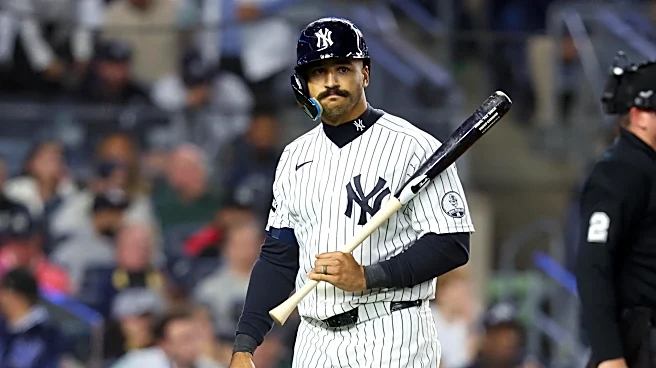
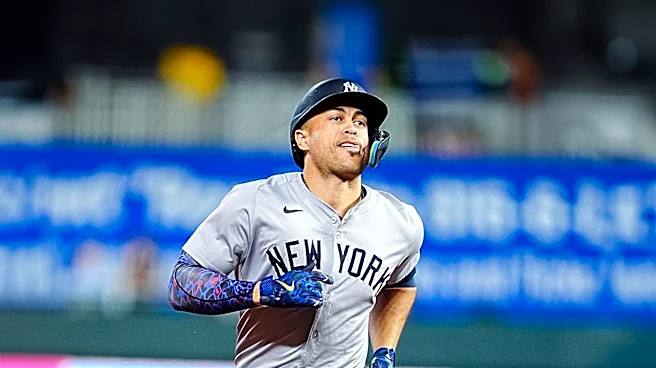
A recent proposal by Sportsnaut suggested a trade involving New York Yankees slugger Giancarlo Stanton and Mets infielder Jorge Polanco. This idea, however, is not a confirmed negotiation but rather an outside trade concept. A significant obstacle to any
potential trade is Stanton's full no-trade clause, which requires his approval for any move. Financially, the comparison between Stanton and Polanco's contracts is complex. FanGraphs lists Polanco's 2027 salary at $23 million, while Stanton's 2027 salary is $25 million, with the Miami Marlins paying the Yankees $10 million annually from 2026 through 2028. This Marlins subsidy would reduce the Mets' cash burden for Stanton to $15 million in 2027, creating a potential $8 million difference against Polanco's salary, assuming the subsidy transfers with the trade. Additionally, Stanton has a $25 million club option for 2028 with a $10 million buyout, which must be factored into any evaluation.
Why It's Important?
This trade idea highlights the intricate financial and strategic considerations involved in high-profile MLB player movements, particularly when no-trade clauses and multi-team financial arrangements are in play. For the Mets, acquiring Stanton would mean committing a significant portion of their designated hitter spot to a player with a history of calf injuries, raising questions about his availability and consistent production. While Stanton offers considerable power, the Mets would need to weigh this against the flexibility lost in the DH role, which can otherwise be used for resting regulars and optimizing matchups. The departure of Polanco would also necessitate a plan for covering his infield assignments, further complicating the roster construction. This scenario underscores how a trade's success depends not just on a player's reputation but also on their health, contractual obligations, and fit within the team's broader strategic needs.
What's Next?
For this trade idea to progress beyond a hypothetical discussion, several key developments would be necessary. First, credible reports of actual team discussions between the Mets and Yankees would need to emerge. Second, Giancarlo Stanton's willingness to approve such a move, given his full no-trade clause, is paramount. Without his consent, no trade can occur. Third, specific details regarding the transfer of the Miami Marlins' annual $10 million payment to the Yankees, and whether this subsidy would follow Stanton to the Mets, would need to be clarified. Until these pieces of information become available, the focus remains on the complex contractual and roster implications rather than the immediate prospect of a deal. The proposal currently serves as a point of offseason debate, emphasizing the challenges of exchanging expensive veteran players.
Beyond the Headlines
The discussion around a potential Stanton-Polanco trade delves into the deeper complexities of modern professional sports contracts and player empowerment. The no-trade clause, a common feature in high-value player contracts, grants athletes significant control over their careers, shifting some power dynamics from clubs to players. This scenario also illustrates the long-term financial ripple effects of past contracts, such as the Marlins' ongoing payments to the Yankees for Stanton, which can influence future trade possibilities. Beyond the immediate financial and performance considerations, such trades can have cultural impacts on fan bases, particularly between rival teams like the Mets and Yankees. The debate also touches on the evolving role of the designated hitter in baseball, moving from a position primarily for power hitters to one that offers strategic flexibility for managing player fatigue and optimizing lineups.