




What's Happening?
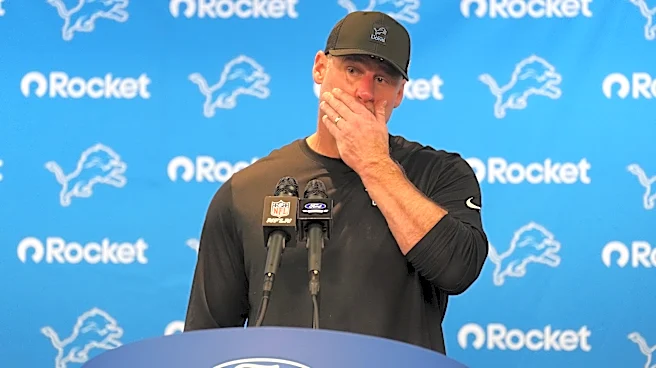
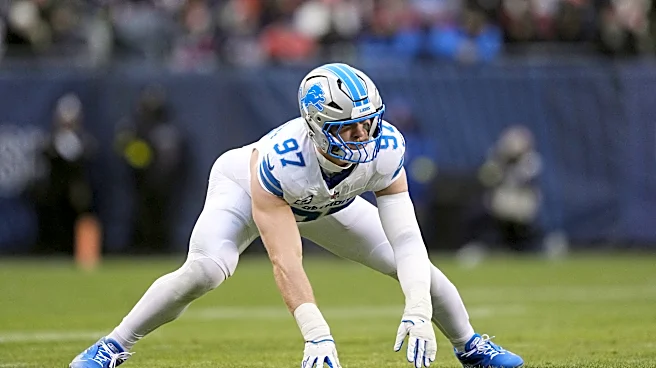
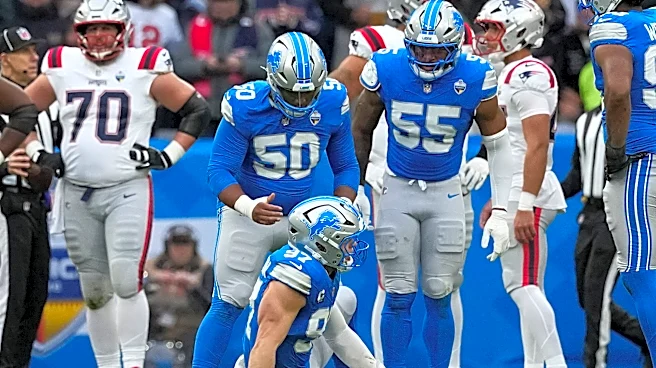
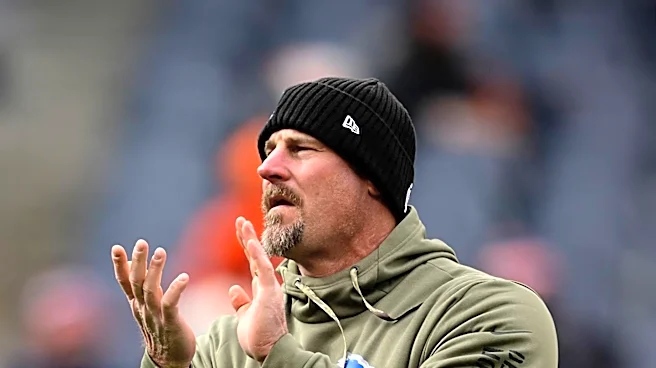
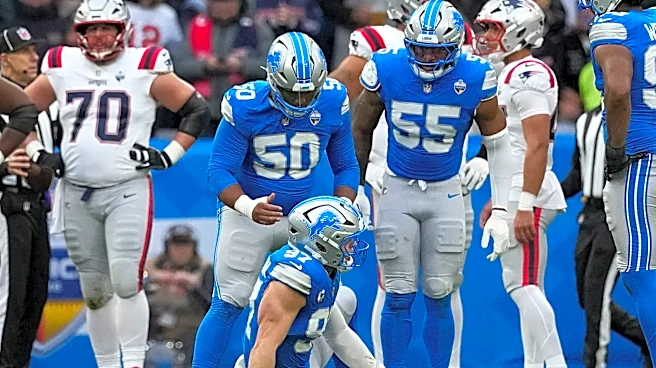
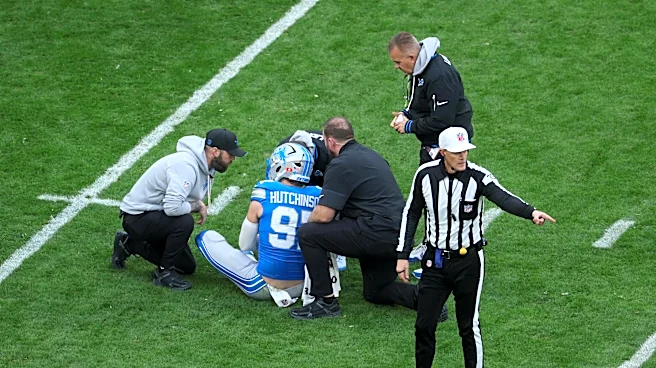
Detroit Lions coach Dan Campbell has publicly stated his refusal to 'wallow in what ifs' concerning recent significant injuries to key players, including linebacker Jack Campbell (neck) and defensive end Aidan Hutchinson (knee). Speaking to reporters,
Campbell emphasized that dwelling on hypothetical scenarios due to injuries can lead to a negative mindset, which he is determined to avoid for himself and his team. He acknowledged the immediate sting of losing important players but stressed the necessity of moving forward. Campbell articulated a clear message to his team: the injuries to Jack Campbell and Hutchinson will not be in vain, and the remaining players must step up to fill the void and ensure their contributions are not wasted. This approach underscores a resilient team philosophy focused on adaptability and collective effort.
Why It's Important?
Coach Campbell's stance is crucial for maintaining team morale and focus, especially in the demanding environment of professional football where injuries are an inevitable part of the game. By rejecting a 'woe is us' mentality, he sets a precedent for resilience and accountability within the Detroit Lions organization. This leadership approach can prevent a downward spiral of negativity that often accompanies significant player losses, instead fostering a culture where every player is prepared to contribute. The emphasis on the 'next man up' strategy highlights the importance of roster depth and player development, as teams must be able to perform effectively even when star players are sidelined. This philosophy is vital for sustained success in the NFL, where player availability can fluctuate rapidly.
What's Next?
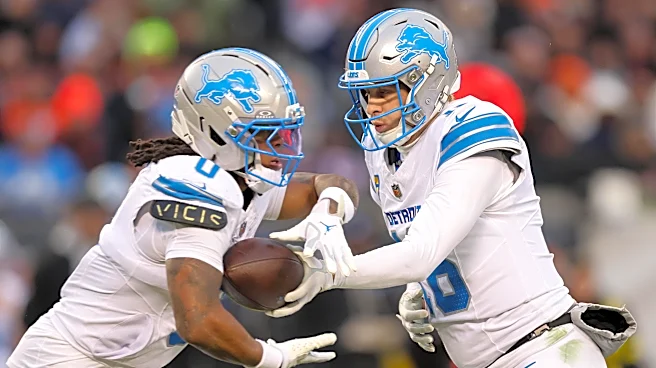
The Detroit Lions will now need to fully implement the 'next man up' philosophy as they navigate the remainder of their season without key defensive players like Jack Campbell and Aidan Hutchinson. This will involve other players stepping into more prominent roles, potentially leading to shifts in defensive schemes and increased pressure on less experienced individuals. Coach Campbell's firm stance suggests that the team will not seek excuses but will instead focus on maximizing the potential of its current roster. The performance of the Lions in the coming weeks will be a test of their depth and the effectiveness of this resilient mindset. The coaching staff will be tasked with preparing replacement players to perform at a high level, ensuring the team remains competitive despite the setbacks.
Beyond the Headlines
Coach Campbell's leadership in the face of adversity offers insights into effective crisis management within high-performance teams. His refusal to engage in 'what ifs' and his focus on actionable solutions reflect a pragmatic approach that can be applied beyond sports. This mindset fosters a culture of proactive problem-solving rather than reactive lamentation, which is critical for any organization facing unexpected challenges. The situation also subtly highlights the economic implications of player injuries in professional sports, where significant investments in athletes can be temporarily sidelined, forcing teams to rely on less costly, often less experienced, alternatives. This dynamic underscores the constant balancing act between talent acquisition, player development, and risk management in professional sports franchises.