





What's Happening?
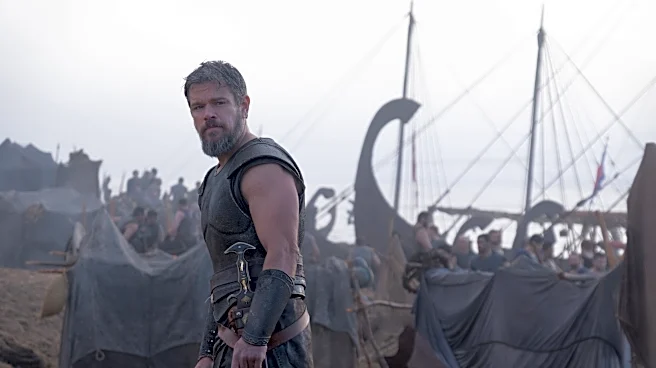
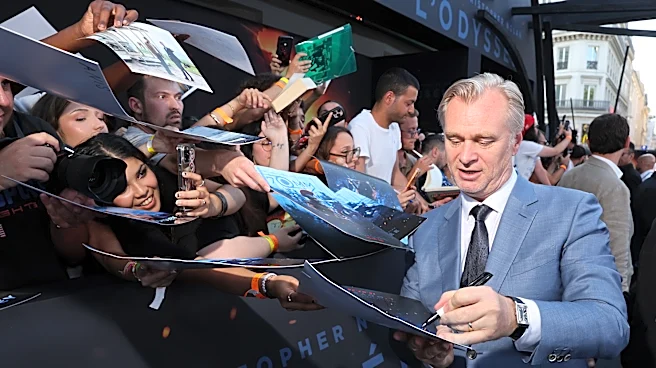
Christopher Nolan's latest film, 'The Odyssey,' has achieved a significant milestone by grossing over $260 million worldwide during its opening weekend. The film, which was shot across six countries, features a star-studded cast including Matt Damon,
Anne Hathaway, Zendaya, and Tom Holland. Nolan, known for his dedication to cinematic authenticity, shot the entire film in IMAX 70mm format, a first for a commercial feature. The production faced numerous challenges, including filming in remote and difficult locations, which Nolan and the cast described as more akin to an expedition than a traditional movie shoot. Despite these challenges, the film has been met with critical acclaim, with audiences praising its visual and narrative depth.
Why It's Important?
The success of 'The Odyssey' underscores Christopher Nolan's influence in the film industry and his ability to draw audiences to theaters, a significant achievement in an era where streaming services dominate. The film's use of IMAX 70mm format highlights a commitment to traditional cinema experiences, potentially influencing future productions to prioritize theatrical releases. Additionally, the film's international success reflects the global appeal of Nolan's storytelling and the continued viability of large-scale, high-budget films in the global market. This success may encourage studios to invest in similar ambitious projects, impacting the types of films that receive funding and distribution.
What's Next?
Following its successful debut, 'The Odyssey' is expected to continue its strong box office performance, potentially setting new records for Nolan's career. The film's reception may lead to increased interest in IMAX screenings, prompting theaters to expand their capabilities to accommodate such formats. Additionally, the film's themes and execution could spark discussions within the industry about the balance between digital and traditional filmmaking techniques. As audiences and critics continue to engage with the film, it may also influence future adaptations of classic literature, encouraging filmmakers to explore innovative approaches to well-known stories.