





What's Happening?
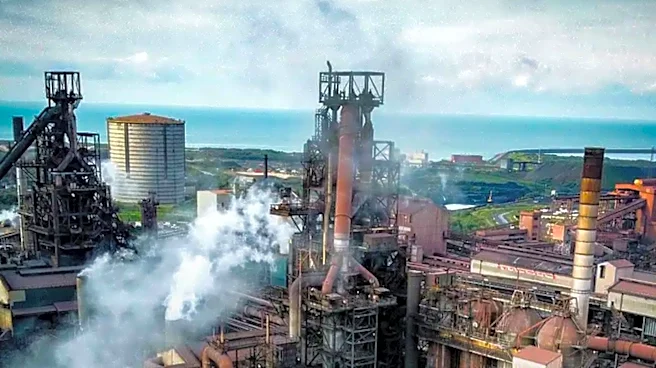
Australia's Whyalla Steelworks is set to cut approximately 500 jobs, with an additional 100 contract workers also being let go. This decision follows the government's announcement that it will not fund the restart of the 60-year-old blast furnace at the plant.
The Whyalla Steelworks, which was responsible for producing 75% of Australia's structural steel in 2024 and is the country's sole producer of long steel products, was placed into administration last year. Efforts to restart the blast furnace, which had been ongoing for several months, were unsuccessful. The plant has faced significant financial and legal troubles since 2021, when its owner, GFG Alliance, experienced the collapse of its main lender, Greensill Capital. The steelworks accumulated debts of US$828 million after a series of outages in 2024 and 2025. The administrator, KordaMentha, confirmed the decision, stating it is a necessary step as the company transitions to modern steelmaking technologies, with plans to replace the existing coal-fired blast furnace with a lower-carbon electric arc furnace (EAF).
Why It's Important?
The closure of the blast furnace and the subsequent job cuts at Whyalla Steelworks represent a significant shift in Australia's steel industry and have broader implications for the country's manufacturing sector. As the primary producer of structural steel and the only Australian source of long steel products, the plant's operational changes will impact domestic supply chains and potentially increase reliance on imported steel. The move towards a lower-carbon electric arc furnace (EAF) reflects a global trend in industrial decarbonization, highlighting the economic pressures and environmental considerations driving such transitions. While this decision aims to modernize the facility and secure its long-term future, the immediate job losses will have a substantial socio-economic impact on the Whyalla region. The Australian government's involvement, including a AUD$1.9 billion sovereign steel package, underscores the strategic importance of maintaining a domestic steel production capability, even as it navigates the challenges of an aging infrastructure and financial distress.
What's Next?
The administrator, KordaMentha, will now focus on selling the Whyalla Steelworks, which will operate without an operational blast furnace. Several potential buyers have emerged, including M Resources and Jindal Steel, who are understood to be the final bidders. The sale process is crucial for the plant's future, with plans to implement new capital and equipment, specifically a lower-carbon electric arc furnace (EAF) and associated infrastructure. The State and Federal Governments are actively working to secure a new owner with the capacity to deliver these modern steelmaking facilities, aiming to underpin Whyalla's long-term viability. Workers affected by the job cuts are expected to have their entitlements paid in full, as assured by South Australia's Premier Peter Malinauskas. The transition to new steelmaking technologies is anticipated to reshape the plant's operations and its role in the Australian steel market.
Beyond the Headlines
The situation at Whyalla Steelworks extends beyond immediate job losses and financial restructuring, touching upon the broader challenges of industrial legacy and environmental sustainability. The decision to replace a 60-year-old coal-fired blast furnace with an electric arc furnace signifies a critical juncture in the global effort to reduce industrial carbon emissions. This transition, while economically challenging in the short term, positions the plant for a more sustainable future in an increasingly carbon-conscious world. The reliance on stockpiles and externally sourced semi-finished steel products during this transitional phase highlights the vulnerabilities in domestic manufacturing when core infrastructure is undergoing modernization. Furthermore, the involvement of international heavyweights in potential consortiums for lower emissions iron production in Australia suggests a growing global interest in green steel initiatives and the strategic importance of Australia's resources in this evolving landscape. The long-term success of this transition will serve as a case study for other aging industrial facilities grappling with similar pressures.