





What's Happening?
Director Christopher Nolan, known for his meticulous approach to filmmaking, has once again employed a unique method to prepare his cast and crew for his latest project, 'The Odyssey.' Before filming began, Nolan organized screenings of three classic
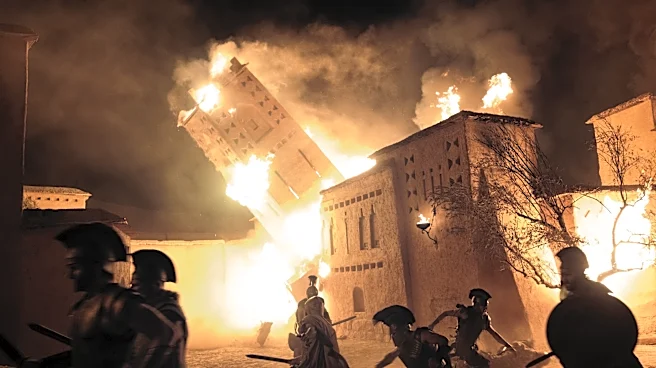
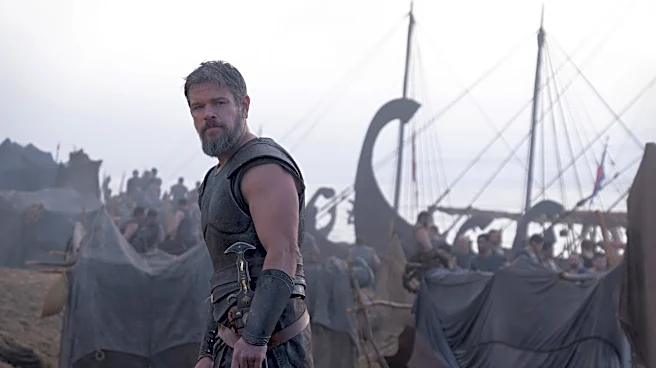
films to inspire the team. The films included Andrei Tarkovsky’s 'Andrei Rublev,' Akira Kurosawa’s 'Ran,' and Martin Scorsese’s 'The Last Temptation of Christ.' Nolan explained that these films were chosen for their 'textures' and indirect influences that could enhance the storytelling of 'The Odyssey,' an adaptation of the Homeric epic. The film stars Matt Damon as Odysseus, Anne Hathaway as Penelope, and Tom Holland as Telemachus, and it marks the first feature to be shot entirely on IMAX film cameras, a technical feat made possible by advancements in camera technology.
Why It's Important?
Nolan's approach underscores the importance of creative inspiration in filmmaking, particularly when adapting a story as complex and storied as 'The Odyssey.' By drawing on the visual and thematic elements of classic films, Nolan aims to bring a fresh perspective to the ancient tale. This method not only highlights the director's commitment to cinematic excellence but also sets a precedent for how historical and literary adaptations can be approached in modern cinema. The use of IMAX technology further emphasizes the film's ambition, promising a visually immersive experience that could redefine audience expectations for epic storytelling. The success of Nolan's previous film, 'Oppenheimer,' has provided him with the opportunity to push the boundaries of filmmaking, potentially influencing future projects in the industry.
What's Next?
As 'The Odyssey' moves into production, anticipation builds around how Nolan will interpret the classic tale and how the film will be received by audiences and critics alike. The use of IMAX cameras suggests a focus on grand, sweeping visuals that could set a new standard for epic films. The film's release will likely spark discussions on the adaptation of classical literature in cinema and the role of technology in enhancing storytelling. Additionally, the film's success could influence other filmmakers to explore similar methods of preparation and inspiration, potentially leading to a resurgence of interest in classic films as a source of creative influence.