





What's Happening?
Delta Air Lines CEO Ed Bastian has articulated an ambitious goal: to position Delta among the world's top-tier airlines, specifically mentioning carriers like Singapore Airlines and Emirates. This aspiration was shared during an appearance on the Airlines Confidential
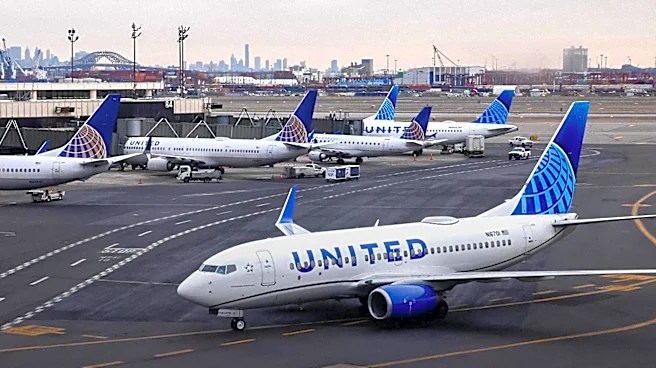
podcast. Bastian expressed his desire for Delta to be recognized as a global leader, moving beyond its current perception primarily as a leader in the U.S. travel industry. He noted that while U.S. carriers traditionally benchmarked themselves against each other, there's a growing trend among U.S. airline CEOs, including United CEO Scott Kirby, to look towards Asian and Middle Eastern airlines as the new standard for excellence. Bastian believes Delta has already established many world-class elements, such as its Delta One Lounges and a strong service culture, but acknowledges there is still work to be done to achieve the consistency and luxury details offered by the global elite.
Why It's Important?
This strategic shift by Delta Air Lines, and potentially other major U.S. carriers, signifies a significant evolution in the competitive landscape of the global airline industry. By aiming to match the service and luxury standards of airlines like Singapore Airlines and Emirates, Delta is signaling a commitment to enhancing the passenger experience, particularly in premium cabins. This could lead to increased investment in cabin products, ground services, and overall service choreography, benefiting U.S. travelers seeking higher quality air travel. For the U.S. airline industry, this ambition could spur greater innovation and competition, potentially raising the bar for all domestic carriers. However, achieving this level of luxury and consistency, which often involves substantial investment and operational changes, will be a considerable challenge for Delta, given the varying quality of its current fleet and services.
What's Next?
Delta Air Lines is expected to continue its efforts to enhance its premium offerings and service consistency to align with its CEO's vision. This may involve further upgrades to its fleet, expansion of its Delta One Lounge network, and refinement of its in-flight service protocols. The company's focus on leveraging artificial intelligence to improve profitability by 50%, moving its operating margin from 10% to 15%, suggests that AI will play a crucial role in optimizing operations, maintenance, crew scheduling, and fuel efficiency. While these AI applications could lead to more efficient and potentially better service, Bastian's comments on AI making 'better revenue decisions' also hint at more sophisticated pricing and individualized merchandising, which could impact consumers through tailored offers and potentially higher costs for certain services.
Beyond the Headlines
The ambition to compete with global luxury carriers like Singapore Airlines and Emirates extends beyond mere service upgrades; it touches upon the perception and branding of U.S. airlines on the international stage. Historically, U.S. carriers have often been perceived as more focused on efficiency and cost-effectiveness rather than luxury and bespoke service. Delta's stated goal, mirrored by United's CEO, suggests a cultural shift towards prioritizing a more refined and consistent premium experience. This could lead to a re-evaluation of what constitutes 'world-class' air travel for U.S. passengers and potentially influence consumer expectations across the industry. The ethical implications of using AI for 'better revenue decisions' also warrant attention, as it raises questions about personalized pricing and whether such advancements will ultimately benefit or disadvantage consumers.