


What's Happening?
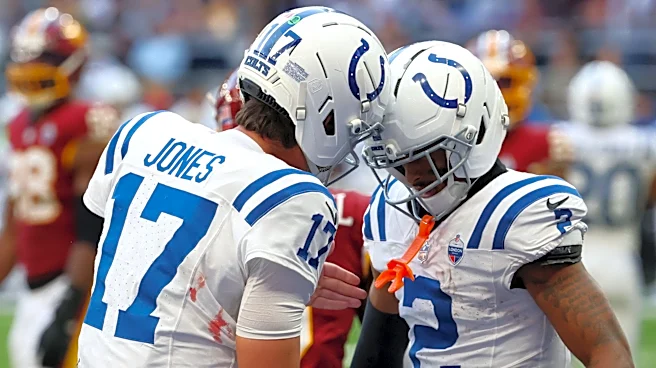
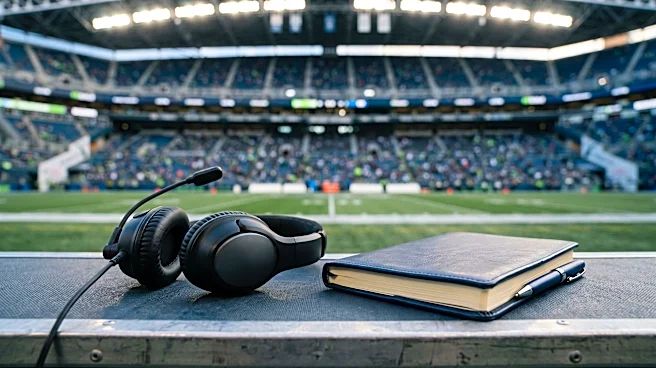
Carlie Irsay-Gordon, owner of the Indianapolis Colts, has drawn attention for her practice of taking notes and listening to coaches via a headset from the sidelines during games. This active, on-field presence has ignited a discussion regarding her leadership
style. Some observers view her approach as an unorthodox yet potentially beneficial method for gaining deeper understanding and informing her decision-making process. Conversely, others question whether her direct involvement on the sidelines might inadvertently interfere with the coaching staff or team dynamics. The debate centers on whether this hands-on style is an effective way for a high-level executive to lead a multi-billion dollar organization like an NFL team, or if it creates an unnecessary layer of scrutiny for those directly managing the game. The sources highlight that there is no definitive consensus on whether her presence is ultimately advantageous or detrimental to the team's performance and internal operations.
Why It's Important?
This situation is important as it raises fundamental questions about leadership and management in high-stakes, high-profile organizations, particularly within the U.S. sports industry. The NFL, as a major American institution, operates under intense public and media scrutiny, and the leadership styles of its owners can significantly influence team culture, performance, and public perception. Irsay-Gordon's approach challenges traditional executive roles, where owners typically observe from private boxes rather than the sidelines. Her method could be seen as a model for increased owner engagement, potentially leading to more informed strategic decisions, or it could be viewed as a form of micromanagement that undermines the autonomy of coaches and general managers. The outcome of this debate could influence how other sports franchise owners, and even leaders in other industries, perceive the value and risks of highly visible, hands-on leadership. It also touches on broader discussions about gender in leadership, as some commentators suggest a potential bias in the questioning of her methods due to her being a woman in a male-dominated field.
What's Next?
The discussion surrounding Carlie Irsay-Gordon's leadership style is likely to continue as long as she maintains her active sideline presence. Future team performance, particularly the Colts' success or struggles, will undoubtedly be linked by some to her involvement, whether fairly or not. If the Colts achieve significant success, her method might be lauded as innovative and effective, potentially inspiring other owners to adopt similar hands-on approaches. Conversely, if the team underperforms, her sideline presence could become a focal point of criticism, with suggestions that it creates undue pressure or distraction. Stakeholders, including fans, media, and other NFL executives, will continue to observe and comment on the impact of her unique leadership. The ongoing dialogue may also prompt further academic or professional discussions on the optimal balance between executive oversight and operational autonomy within complex organizational structures.
Beyond the Headlines
Beyond the immediate discussion of team performance, Irsay-Gordon's approach delves into the deeper psychological and cultural aspects of leadership. Her stated intention to 'listen, really to understand' and 'ask questions' reflects a desire for deep engagement, which can be a powerful tool for leaders. However, the inherent power dynamic between an owner and their employees means that even well-intentioned curiosity can be perceived as pressure or a directive. This highlights the delicate balance leaders must strike between being present and being intrusive. The situation also brings to light the evolving nature of leadership in modern organizations, where traditional hierarchies are sometimes challenged by more collaborative or immersive styles. It prompts reflection on how leaders can foster trust and empower their teams while remaining informed and engaged, especially in environments where their presence inherently alters dynamics. The public nature of this debate in the NFL offers a unique case study for understanding the complexities of leadership perception and effectiveness.