



What's Happening?
Actor Danny Trejo has issued a clarification regarding his stance on immigration enforcement after facing criticism for his role in an upcoming film produced by Ben Shapiro's media company, The Daily Wire. The film, titled 'Pawn Shop,' reportedly portrays
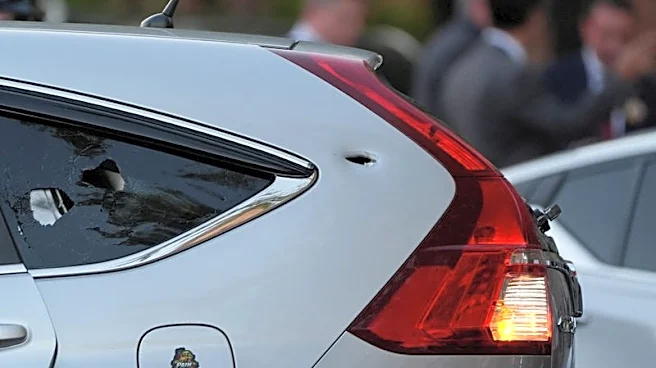
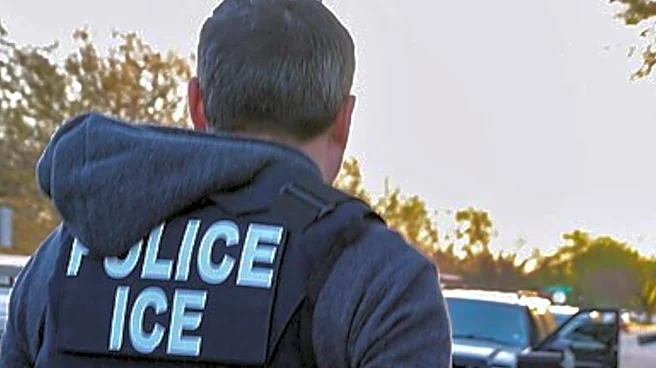
an Immigration and Customs Enforcement (ICE) officer attempting to survive a violent confrontation with protesters. Trejo, known for his role in 'Machete,' stated on Instagram on October 9 that he is a proud Mexican and a supporter of his community and immigrants, emphasizing, 'I am not pro-ICE.' He asserted that his participation in the film is part of his job as an actor to tell a story, and he was interested in portraying a Latino military veteran in a positive light. In the movie, his character owns a pawn shop in Minneapolis where an ICE officer seeks refuge. The controversy extends beyond Trejo's casting, with footage obtained by TMZ reportedly showing the production recreating the fatal ICE shooting of Renee Good, drawing further scrutiny. Filming in Livingston, Montana, was temporarily halted on October 3 due to resident complaints about disruptions and insufficient warnings about stunts, but permits were reinstated on October 5.
Why It's Important?
This situation highlights the increasing intersection of entertainment, political messaging, and social issues in the U.S. The casting of a prominent Latino actor like Danny Trejo in a film with perceived 'pro-ICE' messaging, especially one produced by a conservative media company, sparks significant debate within various communities. For the entertainment industry, it underscores the potential for actors to face public scrutiny over their roles, particularly when those roles touch on sensitive political or social topics. For audiences, it raises questions about artistic intent versus perceived political endorsement. The controversy also reflects broader societal divisions regarding immigration policy and the role of law enforcement agencies like ICE. The reported recreation of a fatal ICE shooting within the film's production further intensifies these discussions, bringing ethical considerations about dramatizing real-world tragedies into the spotlight. This event demonstrates how creative works can become flashpoints for larger cultural and political conversations, impacting public perception of both the artists involved and the issues depicted.
What's Next?
The film 'Pawn Shop' is expected to continue production, with filming having resumed after a temporary halt. As the movie progresses towards release, it is likely to face continued scrutiny and debate, particularly given its sensitive subject matter and the political affiliations of its production company. Danny Trejo may continue to address public concerns about his role, potentially reiterating his personal stance on immigration and his artistic motivations. The film's eventual release will likely reignite discussions about its portrayal of ICE, immigration, and the use of real-world events in fictional narratives. Audiences, critics, and advocacy groups will be watching closely to assess the film's message and its impact. The incident also serves as a reminder for film productions to carefully consider community relations and public perception, especially when filming in residential areas or depicting controversial events.
Beyond the Headlines
The controversy surrounding Danny Trejo's role in 'Pawn Shop' delves into deeper implications concerning artistic freedom, an actor's responsibility, and the political weaponization of media. It raises questions about whether an actor's personal beliefs should dictate their professional choices, especially when those choices align with narratives that are politically charged or socially divisive. This incident also highlights the growing trend of media companies, particularly those with clear political leanings, producing content that directly engages with contemporary social issues. The public's reaction, ranging from support for Trejo's artistic autonomy to criticism for his perceived endorsement of a controversial agency, reflects a broader cultural struggle over narrative control and representation. Furthermore, the reported recreation of a real-life fatal incident within the film's production raises ethical dilemmas about exploitation versus commentary, and the potential for such portrayals to either inform or inflame public sentiment. This event underscores the complex interplay between art, politics, and public opinion in a highly polarized society.