

What's Happening?
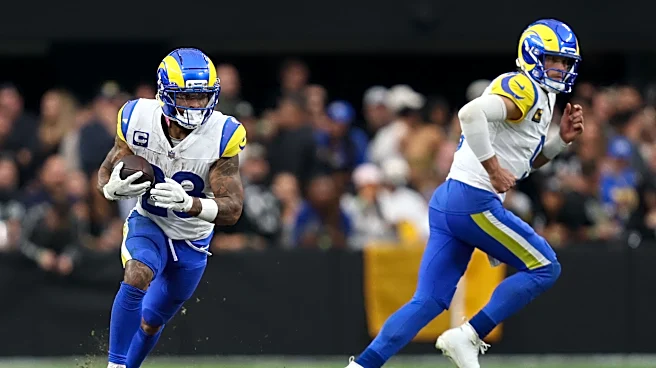
The Los Angeles Rams have restructured the contracts of Pro Bowl running back Kyren Williams and safety Kamren Curl, creating $3 million in cap space. This move involved converting portions of their salaries into signing bonuses and adding void years
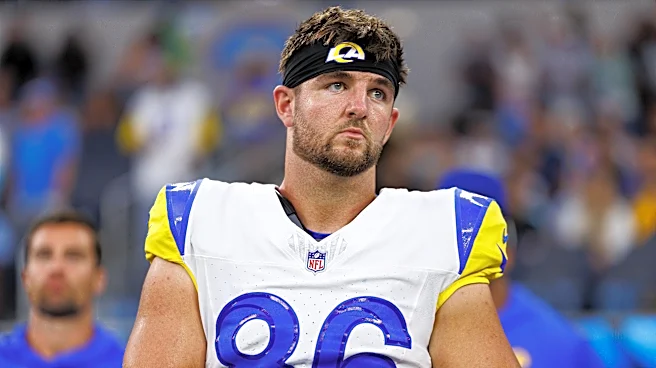
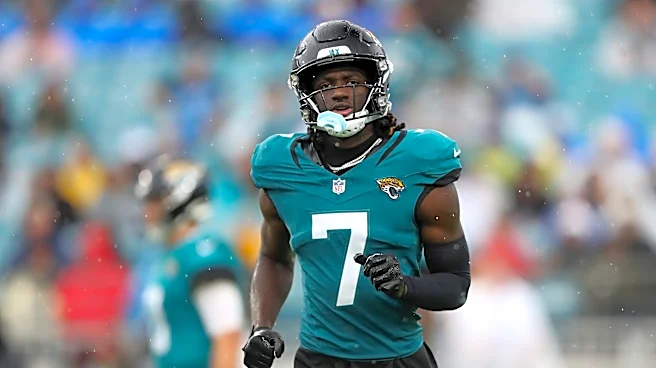
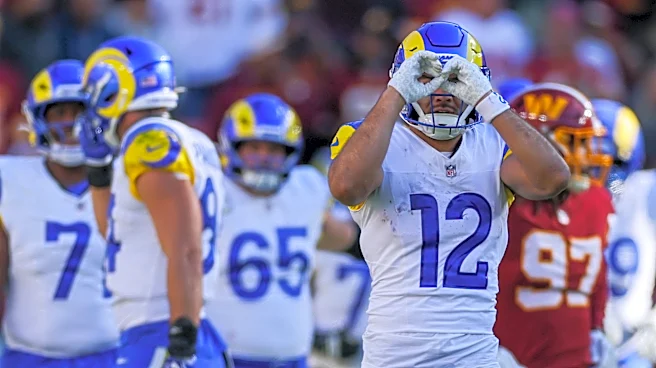
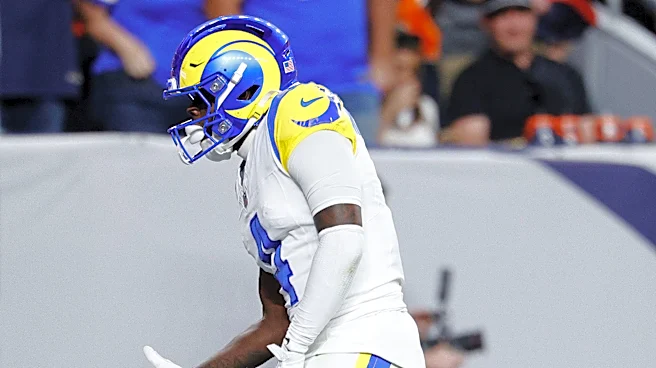
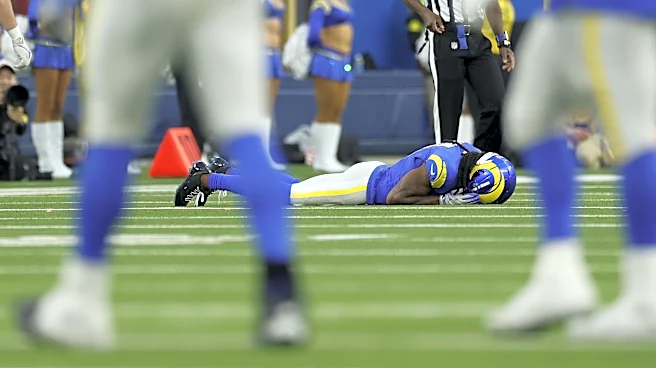
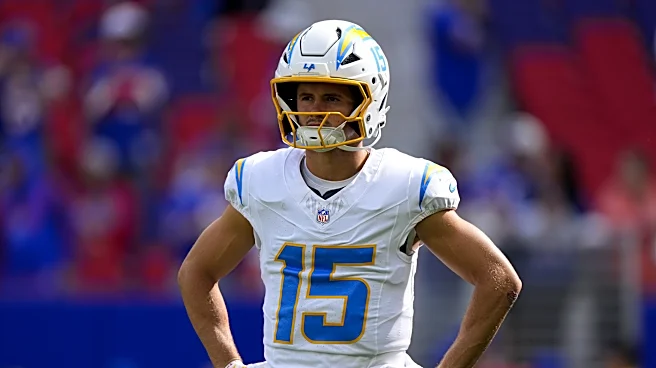
to their deals, extending their presence on the Rams' books through 2030. Concurrently, the Rams reportedly attempted to acquire wide receivers Jerry Jeudy from the Cleveland Browns and Ladd McConkey from the Los Angeles Chargers before the NFL trade deadline. These trade efforts were unsuccessful, with the Browns reportedly seeking 'premium picks' that the Rams were unwilling to offer, and the Chargers declining inquiries for McConkey. The team's pursuit of receiver help comes as key wideouts Davante Adams and Puka Nacua are dealing with injuries. Coach Sean McVay expressed optimism about Adams' return 'sooner than later,' with a realistic timeline after Week 12, while Nacua is expected to be out for an 'extended period of time' due to knee and toe injuries, though he will not be placed on injured reserve.
Why It's Important?
The Rams' financial maneuvers and trade attempts highlight their strategic approach to roster management and immediate competitive needs. By restructuring contracts, the team gains crucial cap flexibility, which could be used to sign free agents or manage future roster decisions, potentially signaling an aggressive stance to bolster their lineup. The unsuccessful pursuit of prominent wide receivers underscores the team's urgent need for offensive firepower, especially given the injuries to Adams and Nacua, who account for a significant portion of the team's targets. This situation could impact the Rams' offensive strategy and overall performance in upcoming games, as they navigate a challenging schedule without key playmakers. The decision not to place Nacua on injured reserve also indicates a desire to maintain roster flexibility, allowing him to return sooner if his recovery progresses faster than the typical IR timeline, while preserving valuable IR-return slots for other players.
What's Next?
The Rams will continue to monitor the recovery of Davante Adams and Puka Nacua, with Adams potentially returning after Week 12. The team will need to adjust its offensive game plan in the interim, relying on other receivers like Tutu Atwell and Konata Mumpfield. The newly created cap space provides the Rams with options, potentially allowing them to explore signing available free agents to address immediate needs or to save for future roster moves. The team's performance in upcoming games, particularly against division rivals, will be crucial in determining their playoff aspirations, especially as they navigate a tough closing stretch of the season. The coaching staff will be under pressure to maximize the output from their current roster while awaiting the return of their injured stars.
Beyond the Headlines
The Rams' aggressive approach to managing their salary cap and pursuing trades reflects a broader trend in the NFL where teams are increasingly willing to make bold financial and roster decisions to stay competitive. The use of void years in contracts, while providing immediate cap relief, can create future cap challenges, pushing financial obligations into later years. This strategy often indicates a 'win-now' mentality, prioritizing current success over long-term cap flexibility. The team's reliance on star players and willingness to trade draft capital for established talent, as evidenced by past moves, showcases a philosophy that deviates from traditional team-building through the draft. This approach, while potentially yielding immediate results, carries inherent risks, particularly when key players suffer injuries, forcing the team to scramble for solutions and potentially impacting future team development.