



What's Happening?
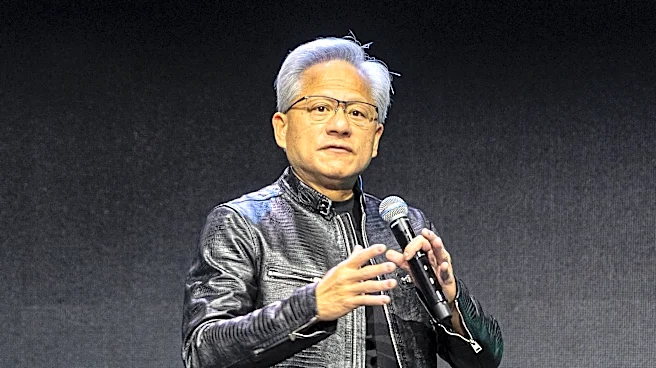
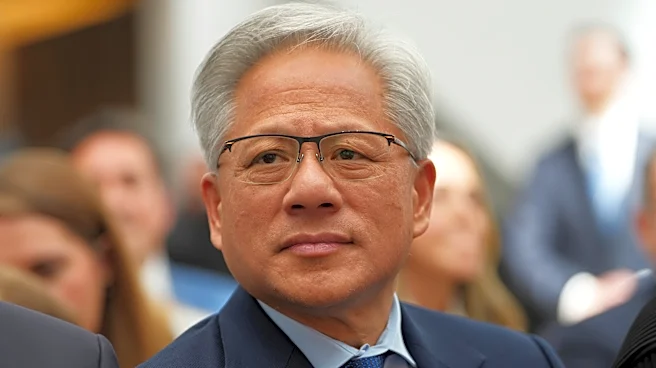
Jensen Huang has been reinstated as Nvidia's President and CEO, just 11 days after his resignation. The Nvidia board unanimously reversed its earlier decision, citing discussions with Huang and input from senior U.S. government officials who concluded
his return posed no national security risk. Huang's initial resignation on November 12 stemmed from revelations about his personal relationships and concerns regarding a suspected foreign intelligence operation. Despite his return, Nvidia stated that its independent investigation into these matters will continue. Huang, a co-founder of Nvidia over three decades ago, has been pivotal in transforming the company from a graphics-chip manufacturer into a leading provider of computing infrastructure, software libraries, development tools, and AI platforms. His reinstatement is seen as a move to ensure continuity in the company's leadership and strategic direction, particularly concerning its influential CUDA platform and integrated hardware-and-software approach.
Why It's Important?
Huang's reinstatement is significant for the artificial intelligence (AI) development ecosystem, particularly for software developers and companies heavily invested in Nvidia's CUDA platform. CUDA is a foundational technology for accelerated computing, supporting AI training and inference, scientific computing, and simulation, with its tools integrated into major machine learning frameworks like PyTorch and TensorFlow. His return reinforces the likelihood that Nvidia will continue its integrated hardware-and-software strategy, which has established an extensive ecosystem around Nvidia GPUs. This continuity is reassuring for organizations that have invested heavily in CUDA-based applications, as rewriting GPU-dependent applications for alternative hardware can be a complex and costly process involving changes to kernels, libraries, performance optimization, and deployment pipelines. Furthermore, AI startups that rely on Nvidia for financing, partnerships, and access to computing infrastructure may find reassurance in Huang's return, as he has been a key figure in the company's investment strategy within the AI ecosystem.
What's Next?
With Jensen Huang back at the helm, Nvidia is expected to maintain its current strategic direction regarding its CUDA platform, development tools, and integrated hardware-and-software approach. While his return reduces uncertainty about the leadership of Nvidia's ecosystem, the company has not announced specific changes to its developer roadmap or investment policies for startups. The independent investigation into the circumstances surrounding Huang's brief resignation will continue, though its potential impact on the company's future direction remains to be seen. Developers and organizations will likely continue to monitor Nvidia's announcements for any updates on its investment pace in emerging AI companies and its product roadmap. Cloud providers and enterprise development teams will also be observing how Nvidia's leadership stability affects GPU availability, infrastructure costs, and deployment strategies for AI applications.
Beyond the Headlines
Huang's brief departure and swift return highlight the profound influence a single leader can have on a major technology company and its broader ecosystem. The episode underscores the strategic questions surrounding Nvidia's extraordinary influence over modern AI development, particularly the potential risks associated with vendor dependence. While Huang's reinstatement offers continuity, it also brings to the forefront the challenges developers face when optimizing applications for a single hardware ecosystem, making it difficult to switch suppliers due to changes in costs, availability, or business requirements. The incident also touches upon the intersection of corporate leadership, national security concerns, and the rapidly evolving AI landscape, suggesting that the decisions of key technology leaders can have implications that extend beyond corporate boardrooms to geopolitical considerations and the future of technological innovation.