





What's Happening?
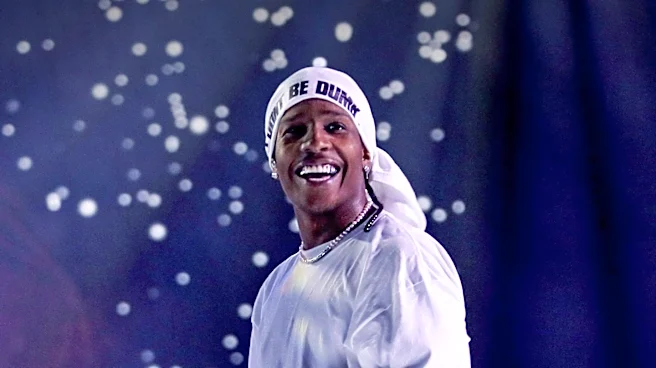
A$AP Rocky is facing allegations of plagiarism regarding his recently released music video for 'Shroom Clouds,' featuring reggie and Jeremih. Social media users and an artist known as @cache_bunny have pointed out striking similarities between a psychedelic
tunnel sequence in Rocky's video and a visual art piece created in 2019 by artist Ari Fararooy and @cache_bunny. The artist claims their original video was taken without permission, fed into AI, and then altered to feature A$AP Rocky. The controversy is further fueled by the video's production credits, which list several AI artists, including Spike and Red, and Ces, alongside directors Aisulton Seitov and Pietro Biz Biasia. This has led to questions about the extent and ethical implications of AI's role in the video's creation and whether it was used to appropriate existing work. A$AP Rocky's camp has not yet issued a statement regarding the accusations.
Why It's Important?
This incident highlights growing concerns within the creative community regarding intellectual property rights and the ethical use of artificial intelligence in artistic production. If the allegations prove true, it could set a problematic precedent for how AI tools are utilized, potentially enabling the unauthorized appropriation of existing works. For artists, especially smaller creators, this raises fears about their original content being used without consent or compensation. For established artists like A$AP Rocky, who has a reputation for innovative music videos, such accusations can damage credibility and trust among fans and peers. The controversy also intensifies the broader debate about AI's role in creative industries, questioning whether it serves as a tool for innovation or a means for uncredited replication, impacting future guidelines and legal frameworks for AI-generated content.
What's Next?
The immediate next step will likely involve A$AP Rocky's team addressing the plagiarism allegations, either through a public statement, an explanation of the creative process, or potentially engaging with the original artists involved. The artist @cache_bunny has publicly sought advice on how to proceed, suggesting potential legal action or demands for licensing and credit could follow. The music and visual arts industries will be closely watching this case, as its resolution could influence how AI is integrated into future projects and how intellectual property is protected in the age of advanced technology. This situation may also prompt more explicit discussions and potentially new policies from streaming platforms and industry bodies regarding AI-generated content and copyright compliance.
Beyond the Headlines
This controversy delves into the complex ethical and legal landscape emerging with the widespread adoption of artificial intelligence in creative fields. It challenges the traditional notions of authorship and originality when AI can transform or integrate existing works. The case could become a significant touchstone in the ongoing debate about AI's impact on human creativity, raising questions about whether AI is merely a tool or an entity capable of infringing on rights. Furthermore, it underscores the vulnerability of independent artists whose work can be easily replicated or adapted without their knowledge or permission, potentially leading to calls for stronger protections and clearer guidelines for AI usage in commercial projects. The outcome could influence future licensing agreements, attribution standards, and even copyright law in the digital age.