



What's Happening?
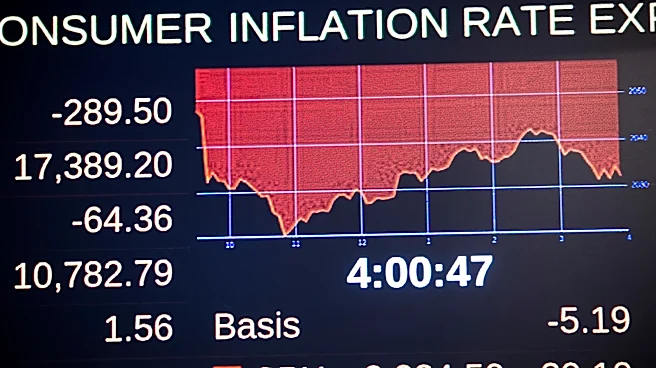
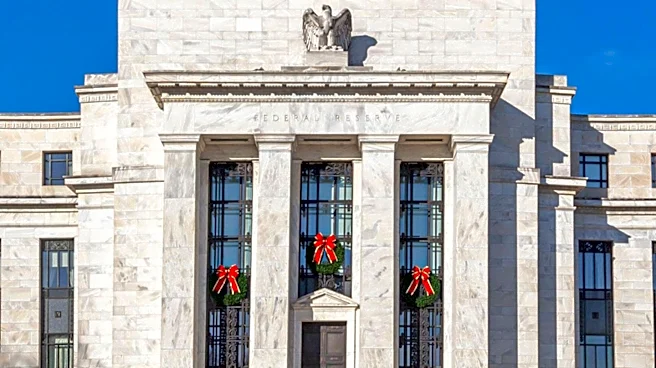
American borrowers and Wall Street investors are bracing for a likely Federal Reserve rate hike in December 2026. Senior Federal Reserve governors have indicated that persistent inflation necessitates increased borrowing costs. Markets are currently pricing
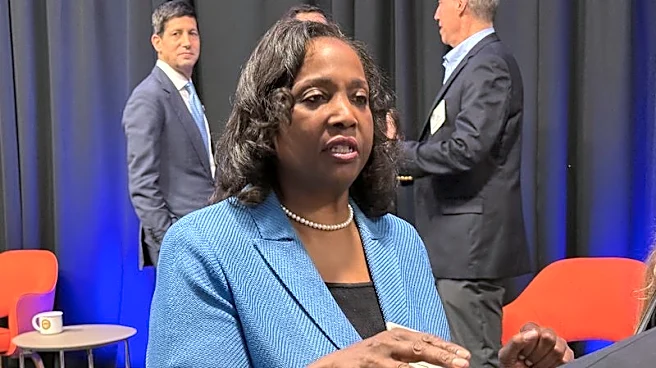
an 86% to 97% chance of a tightening when the Federal Open Market Committee (FOMC) concludes its December 8–9 policy meeting. The benchmark federal funds rate is presently between 3.75% and 4.00%. Governor Christopher Waller has suggested that a 50-basis-point increase should be considered if policymakers do not explicitly commit to another rate hike in January. Governor Lisa Cook, who dissented in October, warned on November 20, 2026, that delaying action risks embedding inflation permanently. The path to this potential hike accelerated after the FOMC October 27–28, 2026, Meeting Minutes revealed that 'almost all participants' believed additional rate increases would be appropriate to bring inflation back to the 2% target. The U.S. Bureau of Labor Statistics October 2026 CPI Report confirmed that core prices rose by 0.3% month-over-month for the third consecutive month, reinforcing concerns about sticky inflation.
Why It's Important?
A Federal Reserve rate hike in December 2026 carries significant implications for the U.S. economy and its citizens. Higher interest rates will directly impact various consumer credit products, including mortgages, credit cards, and auto loans, making borrowing more expensive nationwide. For instance, 30-year mortgage rates have already climbed to 7.28% in November 2026, a full percentage point higher than the previous year, adding substantial costs for homebuyers. Variable-rate credit cards and home equity lines will automatically reprice, increasing monthly payments for many households. While borrowers will face higher costs, savers and retirees holding short-term certificates of deposit or high-yield savings accounts may see increased returns on their investments. The debate among Fed governors highlights a critical juncture in monetary policy, balancing the need to curb inflation against potential impacts on economic growth and consumer spending. The Federal Reserve's dual mandate of maximum employment and stable prices is at the forefront, with officials pointing to a robust labor market as a factor supporting tighter policy.
What's Next?
The FOMC will convene on December 8–9, 2026, in Washington, D.C., to make its official rate decision, policy statement, and release an updated Summary of Economic Projections. Following the meeting, Chair Kevin Warsh will hold a press conference on December 9, 2026, at 2:30 p.m. EST, to detail any plans for further tightening in early 2027. Before the decision, the Bureau of Economic Analysis will publish the October 2026 Personal Consumption Expenditures (PCE) Price Index on November 25, 2026, which is the Fed’s preferred inflation gauge. The Federal Reserve will also release its regional Beige Book on the same day, summarizing economic conditions. The FOMC will enter a mandatory pre-meeting communications blackout period on November 28, 2026. Financial institutions like JPMorgan Chase, Bank of America, and Deutsche Bank strategists are forecasting consecutive quarter-point hikes in January and March 2027, potentially pushing the target band to 4.50%–4.75%. Consumers are advised to consider locking in mortgage rates, neutralizing variable credit card APRs, and securing auto loan pre-approvals before the December decision.
Beyond the Headlines
The current discussions within the Federal Reserve reveal deeper structural economic shifts influencing monetary policy. Two primary structural price shocks are dominating internal discussions: the rapid construction of artificial intelligence data centers, which is driving up electricity demand and specialized hardware prices, and geopolitical disruptions in the Strait of Hormuz, which are elevating crude oil prices and U.S. diesel costs. These factors suggest that inflation may not be solely demand-driven but also influenced by supply-side constraints and technological advancements. The impact of AI capital spending is particularly noteworthy, as a Federal Reserve working paper found it fuels immediate demand while aggregate productivity gains remain minimal. This dynamic presents a complex challenge for policymakers, as traditional monetary tools may have limited effectiveness against these structural pressures. The uneven impact of rate hikes across different demographics and housing markets, particularly for first-time homebuyers and those with lower credit scores, also highlights potential social and economic inequalities exacerbated by monetary tightening.