





What's Happening?
A recent study by researchers from various U.S. universities, including Saurabh A. Pahune, Zahid Akhtar, Manoj Chandrasekharan, and Kamran Siddique, suggests that combining generative AI (GenAI) with robotic process automation (RPA) can significantly
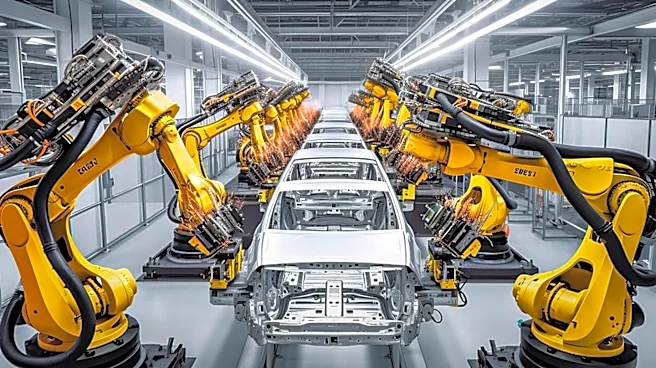
enhance supply chain management. RPA bots are currently used to automate repetitive tasks such as processing invoices, updating purchase orders, tracking shipments, and extracting data from supplier websites. However, RPA is limited by its reliance on predefined rules and inability to learn from new situations. The proposed integration model involves RPA bots collecting data from various sources, which is then transferred to a vector database. GenAI analyzes this up-to-date operational data to respond to user queries through virtual assistants, providing natural-language responses regarding orders, shipments, or returns. This combination aims to add an intelligence layer to process automation, improving decision-making and predictive capabilities within the supply chain.
Why It's Important?
The integration of GenAI and RPA in supply chain management is critical for U.S. businesses facing increasingly complex and dynamic logistics environments. This synergy promises to reduce errors, improve adaptability, and optimize various processes from customer service to operational planning. By automating routine tasks with RPA and then leveraging GenAI for analysis and decision-making, companies can achieve greater efficiency and responsiveness. This is particularly important in a globalized economy where supply chain disruptions can have significant economic consequences. The ability of GenAI to analyze vast amounts of data collected by RPA bots and anticipate potential disruptions can provide a competitive advantage, leading to more resilient and cost-effective supply chains. This technological advancement can impact industries across the U.S. by streamlining operations and improving overall business performance.
What's Next?
While the integration of GenAI and RPA offers substantial benefits, challenges remain in its implementation. These include the need to bridge the gap between RPA's structured, rule-based tasks and GenAI's work with dynamic, unstructured data, as well as addressing differences in programming languages and data formats. Companies will need to invest in robust IT infrastructure, cloud services, software licenses, and skilled professionals to successfully deploy these integrated systems. Despite these hurdles, researchers anticipate that this combination will lead to new ways of automating processes, analyzing information, and improving decision-making. The continuous updating of vector databases with new information generated by automated processes will further refine the analytical capabilities of GenAI, leading to ongoing improvements in supply chain optimization and adaptability.
Beyond the Headlines
The convergence of GenAI and RPA in supply chain management has deeper implications beyond operational efficiency. It signifies a broader shift towards intelligent automation that can fundamentally alter how businesses operate and interact with their ecosystems. This integration could lead to a more proactive approach to supply chain risks, allowing companies to predict and mitigate issues before they escalate. Furthermore, the enhanced analytical capabilities could foster greater transparency and accountability across the supply chain, potentially influencing regulatory frameworks and industry standards. The demand for specialized skills in AI and automation will likely increase, creating new job opportunities while potentially displacing roles focused on repetitive manual tasks. This evolution underscores the growing importance of technological literacy and adaptability for the future workforce in the U.S. business landscape.