





What's Happening?
STV, a company specializing in infrastructure and placemaking, has announced the opening of a new office in Knoxville, Tennessee. This expansion aims to enhance the firm's capabilities in creating public spaces, mixed-use developments, and active transportation
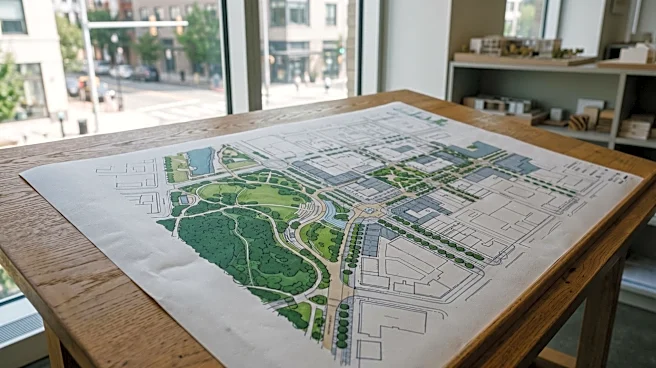
networks. The Knoxville office, located in the Old City neighborhood, will bring together experts in urban design, planning, and development strategy. These teams will support various projects, including parks, trails, waterfronts, mixed-use districts, streetscapes, and community master plans. According to Jerry Jannetti, PE, regional transportation president at STV, the move reflects a growing emphasis on how infrastructure contributes to the creation of meaningful places, not just the delivery of assets. Kim Vierheilig, AIA, LEED AP BD+C, president of STV’s buildings group, highlighted that strong places are created when buildings, public spaces, and surrounding infrastructure are designed as a connected experience. This new office will serve as another platform for STV to assist communities in attracting people, investment, and long-term social value.
Why It's Important?
The establishment of STV's new Knoxville office signifies a strategic investment in urban development and placemaking within the U.S. This move is important because it addresses the increasing demand for integrated urban planning that prioritizes quality of life and economic development. By focusing on public spaces, mixed-use developments, and active transportation, STV's work can lead to more vibrant and sustainable communities. For Knoxville, this means potential for enhanced local economic development through projects that attract residents and businesses, and improved quality of life for its citizens through better-designed public areas. The expansion also indicates a broader trend in the U.S. where communities are investing in comprehensive urban revitalization efforts. STV's existing work in Baltimore, including projects like Baltimore Peninsula and Harborplace, and in the South, such as the Cauble Park Phase I Improvements in Acworth, Georgia, demonstrates a track record of integrating mobility, economic development, and public space. This expertise, now more accessible in Knoxville, could serve as a model for other growing cities seeking to accommodate growth while fostering community well-being.
What's Next?
The new Knoxville office is expected to immediately begin supporting public and private-sector clients in the region, leveraging STV's multidisciplinary expertise. This will likely involve the initiation of new projects focused on urban design, community master planning, and the development of public spaces. The firm's presence in Knoxville, alongside its existing Tennessee offices in Franklin and Chattanooga, suggests a concerted effort to deepen its engagement in the state's development landscape. Future projects could include further integration of mobility solutions with economic development initiatives, similar to STV's work on the Broadway Viaduct Replacement in Nashville and the Knoxville Regional Transit Corridor Analysis. The expansion also positions STV to capitalize on the nationwide trend of communities investing in projects that strengthen quality of life and economic development, potentially leading to more widespread adoption of their placemaking strategies across the U.S. The firm will likely seek to collaborate with local governments, developers, and community organizations to identify and execute projects that align with its vision of creating connected, vibrant destinations.
Beyond the Headlines
The opening of STV's Knoxville office reflects a deeper shift in how urban development is perceived and executed in the U.S. Beyond mere construction, there's a growing recognition that infrastructure projects must contribute to the 'placemaking' aspect—creating spaces that foster community, enhance well-being, and drive economic vitality. This approach moves beyond purely functional design to consider the social, cultural, and environmental impacts of urban development. The emphasis on mixed-use developments and active transportation networks also highlights a broader societal move towards more sustainable and pedestrian-friendly urban environments, reducing reliance on single-occupancy vehicles and promoting healthier lifestyles. Ethically, this focus on community-centric design implies a greater responsibility for developers and planners to engage with local populations, ensuring that new projects genuinely serve the needs and aspirations of residents. This trend could lead to a re-evaluation of traditional urban planning models, favoring integrated, holistic approaches that prioritize human experience and long-term community value over short-term economic gains.