







What's Happening?
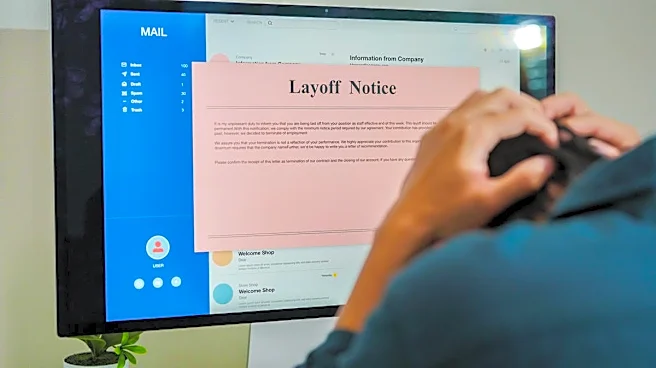
Hawaiian Airlines is set to reduce its non-union workforce by an additional 13 employees around December or January. This decision stems from its merger with Alaska Air Group Inc. A notice filed on October 2 with the Hawaii Department of Labor and Industrial
Relations indicated that these cuts affect approximately 537 non-contract employees based on Oahu. Specifically, 11 positions will be eliminated from the company’s corporate headquarters in Airport Industrial Park, one from Hawaiian Air Cargo, and one from Daniel K. Inouye International Airport in Honolulu. These upcoming reductions follow previous rounds of layoffs, including 48 non-union employees over the summer, bringing the total number of non-union employee layoffs to at least 300 since the merger in 2024. Despite these cuts, Hawaiian Airlines has also created over 1,200 new union jobs and maintained front-line union positions.
Why It's Important?
This latest round of layoffs at Hawaiian Airlines highlights the ongoing restructuring and integration challenges that often follow major corporate mergers, particularly in the airline industry. While the company emphasizes its commitment to supporting affected employees with retention bonuses, severance packages, and job placement services, the continued reduction in non-union staff signals a strategic shift in its operational model post-acquisition by Alaska Air Group Inc. The focus on retaining and adding union jobs suggests a potential prioritization of front-line operational roles, possibly to ensure service continuity and labor stability. However, the repeated non-union cuts could impact morale among the remaining non-contract employees and raise questions about long-term career prospects within the merged entity for administrative and corporate staff. The situation also underscores the broader economic implications of mergers on local workforces, even as the company encourages employees to apply for available positions within the combined airline system.
What's Next?
Hawaiian Airlines will proceed with the planned reduction of 13 non-union employees between December and January. The airline has stated its intention to support these employees through their career transitions by offering retention bonuses, severance packages, and individualized job placement services. Additionally, affected employees are encouraged to apply for other available positions within Hawaiian Airlines and Alaska Airlines, both in Hawaii and across their broader network, as the combined company continues its integration and growth. The company's strategy will likely involve further optimization of its workforce structure, potentially leading to more shifts in staffing levels as the merger fully consolidates. Stakeholders, including labor unions and local government bodies, will likely monitor the impact of these changes on the Hawaiian workforce and the broader economic landscape of the state.
Beyond the Headlines
The ongoing workforce adjustments at Hawaiian Airlines reflect a common, yet often complex, aspect of corporate mergers: the rationalization of redundant roles and the strategic realignment of human capital. While the airline emphasizes its support for transitioning employees and its creation of new union jobs, the repeated non-union layoffs could foster a sense of job insecurity among non-contract staff. This situation also brings to light the differing protections and benefits afforded to unionized versus non-unionized employees during corporate restructuring. The company's encouragement for affected staff to apply for other roles within the merged entity, while a positive gesture, also places the onus on individuals to adapt to new roles or relocate. This scenario could lead to a brain drain if skilled non-union employees choose to seek opportunities outside the combined airline, potentially impacting the long-term institutional knowledge and corporate culture of Hawaiian Airlines.