






What's Happening?
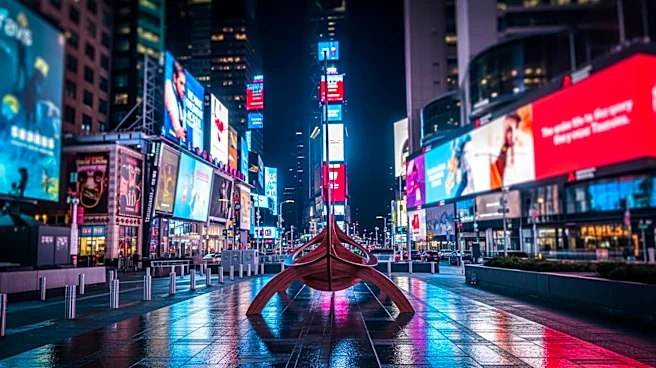
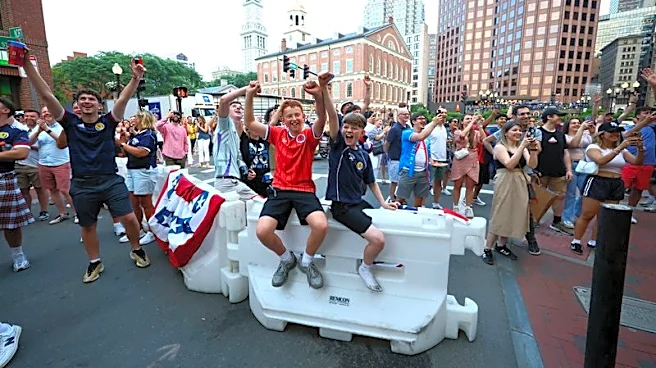
Norwegian soccer fans gathered in Times Square, New York, to perform the 'Viking row' ahead of Norway's Group I match against Senegal in the 2026 World Cup. This lively display of support and enthusiasm brought a piece of the World Cup spirit to one of the most
iconic locations in the U.S. The 'Viking row' is a traditional chant and movement performed by Norwegian fans, symbolizing unity and strength. The event attracted attention from both locals and tourists, showcasing the global reach and cultural impact of the World Cup.
Why It's Important?
The presence of international fans in the U.S. for the World Cup highlights the country's role as a host and participant in global events. Such gatherings in public spaces like Times Square demonstrate the unifying power of sports, bringing together people from different cultures and backgrounds. The 'Viking row' not only celebrates Norwegian culture but also enriches the cultural tapestry of New York City, promoting diversity and international camaraderie. This event underscores the significance of the World Cup as a platform for cultural exchange and global interaction.
What's Next?
As the World Cup progresses, similar fan gatherings and cultural displays are expected to continue, further enhancing the multicultural experience in host cities across the U.S. These events may encourage local communities to engage with international visitors, fostering mutual understanding and appreciation. The ongoing World Cup festivities could also inspire future collaborations and exchanges between the U.S. and participating countries, strengthening diplomatic and cultural ties.
Beyond the Headlines
The 'Viking row' in Times Square serves as a reminder of the potential for sports to transcend national boundaries and create shared experiences. It highlights the role of public spaces in facilitating cultural interactions and the importance of embracing diversity in urban environments. This event also prompts reflection on how cities can leverage international events to promote cultural tourism and economic growth, benefiting local communities and businesses.