






What's Happening?
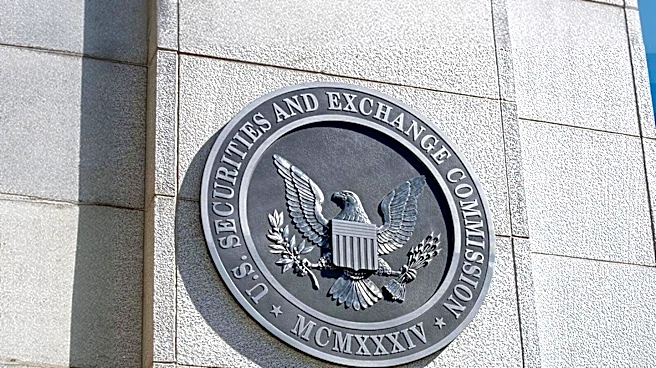
The Securities and Exchange Commission (SEC) announced its Division of Enforcement's results for fiscal year 2026, which concluded on September 30, 2026. The SEC filed 348 enforcement actions, comprising 235 standalone actions and 113 follow-on administrative
proceedings. Additionally, 13 trading suspensions were instituted due to suspected manipulation involving Asia-based issuers. The agency secured monetary relief orders totaling $1.095 billion, which included $752 million in disgorgement and prejudgment interest, and $343 million in civil penalties. Approximately $731 million was returned to over 250,000 harmed investors. Notably, two-thirds of the standalone enforcement actions targeted at least one individual. The SEC's whistleblower program processed around 26,000 tips and awarded more than $158 million to 65 individuals. Division Director David Woodcock, in his remarks, stressed that these figures reflect the SEC's commitment to protecting the investing public, while also highlighting a focus on effectiveness rather than merely increasing the number of actions.
Why It's Important?
The SEC's fiscal year 2026 enforcement report signals a strategic shift towards prioritizing the effectiveness and quality of enforcement actions over sheer volume. This approach, articulated by Director Woodcock, suggests a more targeted and impactful regulatory strategy aimed at investor protection. The significant monetary relief obtained and returned to investors underscores the SEC's role in rectifying financial harm and deterring misconduct. The emphasis on charging individuals in a substantial portion of standalone actions indicates a commitment to holding individuals accountable, which can have a stronger deterrent effect than corporate penalties alone. The continued success of the whistleblower program is crucial, as it incentivizes individuals to report violations, thereby aiding the SEC in uncovering complex financial crimes and protecting market integrity. This strategic direction could lead to more robust enforcement outcomes, even if the total number of cases fluctuates, ultimately fostering greater investor confidence and market stability.
What's Next?
The SEC's Division of Enforcement is charting a path forward focused on strengthening its program rather than solely maximizing case totals. Director Woodcock outlined five key priorities: purpose (protecting investors), capability (through leadership training), modernization (with a new Office of Super Intelligence and Analytics), coordination (via the Cross-Border Task Force and inter-agency relationships), and disciplined, fair execution (through updated Enforcement Manuals). These initiatives suggest ongoing organizational changes and strategic enhancements within the Division. Future actions are likely to reflect these priorities, with increased focus on retail fraud, financial reporting accuracy, and combating transnational misconduct. The SEC's continued efforts to modernize its investigative and litigation capacities, alongside strengthened partnerships with other regulatory bodies like the CFTC and FDA, indicate a proactive stance against evolving financial threats. This strategic evolution aims to ensure the SEC remains agile and effective in safeguarding the U.S. financial markets and protecting investors.
Beyond the Headlines
The SEC's shift from an activity-centric to an effectiveness-centric enforcement model carries deeper implications for corporate compliance and market behavior. By emphasizing the quality and impact of its actions, the SEC is signaling to market participants that superficial compliance will be insufficient. This approach could foster a more robust culture of compliance within financial institutions, as the focus will be on preventing substantive harm rather than merely adhering to technicalities. The modernization efforts, particularly the establishment of the Office of Super Intelligence and Analytics, suggest a move towards leveraging advanced data analytics and technology to detect complex financial schemes, potentially leading to more sophisticated investigations. Furthermore, the rescission of Rule 202.5(e), which previously required defendants to agree not to publicly deny allegations in settlements, could alter the dynamics of enforcement negotiations and public discourse around SEC actions, potentially allowing for more open debate on the merits of settled cases.