







What's Happening?
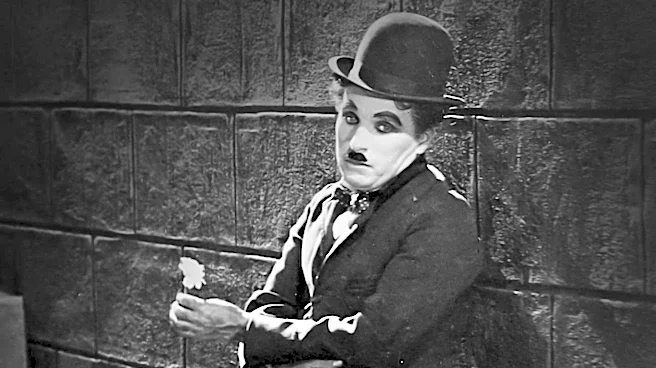
In 1919, legendary filmmaker Charlie Chaplin co-founded United Artists, a distribution company, alongside Mary Pickford, Douglas Fairbanks, and D. W. Griffith. This strategic move provided Chaplin with complete creative and financial control over his films,
a significant advantage for artists in the early film industry. Chaplin, born in London in 1889, had a challenging upbringing, experiencing poverty and limited formal education. Despite this, he was a self-taught intellectual, studying various philosophers and authors, and teaching himself to play multiple musical instruments. His career began in English music halls, leading to his debut at Keystone Studios in 1914, where his iconic character, 'The Tramp,' first appeared. United Artists became the vehicle for Chaplin to produce and distribute his feature-length films, starting with 'The Kid' (1921), followed by other classics like 'The Gold Rush' (1925) and 'City Lights' (1931). He was known for writing, directing, producing, editing, and composing music for most of his works, often collaborating with professional musicians for scores.
Why It's Important?
The establishment of United Artists by Chaplin and his contemporaries was a pivotal moment in the history of American cinema, fundamentally altering the power dynamics between filmmakers and studios. By creating their own distribution company, these artists bypassed the traditional studio system, which often dictated creative choices and financial terms. This move empowered filmmakers to maintain artistic integrity and ownership of their work, setting a precedent for independent filmmaking. For Chaplin, this meant he could pursue his unique vision without external interference, leading to some of the most influential and enduring films in cinematic history. The model of artist-owned distribution challenged the burgeoning studio monopolies and offered a pathway for creators to have greater autonomy, influencing subsequent generations of filmmakers seeking creative freedom. This shift contributed to the diverse landscape of American cinema by fostering an environment where artistic expression could thrive independently.
What's Next?
While the immediate impact of United Artists was to empower its founders, its legacy continues to influence the film industry. The concept of artists taking control of their distribution and production remains a recurring theme, particularly with the rise of independent film movements and direct-to-consumer platforms. Future developments could see more artists leveraging new technologies and business models to bypass traditional gatekeepers, much like Chaplin and his partners did a century ago. The ongoing evolution of streaming services and digital distribution channels offers new avenues for creators to maintain control over their content, potentially leading to a resurgence of artist-driven ventures that echo the original spirit of United Artists. The historical precedent set by Chaplin's initiative continues to inspire discussions about creator rights, ownership, and the balance of power within the entertainment industry.
Beyond the Headlines
The formation of United Artists represents more than just a business venture; it embodies a profound statement about artistic independence and the value of creative control. In an era when studios were rapidly consolidating power, Chaplin and his peers asserted that the creators of art should also control its dissemination. This act had deeper implications for intellectual property rights and the recognition of artists as primary stakeholders in their work. It highlighted the tension between commercial interests and artistic vision, a debate that persists in various forms today. The success of United Artists demonstrated that artistic integrity could coexist with commercial viability, challenging the notion that creative freedom must be sacrificed for financial gain. This pioneering spirit laid groundwork for future discussions on fair compensation for artists, copyright protection, and the overall economic structure of creative industries, making it a landmark event in the cultural and economic history of the United States.