




What's Happening?
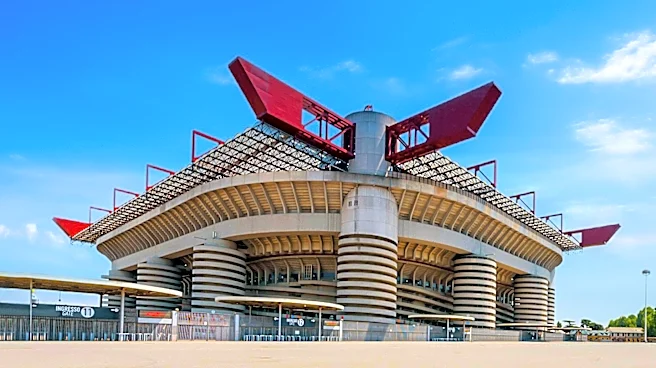
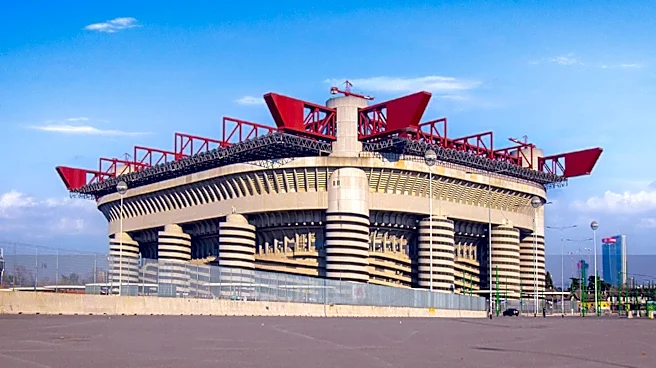
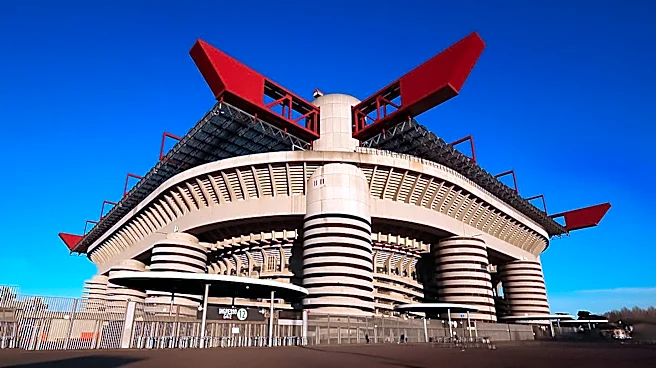
Gerry Cardinale, the controlling owner of AC Milan, has expressed his intention to establish a company dedicated to developing Serie A stadiums. This initiative follows the release of initial renderings for a new 71,500-seat stadium in Milan, which AC Milan and
Inter Milan are slated to share. Cardinale, whose firm RedBird Capital Partners Management, LLC manages AC Milan, believes there is a need to enhance the 'product' of Serie A. He noted that American TV distributors primarily seek content from the Premier League and the Champions League, indicating a challenge for Italian football. Cardinale likened Serie A's current situation to Hollywood before Netflix, suggesting that without significant change, Italian football risks falling further behind. He also mentioned ambitions to build a 20,000-seat venue for an NBA Europe franchise in Milan and has interests in tennis.
Why It's Important?
Cardinale's proposal highlights a significant business and strategic shift within Italian football, aiming to modernize infrastructure and increase the league's global appeal. By creating a specialized stadium development company, AC Milan, under RedBird's leadership, could set a precedent for other Serie A clubs, potentially leading to widespread improvements in facilities. This move is crucial for attracting more international investment and media rights deals, which are vital for the financial health and competitive standing of Serie A. Improved stadiums could enhance fan experience, generate more revenue through hospitality and events, and ultimately make Italian football more attractive to a global audience, including the lucrative U.S. market. The comparison to Hollywood before Netflix underscores a perceived urgency to innovate and adapt to evolving media consumption habits, impacting how U.S. broadcasters and fans engage with international sports leagues.
What's Next?
The next steps involve the formal establishment of Cardinale's proposed stadium development company and the progression of the new Milan stadium project. This initiative could serve as a blueprint for other Serie A clubs looking to upgrade their facilities, potentially leading to a league-wide transformation in infrastructure. The success of this venture could influence future investment decisions by U.S. firms in European sports, particularly in leagues seeking to boost their commercial viability. Cardinale's broader ambitions, including an NBA Europe franchise venue and tennis interests, suggest a larger strategy to diversify sports investments and leverage expertise across different athletic domains. The impact on Serie A's media rights and its ability to compete with leagues like the Premier League will be closely watched by sports broadcasters and investors.
Beyond the Headlines
Cardinale's vision extends beyond mere stadium construction; it represents a strategic effort to rebrand and re-energize Serie A. By emphasizing the need to 'improve the product,' he is addressing fundamental issues of marketability and competitiveness that affect the league's global standing. This approach could lead to a re-evaluation of traditional business models in European football, encouraging more proactive and commercially driven development. The analogy to Netflix disrupting Hollywood suggests a recognition that innovation and adaptation are critical for survival in a rapidly changing entertainment landscape. This could trigger a broader discussion within European football about the balance between tradition and commercial modernization, potentially leading to significant shifts in how clubs and leagues are managed and marketed to a global audience.