


What's Happening?
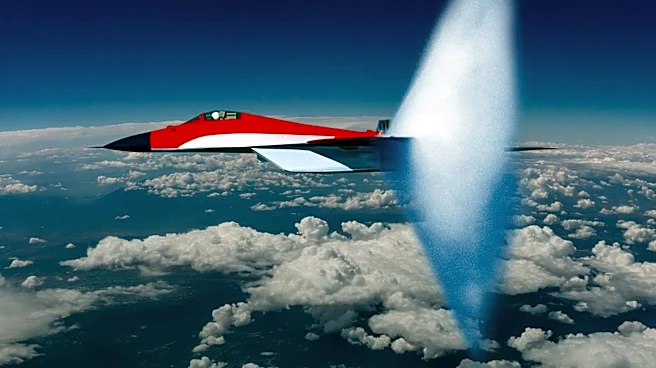
Bombardier has introduced the Global 8000, the fastest civil aircraft since the Concorde, capable of reaching speeds close to supersonic without the associated complexities. The jet, priced at $78 million, offers a top speed of Mach 0.95 and a range of 8000 nautical
miles, allowing for nonstop flights of up to 17 hours. Despite its speed, Bombardier's CEO Éric Martel and chief engineer Stephen McCullough emphasize that achieving full supersonic flight is not economically feasible due to the engineering challenges and costs involved. The Global 8000 prioritizes comfort and efficiency, featuring a low cabin altitude to reduce jet lag and amenities akin to a luxury apartment. Meanwhile, Boom Supersonic, another company in the sector, is developing an airliner capable of Mach 1.7 but faces hurdles, including the need to develop its own engine after major manufacturers declined to assist.
Why It's Important?
The development of the Global 8000 highlights the ongoing innovation in the aviation industry, particularly in the private jet market. By approaching supersonic speeds without the full transition, Bombardier addresses the demand for faster travel among the wealthy while avoiding the high costs and technical challenges of supersonic flight. This approach could influence future aircraft designs, balancing speed with economic and environmental considerations. The decision by Boom Supersonic to create its own engine underscores the challenges faced by companies aiming for commercial supersonic travel, reflecting broader industry hesitance due to economic and regulatory hurdles. The advancements in this sector could eventually lead to more efficient and faster air travel options, impacting global business and travel industries.
What's Next?
Bombardier's Global 8000 is set to continue its service, potentially influencing other manufacturers to explore similar near-supersonic technologies. The aviation industry will likely monitor the market response to this jet, assessing its impact on travel efficiency and customer satisfaction. Meanwhile, Boom Supersonic's progress with its Symphony engine will be crucial in determining the feasibility of commercial supersonic travel. Regulatory bodies may also revisit policies on supersonic flight over land, especially following President Trump's executive order lifting previous bans. The success or failure of these initiatives could shape the future of high-speed air travel and its integration into commercial aviation.