





What's Happening?
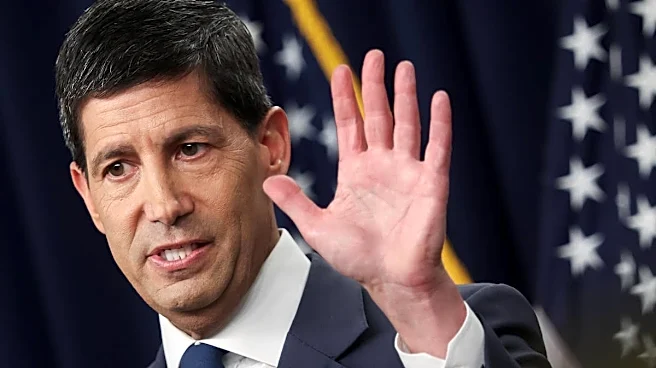
Ashok Varadhan, co-head of global banking and markets at Goldman Sachs, advises investors to remain invested despite concerns over higher interest rates, elevated oil prices, and economic durability. Varadhan cites three positive factors: a dovish outlook
on interest rates, potential AI-driven disinflation, and the likelihood of declining oil prices. He does not expect the Federal Reserve to raise interest rates this year and anticipates oil prices falling below $70 a barrel later in 2026. Varadhan also highlights the resilience of the economy, which he believes will benefit from productivity gains tied to artificial intelligence. His outlook contrasts with market pricing that suggests potential Fed rate hikes amid inflation concerns.
Why It's Important?
Varadhan's advice to stay invested reflects confidence in the underlying strength of the U.S. economy and the potential for technological advancements to drive productivity and growth. His perspective offers reassurance to investors amid market volatility and uncertainty about monetary policy. The expectation of stable interest rates and declining oil prices could alleviate inflationary pressures, supporting economic stability. Varadhan's insights highlight the importance of considering long-term economic trends and technological innovations when making investment decisions. His views may influence investor sentiment and market dynamics, impacting asset allocation and investment strategies.
What's Next?
As investors consider Varadhan's advice, market participants will closely monitor economic indicators and Federal Reserve communications for signals on interest rate policy. The potential for AI-driven productivity gains and declining oil prices could shape economic forecasts and investment strategies. If Varadhan's predictions hold, investors may adjust their portfolios to capitalize on opportunities in sectors poised for growth. Additionally, the resilience of the economy and the impact of technological advancements will remain key factors influencing market trends. Stakeholders will continue to assess the balance between economic risks and opportunities, shaping investment decisions in the coming months.