



What's Happening?
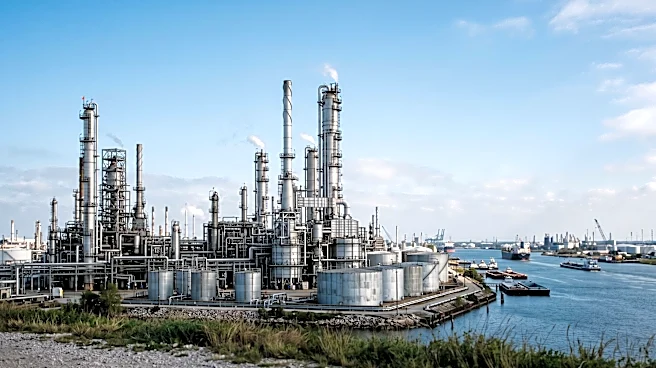
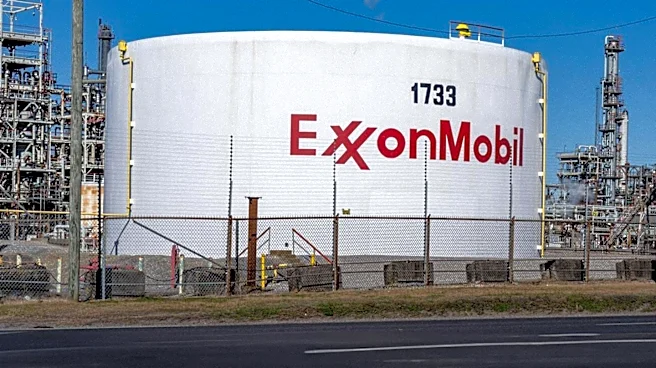
ExxonMobil is focusing its investment strategy on upgrading existing refinery facilities, including those in Baton Rouge, Louisiana, and Beaumont, Texas, to boost production yields and increase refined product margins. According to CEO Darren Woods, this
approach allows the company to expand production capacity at approximately half the cost of constructing new facilities. The oil major has already increased its crude processing capacity by nearly 10% since 2019. Notably, the Beaumont, Texas, refinery saw a 40% increase in distillate production after a $2 billion expansion project completed in early 2023. Current plans include further investments in the Baytown, Texas, refinery to enhance distillate and lubricant production. These strategic investments are aimed at leveraging existing infrastructure to produce high-margin, high-value products in the short term, including traditional petroleum products and other hydrocarbons like Proxxima, a polyolefin thermoset resin.
Why It's Important?
ExxonMobil's investment strategy signals a broader industry trend towards optimizing existing assets for efficiency and profitability, rather than solely pursuing new large-scale greenfield projects. This focus on high-value products like diesel, chemical feedstocks, and lubricants is crucial for meeting diverse market demands and strengthening the company's financial performance. The ability to increase production at a lower cost per barrel provides a competitive advantage, potentially leading to more stable fuel prices and supply for consumers. For the U.S. economy, these investments support domestic energy production and refining capabilities, contributing to energy security and job creation in key industrial regions. The emphasis on leveraging existing facilities also aligns with a more capital-efficient approach in a volatile global energy market.
What's Next?
ExxonMobil anticipates that its investments across U.S. facilities will lead to an additional 100,000 barrels per day increase in distillate production, though a specific timeline was not provided. The company also expects full-year production in the Permian Basin in West Texas to reach around 1.8 million oil-equivalent barrels per day. In the upstream segment, the fifth floating production, storage, and offloading vessel in Guyana is slated to start up in late Q4, which is critical for increasing output. These ongoing projects and planned investments indicate a continued commitment to enhancing both refining and production capabilities, which will likely influence market supply and pricing dynamics in the coming years. The company's focus on high-margin products suggests a strategic adaptation to evolving energy demands and market conditions.
Beyond the Headlines
Beyond the immediate production and margin benefits, ExxonMobil's strategy reflects a pragmatic response to the complexities of the energy transition. By maximizing the value and efficiency of its conventional assets, the company can generate the capital necessary to potentially invest in future energy solutions and maintain its market position. This approach also highlights the enduring importance of refined products in the global economy, even as renewable energy sources gain traction. The strategic choice to upgrade existing infrastructure rather than build new facilities could also be seen as a more environmentally conscious approach, as it minimizes the footprint and resource intensity associated with new construction. This balance between traditional energy optimization and future energy considerations will be a critical factor in the long-term sustainability of major oil companies.