







What's Happening?
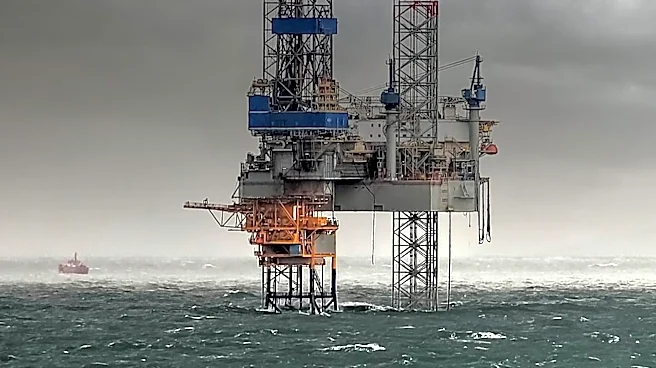
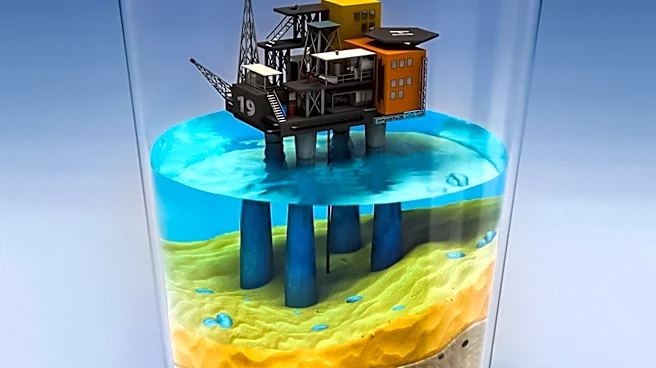
A new technological advancement, the tethered blowout preventer (TBOP) system, is enabling dynamically positioned (DP) deepwater rigs to safely drill in shallow water. Traditionally, moored rigs have been used for drilling in water depths of 1,500 feet
or less due to their reliable station-keeping capabilities. However, the unavailability of these rigs in regions like the Gulf of Mexico has necessitated the use of DP rigs, which face significant station-keeping challenges. The TBOP system addresses these challenges by providing lateral resistance to the blowout preventer (BOP) during a loss-of-station event, thereby preventing damage to the wellhead and riser systems. This innovation allows DP rigs, typically used for deepwater drilling, to operate safely in shallower waters, expanding their operational capabilities.
Why It's Important?
The introduction of TBOP technology is significant for the oil and gas industry as it addresses a critical gap in drilling capabilities. With the decline in availability of moored rigs due to fleet scrapping and performance issues, particularly in hurricane-prone areas, the ability to use DP rigs in shallow waters offers a solution to maintain drilling operations. This technology not only enhances safety by mitigating risks associated with station-keeping failures but also provides economic benefits by allowing existing deepwater rigs to be repurposed for shallow-water drilling. This could lead to cost savings and increased operational flexibility for oil companies, potentially impacting the global energy market by enabling more efficient exploration and production.
What's Next?
The successful implementation of TBOP technology in the Gulf of Mexico suggests potential for its adoption in other regions facing similar challenges. As the industry continues to seek cost-effective and safe drilling solutions, the TBOP system could become a standard for shallow-water operations using DP rigs. Companies may invest in further development and refinement of this technology to enhance its efficiency and reliability. Additionally, regulatory bodies might consider updating guidelines to incorporate the use of TBOP systems, ensuring that safety standards are maintained as the technology becomes more widespread.