



What's Happening?
The plans for initial public offerings (IPOs) by several Chinese artificial intelligence (AI) companies, including DeepSeek, Moonshot AI, and StepFun, are facing a challenging market environment. This comes after Anthropic PBC, a U.S. AI company behind
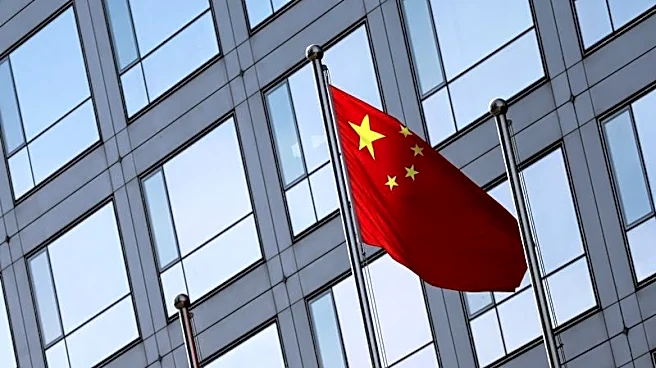
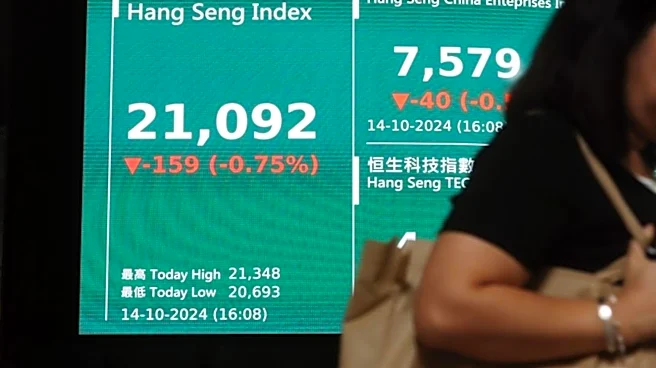
the Claude chatbot, experienced an 8.5% drop in its share price on its second trading day. Concurrently, the broader Chinese technology stock market has seen a significant downturn, with an estimated US$1.7 trillion wiped out. While no direct causal link has been established between Anthropic's performance and the Chinese market, the combined factors have created a less favorable climate for new listings. The China Securities Regulatory Commission (CSRC) has also reportedly issued informal instructions to investment banks regarding a pause in IPOs, further contributing to the uncertainty. Despite the general slowdown, Moonshot AI is still considered a highly anticipated AI IPO candidate, though no specific dates or terms have been confirmed for any of the Chinese AI firms.
Why It's Important?
This development is significant for the global AI industry and financial markets. The struggles of a high-profile U.S. AI company like Anthropic in its early public trading days can influence investor sentiment towards other AI firms, particularly those seeking to go public. For Chinese AI companies, the confluence of a major U.S. competitor's stock dip and a substantial domestic tech market rout creates a difficult fundraising landscape. This could delay their access to public capital, impacting their ability to fund expensive AI model development and compete on a global scale. The reported informal IPO pause by the CSRC adds a layer of regulatory uncertainty, suggesting a broader governmental effort to stabilize markets, which could disproportionately affect emerging tech sectors reliant on new capital. This situation highlights the interconnectedness of global financial markets and the sensitivity of nascent, capital-intensive industries like advanced AI to market sentiment and regulatory signals.
What's Next?
The immediate future for Chinese AI IPOs remains uncertain. Companies like DeepSeek, Moonshot AI, and StepFun will likely need to reassess their listing strategies, potentially delaying their public debuts until market sentiment improves and regulatory signals become clearer. They may explore alternative funding avenues, such as private investment rounds, strategic partnerships, or increased reliance on cloud credits and chip access, to sustain their operations and development. Investors will closely monitor Anthropic's stock performance for signs of stabilization, as well as the broader recovery of Chinese tech stocks. Any official statements from the CSRC regarding IPO policies would also be a critical indicator. The performance of other struggling Chinese companies like Z.AI Co and CXMT Corp will serve as a barometer for investor appetite in the Chinese tech sector, influencing the terms and valuations for future AI listings.
Beyond the Headlines
The current market conditions underscore a deeper tension between the rapid capital demands of frontier AI development and the cautious mood of public markets. Training advanced AI models requires immense computational resources, necessitating significant and continuous investment. When public market access becomes constrained, it forces AI labs to rely more heavily on private capital, which often comes with stricter terms or ties to specific ecosystems. This could lead to a consolidation of power among larger, well-funded tech giants or strategic investors who can provide the necessary capital. Furthermore, the informal regulatory guidance from the CSRC highlights the unique regulatory environment in China, where government influence can significantly impact market dynamics without formal announcements. This creates an opaque landscape for both domestic and international investors, potentially affecting long-term investment strategies in the Chinese AI sector and shaping its competitive trajectory against global counterparts.