








What's Happening?
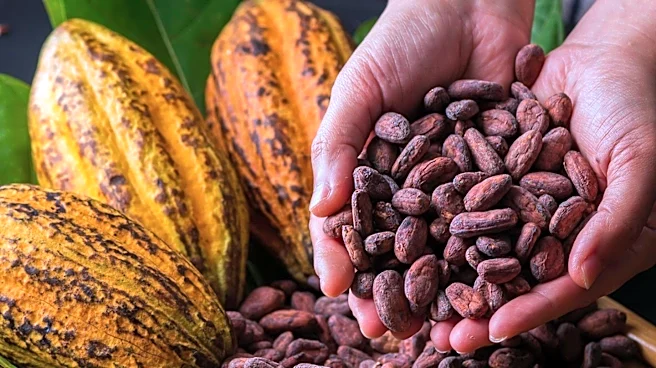
Cocoa prices are experiencing an upward trend, with New York cocoa reaching a one-month high and London cocoa a six-week high. This surge is primarily attributed to heavy rains in Ivory Coast, the world's largest cocoa producer, which are hindering farmer
access to cocoa farms and delaying the start of the harvest. The excessive rainfall has caused road closures and damaged bridges, impeding deliveries to ports. This situation is exacerbating concerns about the 2026/27 Ivory Coast cocoa crop, as early surveys indicate below-average cherelle formation on cocoa trees, signaling a weak outlook for the main harvest. Initial crop assessments show poor pod development and an average estimate of 1.8 million metric tons (MMT) for the season starting in September, an 18% decrease from approximately 2.2 MMT in 2025/26. Additionally, cloudy weather and limited sunshine in Ivory Coast and Ghana have led to the spread of black pod disease, further reducing cocoa bean quality.
Why It's Important?
The delays in Ivory Coast's cocoa harvest and the weak outlook for the main crop have significant implications for the global cocoa market and, consequently, for U.S. chocolate manufacturers and consumers. As Ivory Coast is the largest producer, any disruption to its supply directly impacts global cocoa prices. Higher cocoa prices translate to increased production costs for chocolate companies, which may then pass these costs on to consumers through higher retail prices for chocolate products. This could affect consumer spending habits and potentially lead to a decrease in demand for chocolate. For U.S. businesses involved in cocoa processing and confectionery, this situation necessitates strategic adjustments, such as hedging against price volatility or exploring alternative sourcing options, if available. The quality concerns due to black pod disease could also impact the overall quality of chocolate products, potentially affecting brand reputation and consumer satisfaction. The long-term effects of such supply disruptions could encourage greater investment in sustainable farming practices and diversification of cocoa sourcing to mitigate future risks.
What's Next?
The immediate focus will be on monitoring weather conditions in Ivory Coast and assessing the extent of the damage to infrastructure and crops. Farmers will continue efforts to access their farms and begin the harvest as conditions allow. The market will closely watch for updated crop estimates and shipment data from Ivory Coast to gauge the full impact on global supply. Chocolate manufacturers and traders will likely adjust their purchasing strategies, potentially increasing forward contracts or seeking supplies from other regions, if feasible. The ongoing concerns about the El Niño weather pattern, which typically brings warmer, drier conditions to West Africa, could further exacerbate supply issues in the medium term, leading to continued price volatility. Industry stakeholders will also be looking for any interventions or support from the Ivorian government or international organizations to help farmers recover and mitigate future crop losses.
Beyond the Headlines
The challenges faced by Ivory Coast's cocoa sector highlight deeper issues related to climate change, agricultural sustainability, and global supply chain resilience. The increased frequency and intensity of extreme weather events, such as heavy rains and the potential for El Niño-induced droughts, underscore the vulnerability of agricultural economies heavily reliant on a single crop. This situation could accelerate efforts towards climate-resilient farming practices and crop diversification in cocoa-producing regions. Furthermore, the spread of diseases like black pod disease points to the need for improved agricultural research, disease management strategies, and farmer education. For the U.S. and other consuming nations, this situation emphasizes the importance of supporting sustainable cocoa initiatives that ensure fair prices for farmers, promote environmental stewardship, and secure a stable supply of quality cocoa in the long run. It also brings to light the ethical considerations of global trade, where the livelihoods of millions of smallholder farmers are directly impacted by environmental factors and market fluctuations.