






What's Happening?
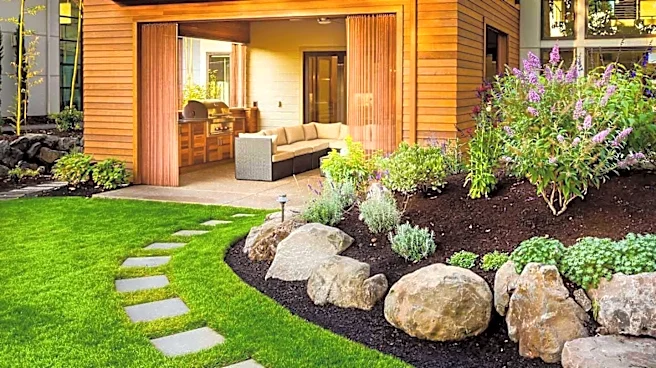
Artificial intelligence is significantly changing landscape design by making it more accessible to homeowners. AI-powered tools allow users to transform photographs of their existing outdoor spaces into visual concepts, experimenting with various landscape styles,
materials, and layouts. This technology helps individuals visualize potential changes, such as adding a modern patio, an inviting garden, or a complete backyard overhaul, without needing professional design software or extensive technical knowledge. By uploading a photo and providing text instructions, users can generate images that show how their property might look after a redesign. This 'before-and-after' effect enables faster creative exploration and improves communication between homeowners and contractors, as visual concepts can clearly convey preferred aesthetics and design goals.
Why It's Important?
This development holds significant importance for the U.S. home improvement market and property owners. It empowers homeowners to take a more active role in designing their outdoor spaces, potentially increasing satisfaction with renovation projects and reducing the likelihood of costly miscommunications. The accessibility of these tools lowers the barrier to entry for design exploration, allowing a broader demographic to engage with landscape planning. For real estate professionals and property managers, AI visualization can be a valuable tool for showcasing potential exterior improvements, enhancing property appeal. While AI primarily generates visual concepts, its ability to facilitate early-stage visual exploration can lead to more informed decisions and efficient project planning across the country.
What's Next?
The future of AI in landscape design is expected to involve closer integration between visual concepts and practical planning information. This could include tools that help organize plant lists, estimate material quantities from verified measurements, and compare alternative layouts against project budgets. Future iterations may also offer more precise control over individual elements, allowing users to modify specific features like patio materials or planting without re-generating the entire image. However, it's crucial to remember that these systems primarily generate visual concepts and do not automatically calculate accurate property dimensions, verify construction safety, or determine plant suitability for specific climates. The ongoing evolution will likely focus on enhancing the practical utility and accuracy of AI-generated designs, moving towards more comprehensive planning solutions.
Beyond the Headlines
Beyond the immediate visual benefits, AI in landscape design prompts a re-evaluation of the design process itself. It encourages a 'creative prototyping' approach, where users can rapidly generate, evaluate, and refine ideas. This iterative process allows for extensive experimentation without immediate commitment, fostering a more dynamic and personalized design journey. However, it also underscores the limitations of AI, particularly in areas requiring specialized knowledge such as horticulture, structural engineering, and local regulations. The technology serves as a powerful creative assistant, but human expertise remains indispensable for translating visual concepts into safe, sustainable, and compliant real-world projects. This blend of AI-driven creativity and human oversight is likely to define the future of landscape architecture and design.