






What's Happening?
Decom Engineering has secured nine offshore mooring chain cutting projects in 2026, with two-thirds of these supporting offshore installation campaigns rather than traditional decommissioning work. The company is expanding the application of its cold-cutting
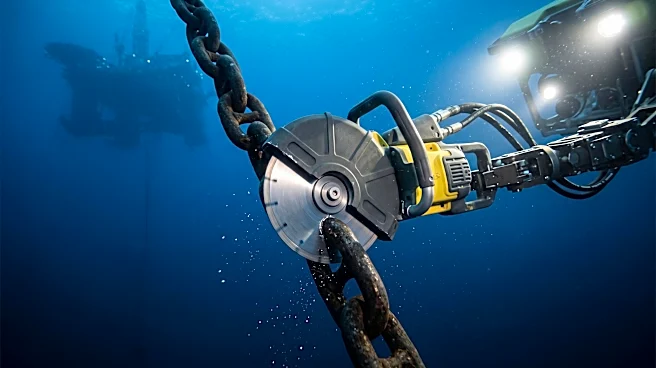
Chopsaws, specifically the C1-16UL and C1-10 models. These tools are used to remove excess mooring chain during the installation and commissioning phases of offshore assets. After mooring lines are deployed and tensioned to position a floating asset, any surplus chain must be precisely cut near new or operational infrastructure. A recent campaign offshore West Africa saw Decom utilize its C1-16UL and heavy-duty C1-16HD Chopsaws to complete four mooring chain cuts, severing primary mooring lines under approximately 400 tonnes of tension in about 11 minutes per cut. The larger C1-16UL is designed for mooring chains 120 mm in diameter and above, while the smaller C1-10, launched earlier this year, handles chains below 120 mm and can be deployed by an ROV manipulator arm without a conventional skid frame, enabling operations in deeper waters.
Why It's Important?
This development is important for the U.S. offshore energy sector, particularly in the Gulf of Mexico and other coastal regions where offshore installations are prevalent. The expansion of Decom Engineering's technology beyond decommissioning to include installation and commissioning phases signifies a shift towards more efficient and safer practices in offshore operations. By enabling controlled and rapid cutting of mooring chains, the technology can reduce project timelines and associated costs for U.S. energy companies. This efficiency can lead to faster deployment of offshore platforms and renewable energy installations, such as wind farms, which are critical for meeting U.S. energy demands and climate goals. Furthermore, the ability to operate at greater water depths with smaller, more agile equipment like the C1-10 can open up new possibilities for offshore development in challenging environments, enhancing the U.S.'s strategic energy capabilities and competitiveness.
What's Next?
Decom Engineering anticipates a significant increase in its fleet, expecting to have 10 C1-16UL units and four C1-10 systems by the end of 2026. Currently, C1-16UL units are deployed or being mobilized in various locations, including Brazil, Canada, the U.S., the UK North Sea, and Cameroon. This expansion indicates a growing demand for their specialized cold-cutting technology in both installation and decommissioning projects globally, including within U.S. waters. The company's head of business development, Michael O'Neill, noted a changing perception of offshore cutting, with increased deployment earlier in the asset lifecycle. This trend suggests that Decom Engineering will continue to focus on integrating its technology into the initial phases of offshore projects, potentially leading to further innovations in offshore construction and maintenance practices.
Beyond the Headlines
The shift in Decom Engineering's operations from primarily decommissioning to a broader role in offshore installation and commissioning highlights a critical evolution in the marine engineering industry. This signifies a move towards more integrated lifecycle management for offshore assets, where specialized tools are utilized from the very beginning of a project. The adoption of cold-cutting technology, which minimizes sparks and heat, also has significant safety and environmental implications, reducing risks associated with traditional hot-cutting methods in volatile offshore environments. This technological advancement could influence regulatory standards and best practices in the U.S. and globally, promoting safer and more environmentally responsible offshore operations. The increased efficiency and reduced operational footprint of these tools could also contribute to the economic viability of complex offshore projects, including those in renewable energy, by lowering costs and accelerating deployment.