




What's Happening?
EZ Form, XMA, and IntelliConnect, all Amphenol companies, are collaborating to provide complete Radio Frequency (RF) layers for quantum computing applications. This initiative addresses the critical need for specialized materials and integrated solutions
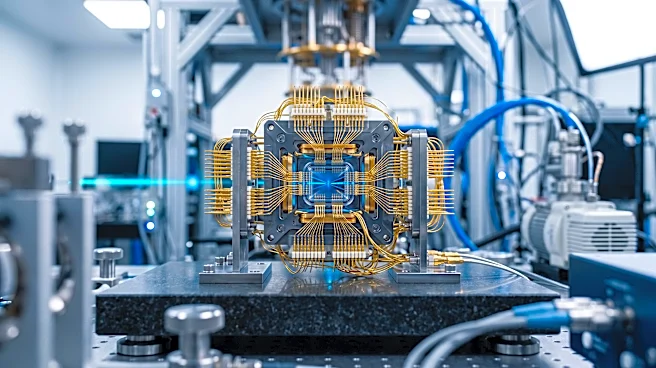
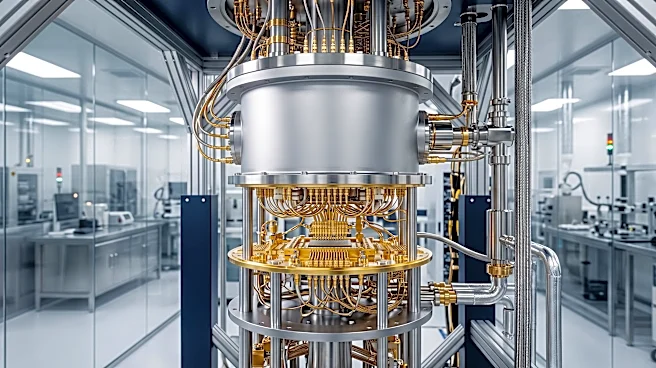
to maintain qubit coherence in extreme cryogenic environments. EZ Form's niobium-titanium (NbTi) cable, specifically designed for quantum computing, becomes superconducting below approximately 9 Kelvin, ensuring signal integrity and reducing thermal conduction. XMA contributes cryogenic attenuators to minimize incoming noise, while IntelliConnect provides solderless RF connectors and formed cable assemblies. The companies aim to offer a unified approach to RF chain design, streamlining the process for quantum computer developers by integrating cables, filtering, and connectors under one roof. This comprehensive solution is crucial for managing the nearly 300-degree Celsius temperature swing within quantum computers and preserving the delicate quantum state of qubits.
Why It's Important?
This collaboration is vital for the advancement of quantum computing in the U.S., as it directly tackles one of the most significant engineering challenges: maintaining qubit coherence. The ability to reliably preserve quantum information is the defining factor for realizing the computational advantages promised by quantum processors. By providing integrated, specialized RF components, these companies are enabling the development of more stable and scalable quantum computers. This impacts U.S. industries relying on advanced computation, such as defense, finance, and scientific research, by accelerating the transition from theoretical quantum mechanics to practical applications. The domestic sourcing of critical materials like NbTi cable also strengthens the U.S. supply chain for quantum technologies, reducing reliance on foreign components and fostering national technological independence in this emerging field.
What's Next?
The integrated offerings from EZ Form, XMA, and IntelliConnect are expected to facilitate the scaling of quantum computers, allowing for denser RF chain architectures. Current designs can support up to 168 RF lines on a single standard ISO100 flange, with planned rectangular form factors projected to increase this capacity to 224 lines or more. This increased density is crucial for accommodating a growing number of qubits. Future developments will likely focus on enhancing the performance of these RF chains across thousands of thermal cycles, ensuring vacuum integrity at feedthroughs, and optimizing non-magnetic materials near the processor. The continued emphasis on a fully integrated and validated RF chain will be key to quickly identifying and resolving performance issues, thereby accelerating the development and deployment of fault-tolerant quantum computing systems.
Beyond the Headlines
The deep integration of RF components for quantum computing highlights a fundamental shift in engineering paradigms, moving beyond individual component specifications to a holistic system-level approach. This collaborative effort underscores the complexity of quantum technology, where seemingly minor imperfections in a cable or connector can lead to significant computational errors. The focus on managing signal integrity, heat, and noise across extreme temperature gradients touches upon ethical considerations regarding the reliability and accuracy of quantum computations, especially as these systems are applied to sensitive data or critical infrastructure. This development also signifies the growing importance of specialized material science and precision engineering in the U.S. tech landscape, pushing the boundaries of what is physically possible in computing and potentially leading to breakthroughs in other high-tech sectors requiring extreme environmental control.