





What's Happening?
A 2026 Dodge Charger test vehicle experienced a recurring software glitch that immobilized the car three times over five days. The issue was traced to a body control module (BCM) software problem, which caused irregular voltage levels to the engine control module (ECM)
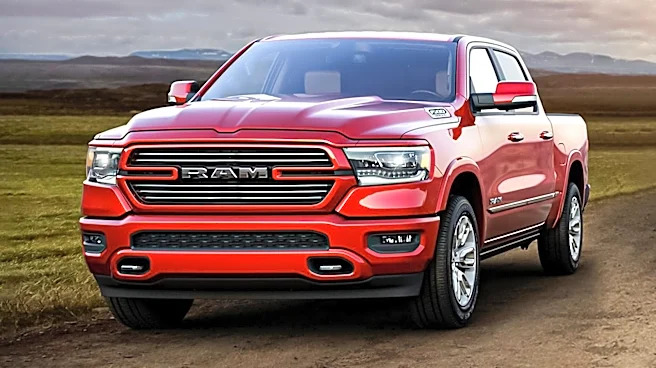
during an engine start-stop event. This irregularity prevented the ECM from determining if the hood was open or closed, triggering a safety protocol that required a manual restart. Stellantis, the parent company, identified the problem and performed a software reflash to resolve it. The issue has not been reported in customer vehicles, but similar problems have been noted in previous Dodge Charger models and Ram 1500 trucks.
Why It's Important?
The incident highlights potential reliability concerns for the 2026 Dodge Charger, a model that has already faced mixed reviews and other technical issues. The immobilization of a vehicle due to software glitches can pose significant safety risks, especially if it occurs in traffic. This situation underscores the importance of robust software testing and quality control in modern vehicles, which increasingly rely on complex electronic systems. The resolution of this issue is crucial for maintaining consumer confidence and ensuring the safety and functionality of the vehicle.
What's Next?
Stellantis has addressed the issue in the test vehicle and continues to monitor for similar problems in customer vehicles. The company may need to implement further software updates or recalls if the problem is found in production models. Ongoing feedback from customers and media will be essential in identifying any additional issues. The automotive industry will likely continue to focus on improving software reliability as vehicles become more technologically advanced.