






What's Happening?
Aston Martin Lagonda, the luxury road car manufacturer, has reported a pre-tax loss of £77 million for the third quarter of 2026. This financial setback occurred despite a 36% rise in revenue, reaching £389 million. The company has accumulated approximately
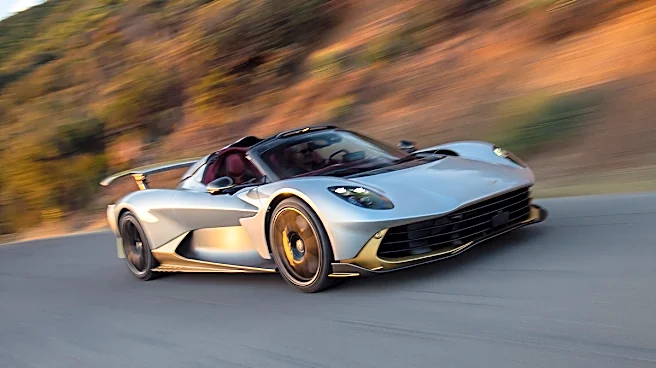
£2.3 billion in after-tax losses since Lawrence Stroll led its rescue six years ago. While the latest quarterly loss is smaller than the £112 million recorded in the same period last year, net debt has climbed to £1.57 billion. The increase in revenue was partly attributed to deliveries of the Valhalla supercar, which improved the product mix and average selling price, now at £247,000. Wholesale volumes remained largely unchanged at 1,431 vehicles, with core model volumes decreasing by 9% to 1,304, supplemented by 127 deliveries from the 'Specials' category. Gross margin improved from 29% to 37%, and free cash outflow decreased to £28 million from £94 million a year prior, with liquidity at £322 million by the end of September.
Why It's Important?
The financial health of Aston Martin Lagonda is significant due to its commercial links and shared ownership with the Aston Martin Formula 1 team, both connected through Lawrence Stroll. Although the reported losses are specific to the road car division and do not directly reflect the F1 team's budget or financial standing, the ongoing challenges faced by the parent company could indirectly influence the broader Aston Martin brand perception and future investment strategies. A struggling road car division might impact the overall brand image, potentially affecting sponsorship deals or the long-term viability of the F1 team's ambitious projects. Conversely, the F1 team's success could serve as a marketing tool to bolster the road car sales, creating a symbiotic, albeit financially distinct, relationship. The continued losses highlight the difficulties in achieving sustainable profitability for luxury automotive brands in a competitive market, even with increased sales revenue and improved margins.
What's Next?
Aston Martin Lagonda plans to maintain its guidance for 2026, anticipating wholesale volumes similar to the previous year and a gross margin in the high-30% range. The company's focus will likely remain on improving profitability and reducing its substantial net debt. Future strategies may involve further optimizing its product mix, particularly with high-margin 'Specials' vehicles, and continuing to enhance operational efficiencies to reduce cash outflows. The connection between the road car manufacturer and the F1 team, while financially separate, will continue to be a point of interest. Any significant financial shifts in the road car division could prompt discussions about the long-term strategic alignment and resource allocation across the broader Aston Martin enterprise, particularly as Lawrence Stroll navigates the dual challenge of restoring the road car business to profitability and sustaining an ambitious Formula 1 presence.
Beyond the Headlines
The financial performance of Aston Martin Lagonda reflects a broader trend within the luxury automotive sector, where brand heritage and high-performance vehicles often coexist with significant investment requirements and market volatility. The distinction between the road car company and the Formula 1 team, while legally and financially separate, underscores the complex branding and business models prevalent in modern motorsports and luxury goods. The F1 team acts as a global marketing platform, potentially justifying the substantial investments in the road car division by enhancing brand visibility and desirability. However, the persistent losses in the road car business raise questions about the long-term sustainability of this model and the potential for cross-subsidization or strategic divestments if profitability remains elusive. This situation highlights the delicate balance between maintaining a prestigious brand image and achieving financial stability in a capital-intensive industry.