

What's Happening?
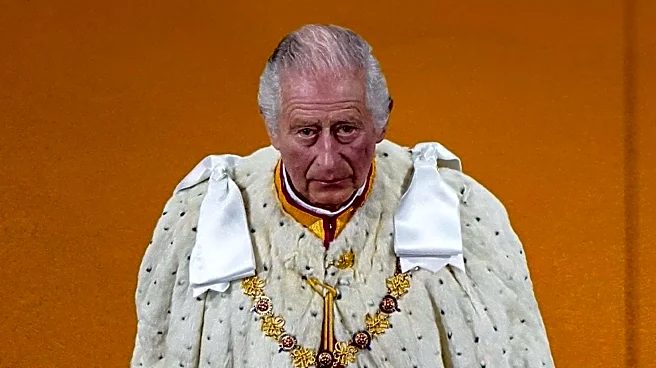
King Charles III recently shared an unconventional fitness tip for horse riding during a conversation with Royals reporter Roya Nikkhah of the Sunday Times. Nikkhah recounted her rigorous daily routine, which includes waking at 4 AM and riding horses
at Lambourn gallops by 7 AM. Upon hearing this, King Charles's eyes reportedly lit up, and he suggested a unique training method: cycling without a saddle to strengthen legs for riding with short stirrups. He stated, "I have found that to really improve your fitness and get your legs really strong for riding with short stirrups, the best thing to do is cycle without a saddle, completely without a seat. It really works." Nikkhah herself found the idea of this training method "painful." The King's enthusiasm for equestrian sports stems from his decades-long involvement, including participating in horse races and playing polo for about 40 years, a career he ended in 2005 due to multiple riding injuries.
Why It's Important?
This anecdote offers a rare glimpse into the personal fitness routines and dedication of a monarch, highlighting the physical demands of equestrian sports, which are often associated with royalty and tradition. While the specific tip might not be widely adopted due to its perceived discomfort, it underscores the King's practical approach to maintaining physical conditioning for activities he is passionate about. For the equestrian community, it provides an interesting, albeit extreme, perspective on training from a high-profile figure. More broadly, it reflects a cultural aspect of the British monarchy, where engagement in traditional sports like polo and horse riding is a significant part of their public and private lives, symbolizing continuity and heritage. The King's willingness to share such a personal and somewhat eccentric tip also humanizes his public image, showing a relatable, albeit unusual, dedication to physical prowess.
What's Next?
While it is unlikely that King Charles's specific saddle-less cycling method will become a mainstream fitness trend, his continued engagement with and commentary on equestrian sports may inspire further discussion within the riding community about alternative training methods. His public sharing of such personal insights could encourage other public figures or athletes to share their unique approaches to fitness, fostering a broader conversation about the diverse ways individuals maintain physical health for their respective passions. Future royal engagements related to equestrian events might see renewed interest in the King's personal involvement and his views on the sport's physical demands. This interaction also reinforces the ongoing public interest in the personal lives and habits of the Royal Family, suggesting that even minor details about their routines can capture public attention and spark conversation.
Beyond the Headlines
The King's fitness tip, while seemingly trivial, subtly reinforces the enduring connection between the British monarchy and traditional aristocratic pursuits like horse riding. This connection is not merely recreational but deeply embedded in the cultural fabric and historical identity of the royal family. The physical rigor King Charles describes for riding with short stirrups speaks to a broader ethos of discipline and resilience often associated with royal duties and expectations. Furthermore, his willingness to share a somewhat unconventional method could be interpreted as a subtle nod to self-reliance and practical problem-solving, traits often valued in leadership. It also highlights the generational continuity of royal involvement in these sports, as Prince Charles himself was a keen polo player, following in a long line of royal equestrians. This dedication to physical activity, even in older age, can also serve as a quiet example of active aging.