

What's Happening?
A collective of prominent artists, including musician Roger Waters, Nobel Prize-winning writer Annie Ernaux, and actor Guy Pearce, have signed an open letter to the Venice Biennale and the Venice Film Festival. The letter calls for "concrete action" against
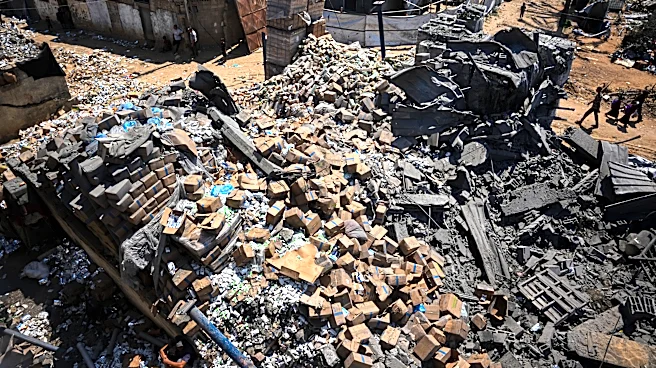
what they describe as a genocide against the Palestinian people. This appeal, under the "Venice4Palestine" banner, follows a similar letter sent a year prior, which the signatories claim yielded no tangible results for Gaza. The letter asserts that despite a "false ceasefire," atrocities have continued and expanded. The artists are urging the festival to raise the Palestinian flag for the entire duration of the event, alongside other national flags representing official selections, as a standard practice.
Why It's Important?
This collective action by internationally recognized artists at a major cultural event like the Venice Film Festival signifies a growing trend of cultural figures using their platforms to address geopolitical issues. Their call for the festival to take a clear stance and display the Palestinian flag highlights the increasing pressure on cultural institutions to engage with political and humanitarian crises. This move could influence other film festivals and cultural events to consider similar actions, potentially leading to broader discussions about the role of art and culture in advocacy. The involvement of high-profile individuals like Roger Waters and Annie Ernaux lends significant weight to the appeal, potentially amplifying the message and drawing more public attention to the Palestinian cause within the global arts community.
What's Next?
The Venice4Palestine representatives are scheduled to host a panel discussion titled "Yet Gaza Continues to Burn" on September 8th at the Lido, during the festival. This event will likely serve as a platform to further articulate their demands and gather more support. The open letter also calls on film, audiovisual, and cultural sector stakeholders to unite and build a protective structure for workers who take a stand against the perceived genocide, aiming to counter professional risks like employment blackmail. The signatories are advocating for transparency in supply chains and the suspension of agreements with entities linked to the Israeli government, pushing for a cultural and economic boycott until specific conditions related to international law and Palestinian rights are met. The festival's response to these demands will be closely watched by both supporters and critics.
Beyond the Headlines
The open letter and the planned panel discussion at the Venice Film Festival underscore the complex intersection of art, politics, and human rights. The artists' call for a boycott and the raising of the Palestinian flag reflect a belief that cultural institutions have a moral obligation to take a stand on global conflicts, rather than remaining neutral. This movement also highlights the power of collective action within the arts community to challenge established norms and influence public discourse. The reference to "The Voice of Hind Rajab" film, which generated collective emotion and indignation, suggests that artistic expressions can be powerful tools for advocacy and raising awareness about humanitarian issues. This initiative could set a precedent for how major cultural events navigate politically charged topics in the future, potentially leading to more overt forms of activism within the arts.