






What's Happening?
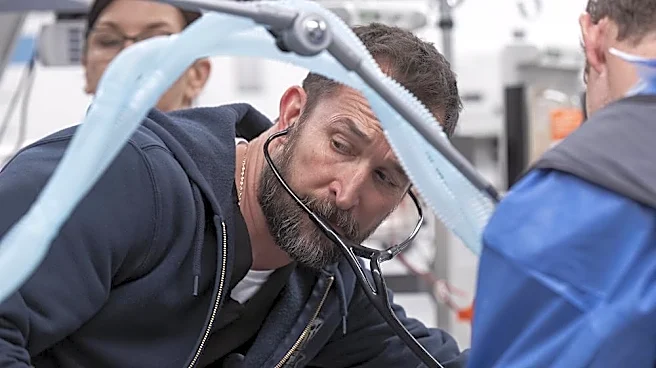
A California appeals court has unanimously ruled that a lawsuit brought by Sherri Crichton, widow of 'ER' creator Michael Crichton, against the HBO Max series 'The Pitt' can move forward. The lawsuit alleges that 'The Pitt' is an unauthorized reboot of 'ER'.
The three-judge panel from California’s 2nd District Court of Appeal upheld a lower court's decision to reject a motion by Warner Bros. Television, the production company for 'The Pitt' and 'ER', to dismiss the case. The court found sufficient similarities between the two medical dramas, including their focus on emergency rooms, the difficult conditions for medical staff, fast pacing, and the use of incomprehensible medical jargon. While the court allowed the lawsuit to proceed against Warner Bros. Television, it dismissed Noah Wyle, John Wells, and R. Scott Gemmill as defendants, finding no evidence they knew about the 'frozen rights' provision in Crichton's original contract that prohibited sequels or reboots without his or his estate's consent. Sherri Crichton's lawsuit was filed in August 2024, before 'The Pitt' aired, claiming she had rejected an 'ER' reboot proposal, and Warner Bros. then proceeded with 'The Pitt' without her permission.
Why It's Important?
This ruling is significant for intellectual property rights in the entertainment industry, particularly concerning established franchises and creator contracts. The 'frozen rights' provision in Michael Crichton's original 'ER' contract highlights the importance of such clauses in protecting a creator's legacy and control over their work. If 'The Pitt' is ultimately found to be a derivative work, it could set a precedent for how studios approach reboots, spin-offs, and adaptations of popular series, potentially leading to more stringent adherence to contractual agreements with creators' estates. For Warner Bros. Television, a loss in this case could result in substantial financial penalties and reputational damage. Conversely, a win for Sherri Crichton would reinforce the power of creators and their estates to control the future of their intellectual property, potentially empowering other creators to negotiate similar protections. The case also underscores the challenges of defining 'similarity' in creative works and the legal complexities involved in proving copyright infringement in the context of genre conventions.
What's Next?
With the appeals court ruling, the lawsuit will now proceed to trial, where a jury may ultimately decide whether 'The Pitt' is indeed a derivative of 'ER'. Warner Bros. Television has stated that it continues to maintain 'The Pitt' is an entirely original series and looks forward to defending its position. The legal process could involve extensive discovery, expert testimony on similarities between the shows, and potentially a lengthy trial. There is also the possibility that the parties could reach a settlement out of court to avoid the uncertainties and costs associated with a full trial. The outcome of this case could influence future negotiations and production decisions for other studios considering reboots or adaptations of existing intellectual property, especially those with similar contractual provisions regarding creator control.
Beyond the Headlines
This legal battle extends beyond the immediate financial implications, touching upon the broader cultural and ethical considerations of creative ownership and artistic integrity. The case raises questions about the balance between a studio's desire to capitalize on successful franchises and a creator's right to control the evolution of their original vision. The dismissal of individual producers like Noah Wyle from the lawsuit, despite their involvement in both shows, highlights the legal distinction between corporate liability and individual responsibility in such disputes. Furthermore, the debate over what constitutes 'generic similarities' versus actionable infringement could influence how future medical dramas are developed, potentially leading to more cautious approaches to avoid perceived resemblances to established works. The case also reflects the ongoing tension in Hollywood between innovation and the reliance on proven formulas, particularly in an era of high demand for recognizable content.