
What's Happening?
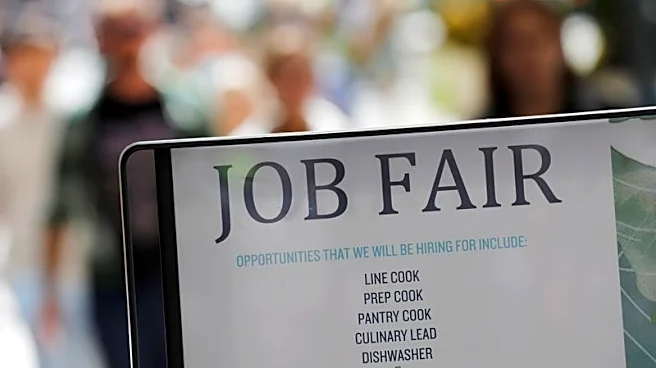
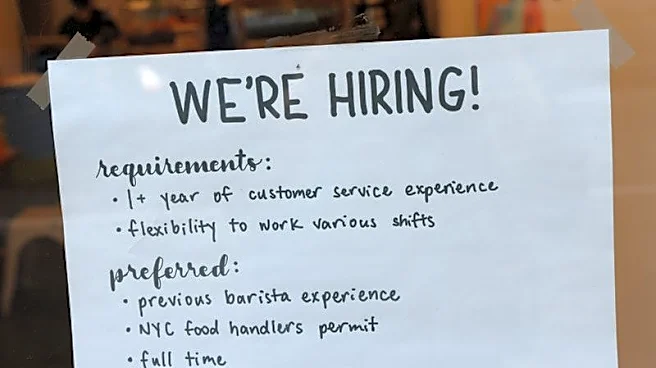
The Labor Department is set to release its July jobs report, with economists predicting an addition of 80,000 jobs, an improvement from June's 57,000. The unemployment rate is expected to remain steady
at 4.2%. Recent data from private sectors, such as ADP, showed slower-than-expected growth, but there are positive signs, including increased pay for job-switchers and a decline in layoff plans. The Bank of America Institute noted that payroll growth appeared to accelerate in July, particularly benefiting lower-income households, whose wage growth surpassed that of higher-income groups for the first time since December 2024.
Why It's Important?
The anticipated job growth and stable unemployment rate suggest resilience in the U.S. labor market despite mixed signals from private sector data. This stability is crucial for economic stakeholders, as it indicates a potential for sustained consumer spending and economic growth. The increase in wages for lower-income households could lead to a reduction in income inequality and boost consumer confidence. However, the slower-than-expected private sector hiring highlights ongoing challenges and uncertainties in the economic recovery.
What's Next?
The official jobs report from the Labor Department will provide a clearer picture of the labor market's health. Stakeholders, including policymakers and businesses, will closely monitor the data to adjust strategies and forecasts. Potential reactions could include policy adjustments by the Federal Reserve or changes in hiring practices by companies. The report's findings may also influence public policy discussions on employment and economic support measures.