


What's Happening?
The Minnesota Timberwolves are currently navigating salary cap and roster limitations as they consider signing their second-round draft pick, Trey Kaufman-Renn. Despite Kaufman-Renn's strong final season at Purdue, where he averaged 14.2 points, 8.3 rebounds,
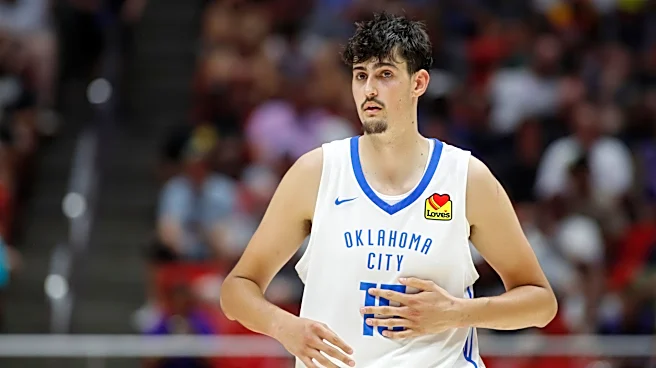
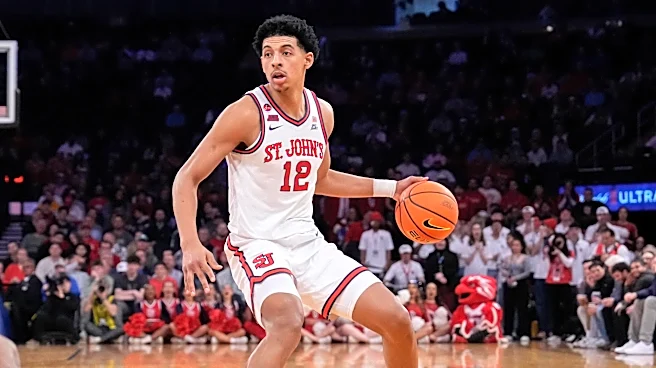
and 2.5 assists per game with 57.8% field goal shooting, the Timberwolves have not yet offered him a contract. The team is weighing whether to provide him with a standard NBA contract or a two-way deal. A significant hurdle is that all three of Minnesota's two-way contract slots are currently filled by Zyon Pullin, Enrique Freeman, and Rocco Zikarsky. To sign Kaufman-Renn to a two-way deal, the team would need to create an opening by moving one of their existing two-way players or a player on the standard roster. The Timberwolves' roster is largely composed of expensive veterans, leaving little flexibility under the salary cap for additional standard contracts.
Why It's Important?
This situation highlights the complex financial and strategic decisions NBA teams face, particularly those operating under strict salary cap limitations. For the Timberwolves, the decision regarding Kaufman-Renn impacts not only his individual development but also the team's overall roster construction and financial health. A standard NBA contract for Kaufman-Renn would be more affordable than signing a veteran free agent, potentially offering more flexibility for the team's 15th roster spot. However, signing him to a standard deal might prevent the team from pursuing other veteran free agents like Jonathan Kuminga, Kevin Love, or Kelly Olynyk due to salary cap constraints. The choice between a standard contract and a two-way deal also reflects the team's philosophy on player development, balancing immediate roster needs with long-term potential. For Kaufman-Renn, the type of contract will significantly influence his playing time and opportunity for growth, with a two-way deal offering more consistent G League minutes for development.
What's Next?
The Timberwolves must decide whether to offer Trey Kaufman-Renn a standard NBA contract or a two-way deal. If they opt for a two-way contract, they will need to clear one of their existing three two-way slots, potentially by moving Zyon Pullin, Enrique Freeman, or Rocco Zikarsky. The team's President of Basketball Operations, Tim Connelly, has a history of shuffling two-way contracts, suggesting that changes could occur late in the offseason or even after the regular season begins. There is speculation that Enrique Freeman might be moved after training camp, opening a two-way spot. If the Timberwolves fail to sign a high-profile free agent like Jonathan Kuminga, they might consider signing Kaufman-Renn to a partially guaranteed standard contract. Ultimately, the team's decision will determine Kaufman-Renn's immediate future and how he integrates into the Timberwolves' system, either through direct NBA exposure or G League development.
Beyond the Headlines
The predicament of Trey Kaufman-Renn underscores a broader challenge for late second-round NBA draft picks: securing a roster spot and a clear path to development in a league with stringent financial and roster rules. While Kaufman-Renn's college performance suggests potential, the economic realities of the NBA, particularly for teams like the Timberwolves with high payrolls, often prioritize established talent or specific roster needs over developing unproven rookies on standard contracts. The prevalence of two-way contracts reflects the league's attempt to provide a development pipeline, but even these spots are limited and highly competitive. This situation highlights the delicate balance between a team's immediate competitive aspirations, its long-term player development strategy, and the financial constraints imposed by the collective bargaining agreement. It also brings into focus the career trajectory of young players who, despite being drafted, face significant hurdles in transitioning from college success to a stable professional career.