







What's Happening?
Raya.design has launched an AI rendering palette specifically for Archicad, a popular architectural design software. This add-on allows architects and interior designers to transform any active Archicad view—whether a 3D view, plan, section, elevation,
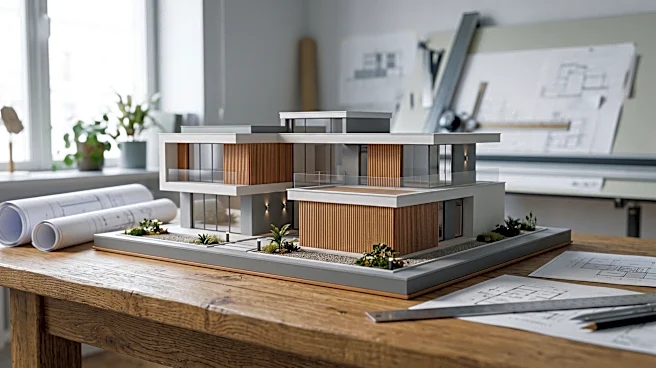
or layout—into a photorealistic visualization within minutes. The process is streamlined: users open the Raya menu, select desired scene parameters, and click 'Generate.' The rendering is performed in the Raya cloud, eliminating the need for powerful local graphics cards or complex scene preparations like configuring lights and materials. Key capabilities include various lighting presets (sunny, cloudy, golden hour, dawn, night), seasonal settings, optional material descriptions, area editing, 4K upscaling, and the creation of short AI video clips from finished visualizations. The add-on is designed to enhance early-stage design presentations and client reviews.
Why It's Important?
This development is significant for U.S. architectural and interior design firms. It democratizes high-quality rendering by making it accessible without specialized hardware or extensive rendering expertise, potentially leveling the playing field for smaller firms. The speed and ease of generating photorealistic visuals mean designers can iterate faster, present more options to clients, and secure approvals more efficiently. This can lead to reduced project timelines and costs, ultimately benefiting both design studios and their clients. The ability to quickly visualize concepts in different lighting and seasonal conditions allows for more comprehensive design exploration and better communication of design intent, minimizing misunderstandings and revisions later in the project lifecycle. It also empowers in-house teams to produce high-quality marketing materials without outsourcing rendering services.
What's Next?
The future trajectory for AI rendering tools like Raya.design will likely involve continuous improvements in realism, speed, and integration with other design software. We can anticipate more advanced AI models that offer even finer control over details, textures, and environmental effects, pushing the boundaries of photorealism. Further integration with BIM (Building Information Modeling) workflows could allow for more intelligent rendering that understands and interprets architectural data directly. The development of interactive AI rendering, where designers can make real-time adjustments and see immediate visual feedback, is also a probable next step. Additionally, the expansion of AI-generated video capabilities, including longer and more complex animations, will likely become a standard offering, enhancing presentation capabilities for architects and designers.
Beyond the Headlines
Beyond the immediate practical benefits, the rise of AI rendering tools like Raya.design has broader implications for the architectural profession. It could shift the skill set required for architects, placing less emphasis on technical rendering proficiency and more on design conceptualization and client communication. This might free up designers to focus more on creative problem-solving rather than the laborious aspects of visualization. However, it also raises questions about the artistic integrity and unique style that human renderers bring to a project, as AI-generated images might tend towards a certain aesthetic uniformity. Furthermore, the reliance on cloud-based rendering services introduces considerations around data security and intellectual property, as design files are processed externally. The ethical use of AI in presenting designs, ensuring that clients understand the distinction between AI-generated concepts and fully engineered solutions, will also be an important consideration.