



What's Happening?
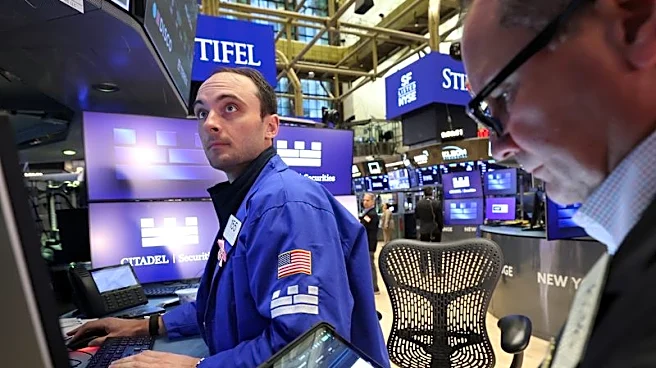
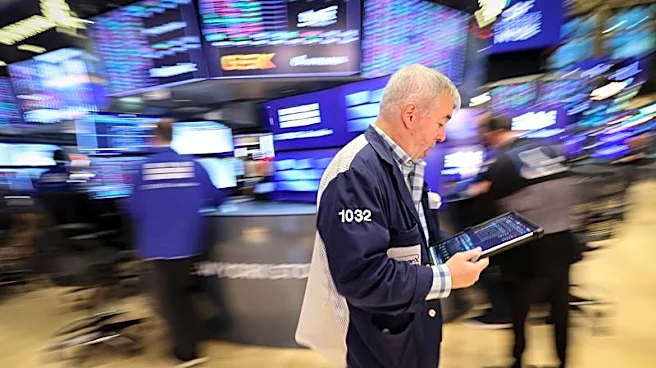
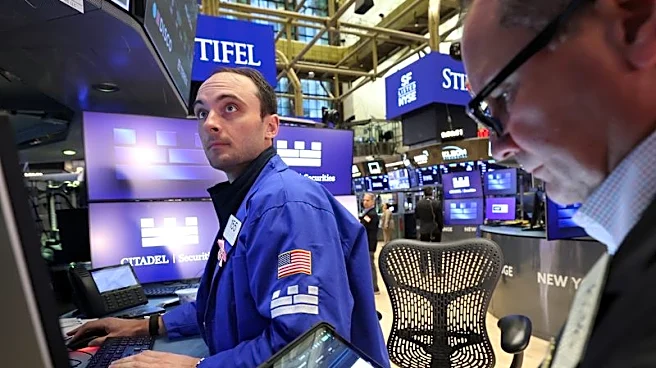
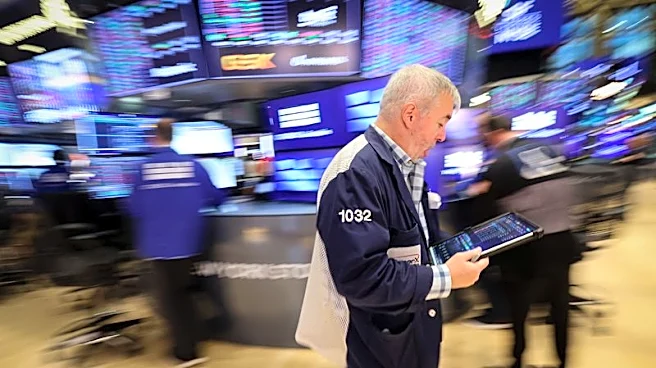
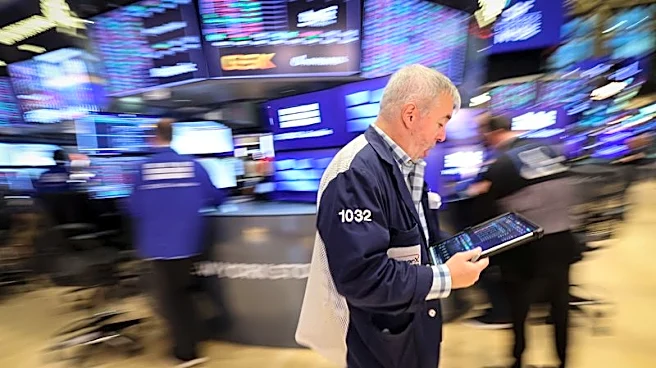
Wall Street experienced a significant rebound during the Thanksgiving-shortened trading week, with all three major U.S. stock indexes posting gains exceeding 5%. The S&P 500 recorded its strongest weekly performance since April 2025, climbing 5.6%. The Dow
Jones Industrial Average rose 5.46%, and the tech-heavy Nasdaq Composite surged 6.68%. This recovery follows a substantial sell-off in the previous week, largely attributed to mounting concerns surrounding the artificial intelligence (AI) sector. According to Reuters, volatility in AI-related stocks, including the reinstatement of Nvidia CEO Jensen Huang and the brief fall of newly public AI developer Anthropic below its initial public offering price, contributed to market fluctuations. Major technology companies like Amazon, Microsoft, Meta, Oracle, and Tesla also saw gains, with Tesla shares surging 5%.
Why It's Important?
This market rebound is crucial for investor confidence, especially after the previous week's 'historic sell-off' that pushed the Dow and S&P 500 into correction territory and wiped out the Nasdaq's gains for the year. The strong recovery indicates a potential shift in market sentiment, with investors returning to AI stocks that had been heavily impacted. The performance of major tech companies and chipmakers like Micron and Marvell, which gained 7.6% and 7.3% respectively, suggests that the underlying belief in the long-term potential of the technology sector, particularly AI, remains strong despite short-term volatility. This rebound could stabilize portfolios and encourage continued investment, mitigating fears of a prolonged downturn in the tech-heavy market segments.
What's Next?
The market's ability to sustain these gains will be a key focus for investors in the coming weeks. While the immediate bounce was attributed to an 'oversold' market, according to Jamie Cox, managing partner at Harris Financial Group, the underlying concerns about AI stock valuations and broader economic factors could still influence future trading. Continued monitoring of AI-related developments, corporate earnings reports, and macroeconomic indicators will be essential. The performance of the technology sector, particularly AI, will likely dictate the overall market direction, as investors assess whether the recent volatility was a temporary correction or a precursor to further adjustments.
Beyond the Headlines
The rapid swing from a significant sell-off to a strong rebound highlights the inherent volatility and speculative nature of certain market segments, particularly those driven by emerging technologies like AI. This pattern underscores the psychological aspect of market movements, where investor sentiment can quickly shift based on news and perceived value. The 'historic sell-off' and subsequent 'major comeback' also raise questions about market efficiency and the potential for overreactions to news events. This dynamic environment could lead to increased scrutiny from regulators regarding market stability and the transparency of information influencing investor decisions, especially in high-growth sectors.